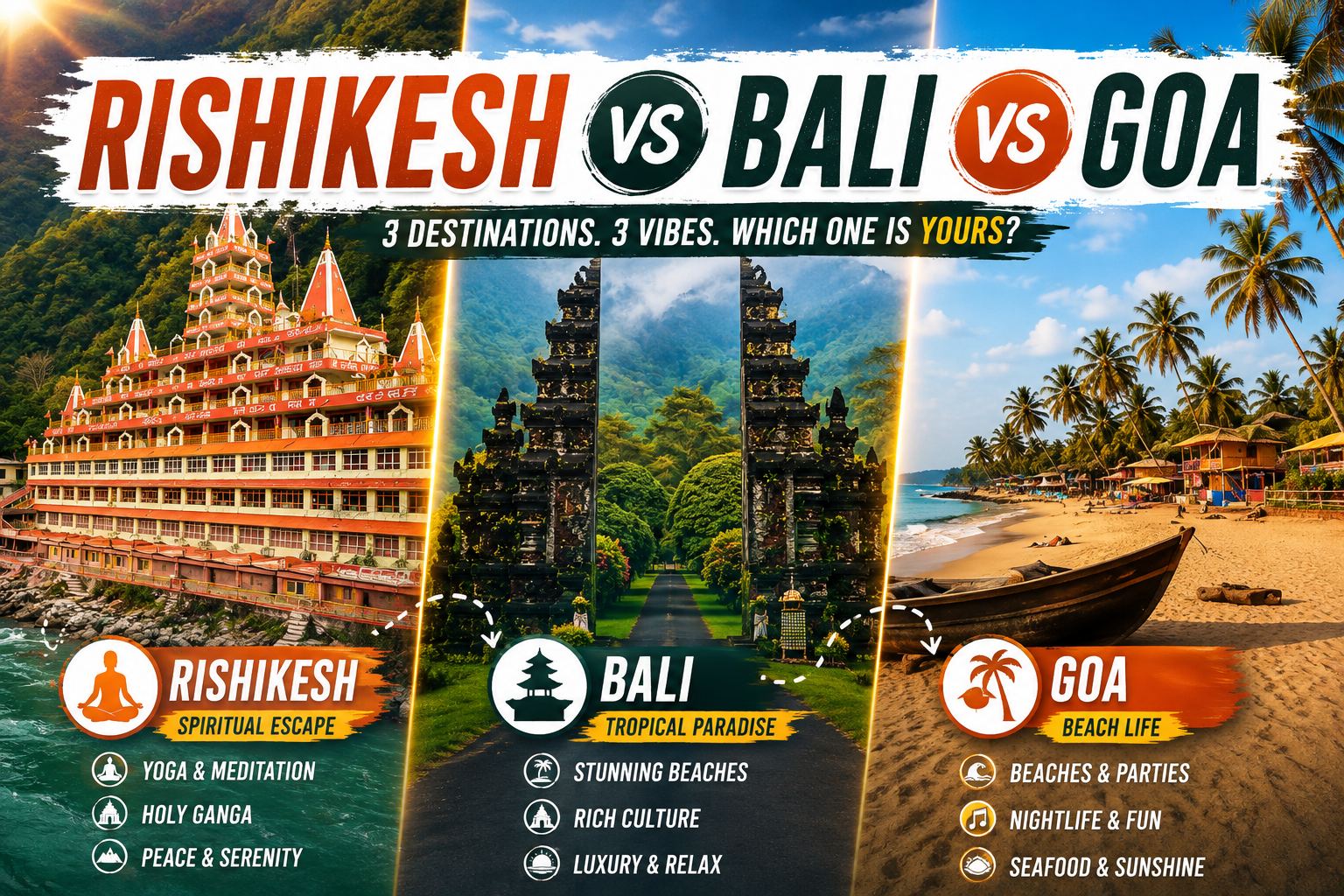
You’ve decided you want a yoga retreat. That was the hard part. Now comes the surprisingly stressful part — where? Three destinations dominate the conversation: Rishikesh, Bali, and Goa. All three are beautiful. All three have excellent yoga scenes. And all three will give you a dramatically different experience.
The internet is full of listicles ranking these destinations, but most of them read like travel brochures. Rishikesh vs Bali vs Goa This guide is different. We’re going to be honest about what each place actually delivers — the strengths, the trade-offs, and who each destination is really best for.
The Core Difference in One Sentence
Rishikesh is where you go to study yoga. Bali is where you go to experience wellness. Goa is where you go to relax with some yoga mixed in. That’s an oversimplification, but it captures the essential energy of each place. If you understand this distinction, you’re already halfway to the right decision.
Rishikesh: The Source
The setting
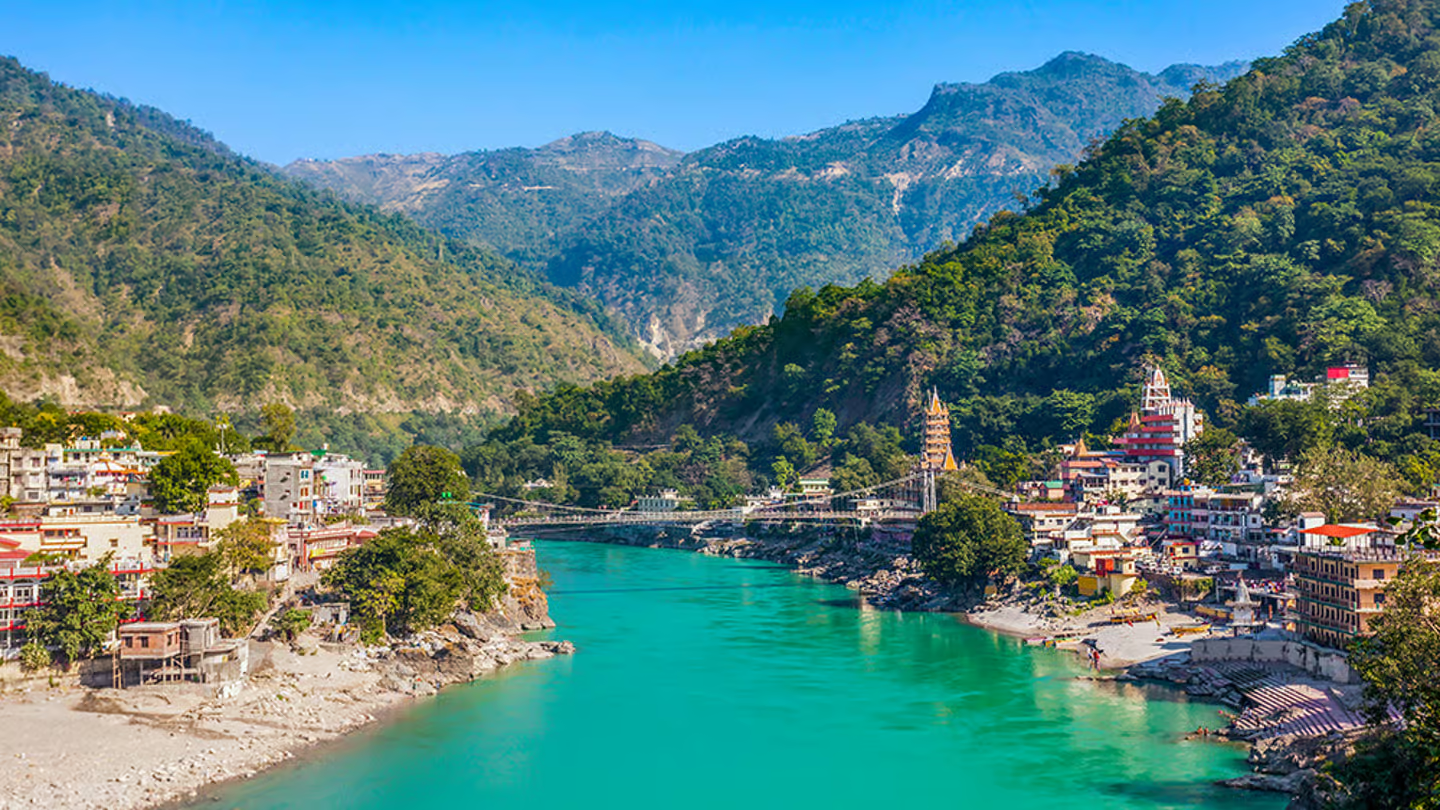
Rishikesh sits in the foothills of the Indian Himalayas, along the banks of the Ganges River. It’s a small, walkable city with ashrams on nearly every street, temple bells ringing throughout the day, and a spiritual energy that’s been building for thousands of years. This is where The Beatles came to meditate in 1968. This is where many of the world’s most influential yoga teachers trained. And this is where the Indian government officially designated the “Yoga Capital of the World.”
The landscape is mountains, river, and forest. Not beaches. Not rice paddies. Raw Himalayan beauty with the occasional monkey stealing your banana at breakfast.
The yoga
This is where Rishikesh separates from the pack. The yoga here tends to be traditional, rigorous, and deeply rooted in classical philosophy. Morning practice starts early — often 6:00 or 6:30 AM — and the curriculum typically includes asana, pranayama, meditation, mantra chanting, and yoga philosophy.
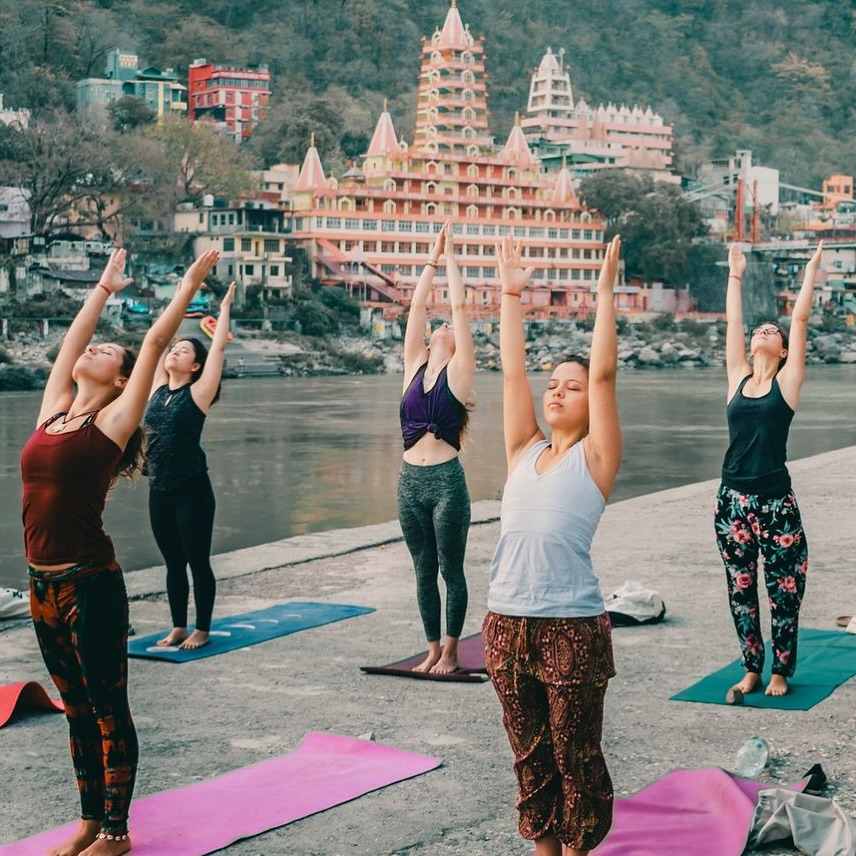
Teachers in Rishikesh are often Indian-born practitioners who grew up in the tradition. Many have studied under renowned gurus and bring a lineage-based depth that’s hard to find elsewhere. This doesn’t mean the teaching is rigid or inaccessible — good centers adapt for all levels — but the foundation is authenticity, not trends.
You’ll also find a strong emphasis on the non-physical aspects of yoga. Expect philosophy discussions, breathwork sessions, and meditation practice to feature prominently alongside the physical postures.
The vibe
Rishikesh is earnest. People come here to learn, to practice, and to go deep. The social scene exists — cafés along the ghats, evening aarti ceremonies, conversations over chai — but it’s quieter and more reflective than what you’ll find in Bali or Goa. Alcohol is not sold in Rishikesh (it’s considered a holy city), and the food is entirely vegetarian.
If you thrive in simplicity and want minimal distractions, Rishikesh will feel like home.
The cost
Rishikesh is the most affordable of the three destinations. A week-long retreat with accommodation, meals, and daily classes can range from $300 to $800 USD depending on the center and room type. Budget rooms at smaller ashrams can bring this even lower. India’s cost of living works heavily in your favor here.
Best for
Serious practitioners. First-timers who want depth over luxury. Anyone interested in classical yoga philosophy. People who want to disconnect from digital life. Budget-conscious travelers who still want a world-class experience.
Bali: The Wellness Playground
The setting
Bali — specifically Ubud, the island’s cultural and yoga hub — is lush, tropical, and photogenic in a way that almost feels engineered for social media. Rice terraces, jungle valleys, ornate Hindu temples, and infinity pools overlooking volcanic landscapes. It’s stunning.
The broader island offers beaches, surf towns, and nightlife in areas like Seminyak and Canggu, which means you can combine a retreat with more traditional vacation activities before or after.
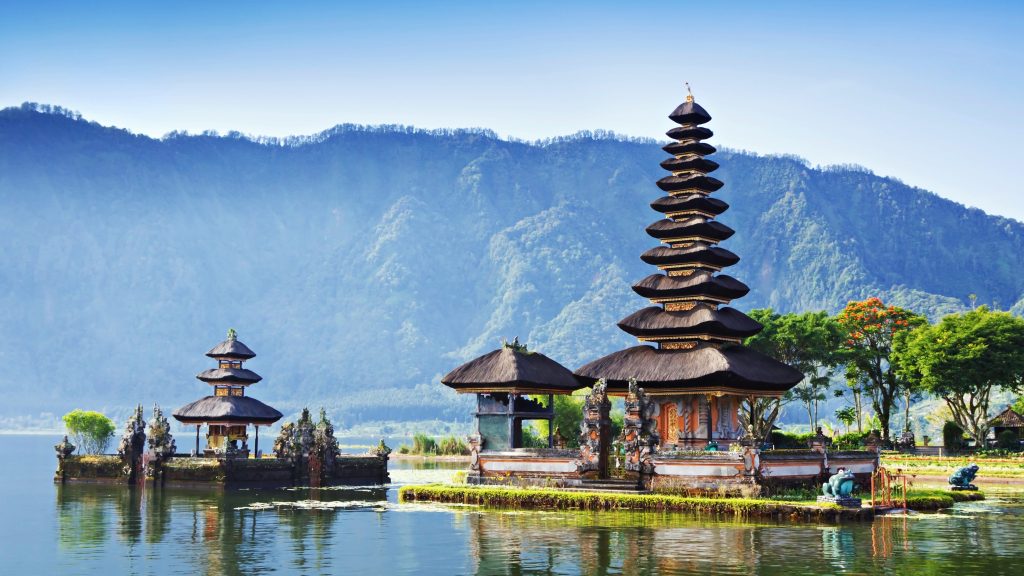
The yoga Bali’s yoga scene is vast, diverse, and heavily influenced by Western teachers. You’ll find everything from traditional Hatha and Ashtanga to ecstatic dance, sound healing, cacao ceremonies, breathwork journeys, and fusion styles that blend yoga with other modalities.
The quality is generally high, but it’s more variable than in Rishikesh. Because Bali attracts yoga teachers from all over the world — many of whom set up shop after completing their own teacher training — you’ll encounter a wider range of teaching styles and experience levels. Some are excellent. Some are Instagram influencers with a 200-hour certificate and a ring light.
The physical practice tends to take center stage in Bali. Philosophy and breathwork are present but often play a supporting role rather than sharing equal billing with asana.
The vibe
Bali is social, energetic, and wellness-forward. The café culture is world-class — smoothie bowls, matcha lattes, raw vegan desserts — and the retreat community is international and outgoing. You’ll meet digital nomads, entrepreneurs, life coaches, and fellow yoga enthusiasts from every corner of the globe.
The downside of this energy is that it can feel busy, commercial, and occasionally performative. If you’re sensitive to the wellness-industrial complex — overpriced supplements, manifesting workshops, and retreat centers that feel more like boutique hotels — parts of Bali’s scene may grate on you.
The cost
Bali is mid-range. A week-long retreat typically runs $600 to $2,000 USD, depending on the level of luxury. High-end retreats with private villas, spa treatments, and gourmet plant-based cuisine can push well above $3,000. The everyday cost of living (food, transport, activities) is affordable, but the retreat products themselves carry a premium.
Best for
People who want a well-rounded wellness vacation. Those who enjoy social scenes and meeting other travelers. Practitioners who prefer modern, fusion-style yoga. Anyone who wants luxury amenities alongside their practice. Couples or friends traveling together.
For those who discover a deeper passion for yoga during their retreat and want to continue their journey, joining a Yoga Teacher Training in Bali can be a natural next step. With immersive training, experienced teachers, and Bali’s inspiring environment, it’s an ideal place to deepen your practice and build the skills to teach with confidence.
Goa: The Laid-Back Option
The setting
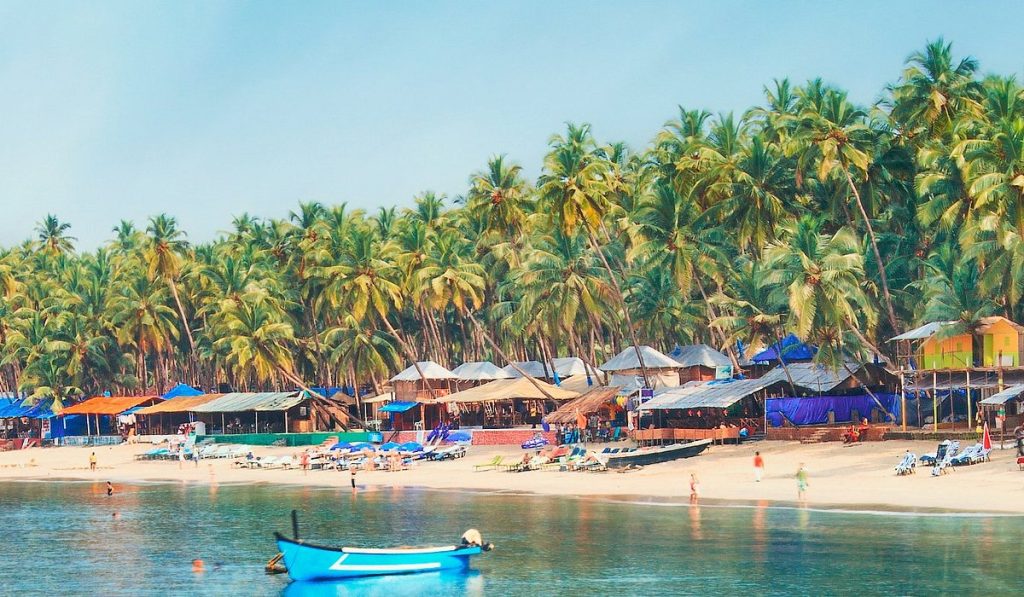
Goa is India’s beach state — a narrow strip of coastline on the western edge of the country with Portuguese colonial architecture, palm-fringed beaches, and a famously relaxed attitude. The yoga scene is concentrated in North Goa (around Arambol and Mandrem) and South Goa (around Palolem and Agonda).
Unlike Rishikesh’s mountain intensity or Bali’s jungle lushness, Goa’s energy is coastal, warm, and unhurried. The Arabian Sea is your backdrop, and the pace of life moves accordingly.
The yoga
Goa’s yoga scene has grown significantly over the past decade, but it remains less structured than either Rishikesh or Bali. Retreats here tend to be shorter — three to five days rather than one to two weeks — and the approach leans toward relaxation and restoration rather than rigorous study.
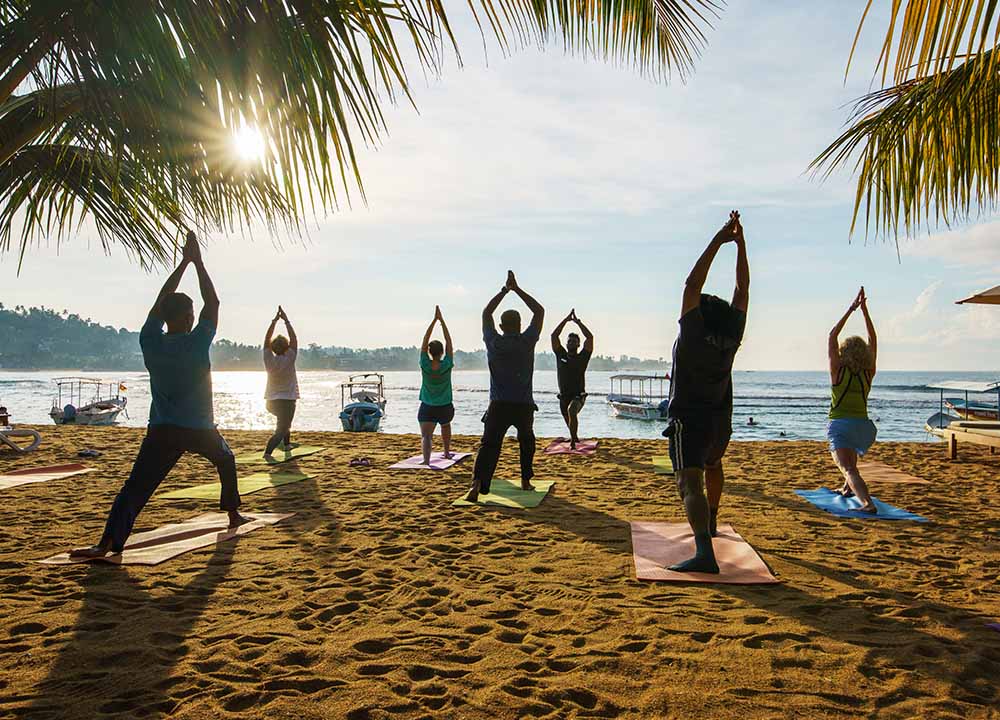
You’ll find Hatha, Vinyasa, and Yin yoga alongside offerings like Ayurvedic massage, surf-and- yoga packages, and detox programs. The teaching is a mix of Indian and international instructors, and the overall quality is solid if less consistent than Rishikesh.
Goa is strongest when you want yoga as part ofa larger relaxation experience rather than the central focus.
The vibe
Goa is the most laid-back of the three. The beach culture creates a holiday atmosphere that’s hard to resist. You can do a morning yoga class, spend the afternoon swimming or reading on the beach, eat fresh seafood at a shack at sunset, and be in bed by nine. Unlike Rishikesh, alcohol is widely available, and the food is both vegetarian and non-vegetarian.
The social scene varies by area. Arambol has a bohemian, backpacker energy. Palolem is more family-friendly. South Goa is quieter and more upscale. Choose your beach based on the vibe you want.
The cost
Goa falls between Rishikesh and Bali. A week-long retreat ranges from $400 to $1,200 USD. Beach accommodation and food are affordable, and the overall cost of a Goa trip is lower than Bali but slightly higher than Rishikesh for equivalent retreat quality.
Best for
People who want a beach vacation with meaningful yoga. Those who prefer a shorter retreat (three to five days). Travelers who want flexibility to combine yoga with other activities. Anyone who finds Rishikesh too intense or Bali too commercial.
Side-by-Side Comparison
Depth of yoga practice
Rishikesh: Deep. Classical. Comprehensive. Bali: Moderate. Modern. Asana-focused. Goa: Light to moderate. Relaxation-focused.
Accommodation style
Rishikesh: Simple to mid-range. Ashram-style common. Bali: Mid-range to luxury. Boutique retreats common. Goa: Beach huts to mid-range resorts.
Food
Rishikesh: Vegetarian only. Simple, sattvic, nourishing. Bali: Plant-based wellness cuisine. Café culture. Goa: Mixed. Seafood, Indian, international.
Alcohol
Rishikesh: Not available (holy city). Bali: Widely available. Goa: Widely available.
Digital detox potential
Rishikesh: High. Minimal distractions. Bali: Low. Ubud is a digital nomad hub. Goa: Moderate. Depends on your discipline.
Best season
Rishikesh: September – November, February – April. Bali: April – October (dry season). Goa: November – March.
Read More: Why Rishikesh Is the Ideal Destination for a Healing Retreat: Beyond Yoga and Into Ayurveda
So Which One Should You Choose?
This comes down to a single honest question: what do you actually need right now? If you need to go deep — to strip away distractions, study the roots of yoga, and come home genuinely changed — Rishikesh is where you belong. It’s not the prettiest option or the most comfortable one, but it’s the most real. There’s a reason practitioners have been making the journey to this specific stretch of the Ganges for centuries. The tradition here isn’t manufactured — it’s inherited.
If you need a wellness recharge with great food, beautiful surroundings, and a vibrant social scene, Bali will deliver exactly that.
If you need a beach holiday with enough yoga to make it feel meaningful, Goa is your answer. There’s no wrong choice. But there is a right-for-you choice.
If Rishikesh is calling, explore the retreat programs at Om Setu yogashala to find a program that matches your experience level and goals. From week-long immersions to extended two-week retreats, there’s a path designed for wherever you are in your practice.
Once you’ve picked Rishikesh, here’s how to choose the right retreat here.