A friend of yours went to Bali and came back glowing. Another spent a week at a wellness resort in Portugal and couldn’t stop talking about the sound baths and organic meals. Your coworker just returned from an Ayurveda retreat in Rishikesh and says, with an unsettling amount of conviction, that it changed her life. They all call it a “retreat.” They all look better afterward. So what’s actually different?
The answer isn’t about which is “better” in some universal sense. It’s about understanding what each type of experience is designed to do — and being honest about what you’re actually looking for. Because booking the wrong type of retreat for your needs isn’t just a waste of money. It’s a missed opportunity to get the specific kind of rest, healing, or transformation you actually need right now.
Let’s break this down honestly.
The Fundamental Philosophy: Relaxation vs. Recalibration
Modern wellness retreats — the ones you’ll find in Bali, Costa Rica, Ibiza, the Maldives, and increasingly across Europe and the US — are primarily designed around relaxation, self-care, and temporary escape. They do this exceptionally well. You’ll sleep in beautiful rooms, eat carefully prepared meals, move your body in scenic settings, and disconnect from the demands of daily life. You’ll leave feeling rested, recharged, and ready to return to your routine.

The operating assumption is that your routine is fundamentally fine — you just need a break from it.
A traditional Ayurveda retreat operates from a completely different premise. It assumes that your routine, your diet, your sleep patterns, your stress responses, and your relationship with your own body may have drifted out of alignment with your natural constitution. The retreat isn’t designed to give you a break from your life. It’s designed to help you understand why your life is making you unwell, and to initiate a physiological reset at the root level.
This isn’t a philosophical difference you can gloss over. It determines everything — from what you eat, to what happens during treatments, to how you feel when you leave, to how long the effects last.
Diagnosis vs. Menu: How Your Program Gets Designed
At a modern wellness retreat, you typically choose your experience from a menu. Spa treatments, yoga class styles, excursion options, meal plans — you curate your itinerary based on preference. This feels empowering and enjoyable, and it works perfectly for general relaxation and self-care.
At a traditional Ayurveda retreat, your program is prescribed — not chosen.
On arrival (or ideally before, via a pre-retreat questionnaire), you sit with a qualified Ayurvedic physician for a comprehensive consultation. This isn’t a casual chat about your preferences. Wellness Retreats It’s a clinical assessment that typically includes nadi pariksha (pulse diagnosis), examination of your tongue, eyes, skin, and nails, a detailed review of your medical history, digestive patterns, sleep quality, emotional tendencies, menstrual health (for women), and lifestyle habits.
From this assessment, the practitioner determines your prakriti (innate constitutional type), your vikriti (current imbalance), and the specific organs, tissues, and systems that need attention. Your treatment plan — which therapies, which herbal medicines, which dietary modifications, which yoga practices — is built entirely around this diagnosis.
Two guests at the same Ayurvedic retreat with similar-sounding complaints (“I’m tired all the time”) might receive entirely different treatment protocols. One might receive warming, stimulating treatments with heating herbs and dynamic yoga. Wellness Retreats The other might receive cooling, calming therapies with sedative herbs and restorative postures. Because in Ayurveda, the same symptom can arise from completely different root causes, and treating the symptom without addressing its origin is considered incomplete medicine.
This diagnostic precision is the single biggest differentiator. It’s also why authentic Ayurvedic retreats require practitioners with genuine clinical training — not weekend-certified wellness coaches, but physicians with years of supervised clinical practice.
The Treatment Experience: Pampering vs. Medicine
Let’s talk about what actually happens on the treatment table.
A spa treatment at a wellness resort is designed to feel good. Full stop. The pressure, temperature, scent, and duration are calibrated for your sensory pleasure. Wellness Retreats You’re the customer, and your comfort is the priority. The therapeutic benefits — improved circulation, reduced muscle tension, lower cortisol — are real but secondary to the experience itself.
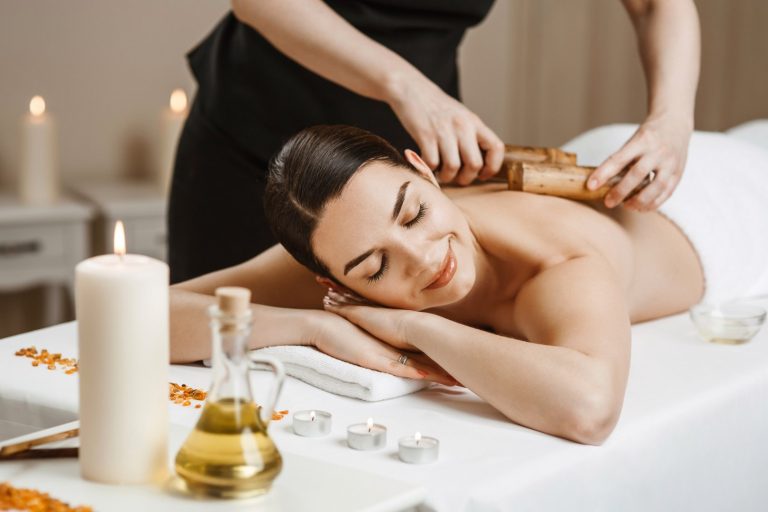
An Ayurvedic treatment is designed to produce a specific physiological outcome. It may also feel wonderful — many guests describe Abhyanga (warm oil massage) and Shirodhara (warm oil poured continuously on the forehead) as some of the most deeply relaxing experiences of their lives. But the warmth of the oil, the rhythm of the strokes, the specific herbal formulation infused into the oil, and the duration of the treatment are all determined by your diagnosis, not your preference.
Some Ayurvedic treatments are genuinely uncomfortable. Wellness Retreats Nasya (nasal administration of medicated oils) can make your eyes water. Vamana (therapeutic emesis) is exactly what it sounds like. Virechana (purgation therapy) will have you spending a full day near a bathroom. Wellness Retreats These aren’t spa experiences. They’re medical procedures performed with therapeutic intent, supervised by trained practitioners, and preceded by days of careful preparation.
The difference in approach also extends to aftercare. A wellness spa might suggest you drink water and rest for an hour. After an Ayurvedic treatment session, you’ll receive specific instructions: Wellness Retreats what to eat (and what to avoid), how long to rest, whether to bathe or not, which activities to skip, and when to sleep. These post-treatment protocols aren’t suggestions — they’re integral to the therapeutic outcome.
Food as Medicine vs. Food as Experience
This is where the contrast becomes most visible on a daily basis.
Wellness retreats typically offer beautiful, Instagram-worthy meals. Think acai bowls, avocado toast on sourdough, cold-pressed juices, poké bowls, and artisanal coffee. Wellness Retreats The food is delicious, photogenic, health-conscious by Western standards, and designed to make you feel like you’re treating yourself well. And nutritionally, these meals are often excellent.

At a traditional Ayurveda retreat, food is medicine. Literally.
Your meals are prescribed based on your dosha, your current imbalance, and the stage of your treatment. During the preparatory phase of Panchakarma, you might eat nothing but khichdi—a simple rice and lentil porridge — for several days. Wellness Retreats Not because the kitchen can’t do better, but because khichdi is the easiest food for the human digestive system to process, and during deep detoxification, digestive energy needs to be conserved for internal cleansing rather than spent on breaking down complex meals.
Meals at an Ayurvedic retreat are warm, cooked, spiced with purpose (turmeric for inflammation, cumin for digestion, coriander for cooling), and served at consistent times to support your body’s natural rhythmic cycles. Wellness Retreats Cold foods and raw salads — staples of Western health culture — are generally minimized because Ayurveda considers them harder to digest and counterproductive during treatment.
Is the food exciting? Not always. Is it satisfying? Deeply — often in ways that surprise guests who are accustomed to needing variety and stimulation at every meal. Wellness Retreats There’s something quietly powerful about eating the same simple, nourishing meal for days and noticing how your digestion, energy, and mental clarity respond. It resets your relationship with food at a level that no nutrition book can replicate.
Duration and Depth: A Weekend vs. a Commitment
Modern wellness retreats often run for three to five days. Wellness Retreats Some offer weekend packages. The model is designed to fit into busy schedules and deliver a noticeable mood boost within a short window. And it works — for what it is.
Ayurvedic retreats require more time. The classical texts recommend a minimum of seven days for meaningful results, with fourteen to twenty-one days considered optimal for Panchakarma. This isn’t arbitrary gatekeeping. Wellness Retreats The preparation phase alone (oleation and sweating therapies to loosen deep-seated toxins) takes three to five days. The active treatment phase needs another five to ten days. Wellness Retreats The post-treatment rejuvenation and dietary reintroduction phase requires at least three to five more.
Compressing this process into a long weekend isn’t just impractical — it’s medically inadvisable. Mobilizing toxins without adequate time for elimination and recovery can leave you feeling worse than when you started.
This time requirement is both the strength and the barrier of Ayurvedic retreats. It demands that you take your healing seriously enough to invest real time. Wellness Retreats For people who are willing to commit, the depth of result is incomparable. For those who can only spare a few days, an honest Ayurvedic practitioner will tell you that a shorter yoga retreat may be more appropriate than a truncated Panchakarma program.
The Lasting Impact: Afterglow vs. After-change
Here’s the question that matters most: what happens when you go home?
After a wellness retreat, most people experience a genuine afterglow — improved mood, better sleep, renewed motivation — that lasts one to three weeks before gradually fading as daily routines reassert themselves. This isn’t a failure of the retreat. It’s the natural outcome of an experience designed for temporary relief.
After a well-conducted Ayurvedic retreat, the changes tend to be more structural. Your digestion operates differently. Your sleep patterns shift. Chronic symptoms that you’d accepted as “just part of life” — acid reflux, skin issues, joint stiffness, brain fog, menstrual irregularity — often reduce significantly or resolve entirely. Your food cravings change. Your stress threshold increases.
These aren’t placebo effects. They’re the result of a systematic detoxification and recalibration process that addresses imbalance at the tissue level. Published research, including studies in the Journal of Alternative and Complementary Medicine, has documented measurable reductions in lipid peroxides and improvements in metabolic markers following Panchakarma treatment.
The catch is that sustaining these results requires following the post-retreat lifestyle guidelines — called pathya — that your practitioner prescribes. Wellness Retreats This includes specific dietary recommendations, daily routine modifications, seasonal adjustments, and sometimes ongoing herbal supplementation. The retreat initiates the change. Your daily choices determine whether it lasts.
So Which One Is Right for You?
Ask yourself one honest question: What do I actually need right now?
If you need rest, beauty, pleasure, and a reset from the grind of daily life — a modern wellness retreat is a wonderful choice. Pick a beautiful destination, choose the activities that excite you, and enjoy the experience fully and without guilt.
If you’re dealing with persistent health issues, chronic stress patterns, digestive dysfunction, hormonal imbalance, or a deep sense that something in your body-mind system has gone off- track and surface-level solutions aren’t reaching it — a traditional Ayurveda retreat offers something fundamentally different. It requires more time, more surrender, and more honesty. Wellness Retreats But it works at a depth that relaxation alone cannot access.
And if you’re drawn to experiencing Ayurveda in its most authentic form — practiced by trained physicians, using locally sourced Himalayan herbs, integrated with yoga and meditation, in the environment where the tradition was born — an Ayurveda retreat in Rishikesh is worth serious consideration.
Not sure which style suits you? See what makes the best yoga retreat in Rishikesh for a side-by-side comparison.
Related Articles & Recommended Reading:
Both paths are valid. The only wrong choice is the uninformed one.