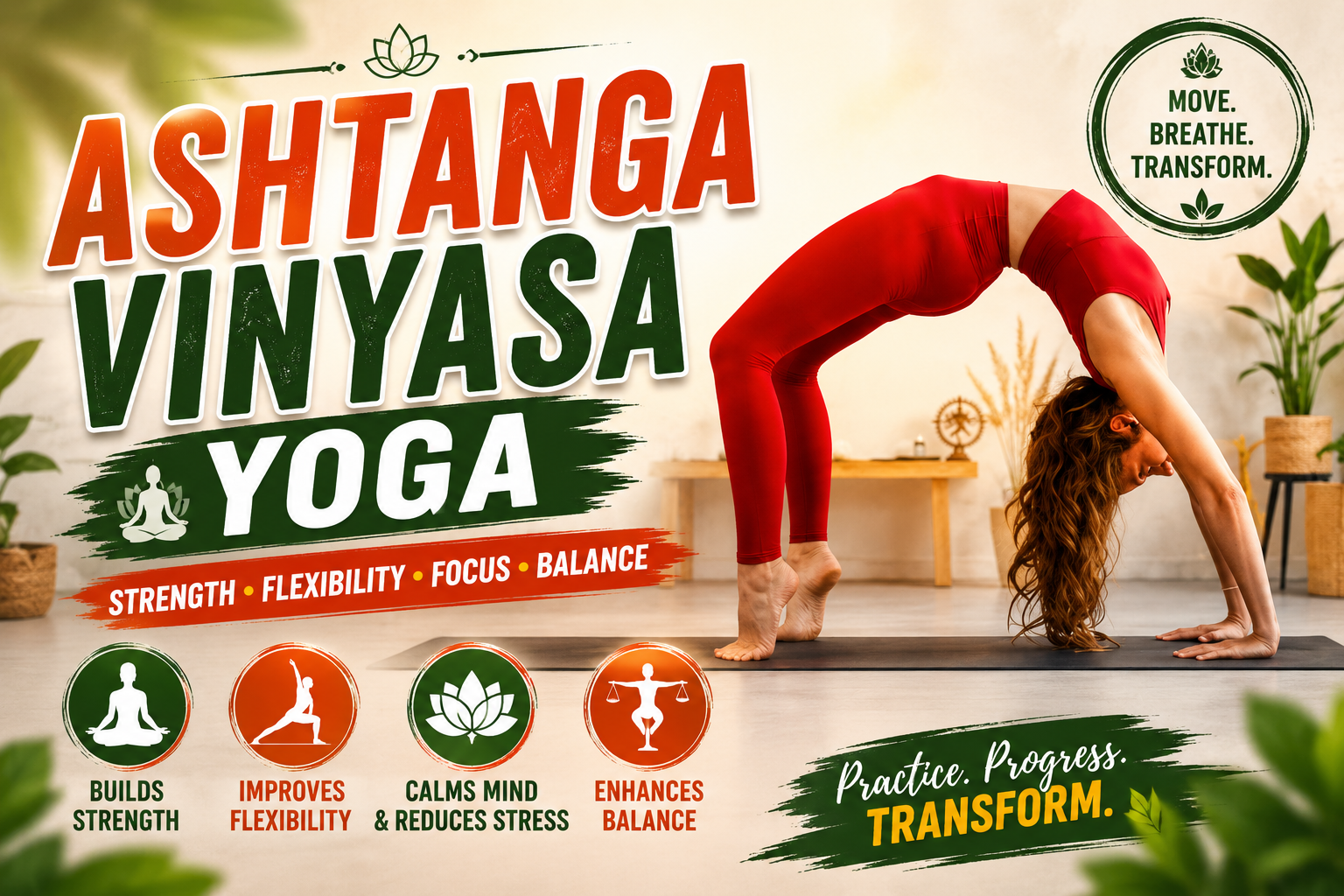
The yogic world is full of wisdom. It has a series of ancient knowledge. Yoga is a blessing to the world. It is a holistic way to achieve a disease-free life. This holistic practice is not just a five-minute morning routine; it is a lot more than that. It is an in-depth approach to heal the human race inside out. One of such practices in Yogic Classical texts is Ashtanga Vinyasa Yoga. Ashtanga Vinyasa yoga is an ancient practice that balances the inner energies of your body.
It unclogs the blockages within your energy channels and ensures the free flow of the life energy within. This helps in correcting the internal system of the body and ensuring one with the various health benefits. It harmonises the soul with the body and mind and helps in attaining longevity and daily energy. This yoga form is a part of Ashtanga Yoga. Constant practice of this yoga form can help you achieve the advanced stage of this beneficial yogic practice. This is beautiful and one of the most powerful ways to achieve wholesomeness. Let’s understand more about Ashtanga Vinyasa Yoga!
What is Ashtanga Vinyasa Yoga?
Popularly mentioned in various yogic texts, Ashtanga Vinyasa yoga can be called a subset of Ashtanga Yoga. In Patanjali, it is mentioned that Ashtanga is yoga to ensure various physical, mental, and soul benefits. Ashtanga yoga has eight limbs, and that is the reason it is known as ‘Ashtanga.
It is mentioned in the Ashtanga Vinyasa Yoga sequences. It is the subject of the third limb of Ashtanga Yoga, and that is Asana. It is a connected yoga sequence. It uses breathwork to stay connected and looks like a long yoga sequence. One needs a lot of practice to achieve the Ashtanga Vinyasa yogic wisdom.
Popularised by K Pattabhi Jois in the 20th century, Ashtanga Vinyasa yoga is a powerful sequence that is also known to heal the body, soul, and mind!
The Meaning of Ashtanga Yoga
Ashtanga Yoga is one of the most traditional yoga forms. Asht means eight, anga means limbs. This yoga has eight limbs. The third of the eight limbs of Ashtanga Yoga is Asana. It is an eightfold path of achieving holistic wellbeing. This yoga style is quite demanding and requires linking of movements (asanas) with breath and making it a long, flowing yoga sequence. Here, one has to switch from one pose to another. The transition is not abrupt but continuing.
Each transition has a unique way and reason. Every yoga pose connected to others with breathwork has a defined health benefit. This yoga style is a home where the Ashtanga Vinyasa Yoga lives. Ashtanga yoga is for power, flexibility, and strength. This yoga form ensures living consciously. This practice will make you self-aware! You will get to connect with your body more. You will be awakened and healthy!
Key Principles of Ashtanga Vinyasa
There are three core concepts of Ashtanga Vinyasa Yoga:
Yoga Chikitsa
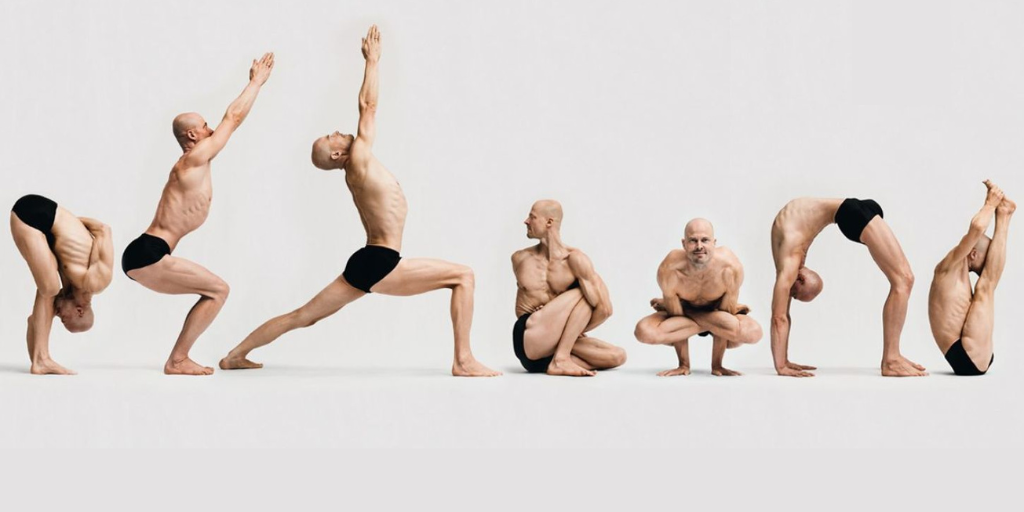
This is the primary and three-level purification series. It purifies the practitioner’s body, mind, and nervous system. This is also known as the Yoga Therapy of Health Yoga.
Nadi Shodhana

This is a method of purifying the nerves and various energy centres in the body. The aim is to give great health benefits. It also cleans the whole body! It includes similar progressions as in sitting, back-bending, surya namaskara, back-bending, and other similar advanced sequences.
Sthira Bhaga
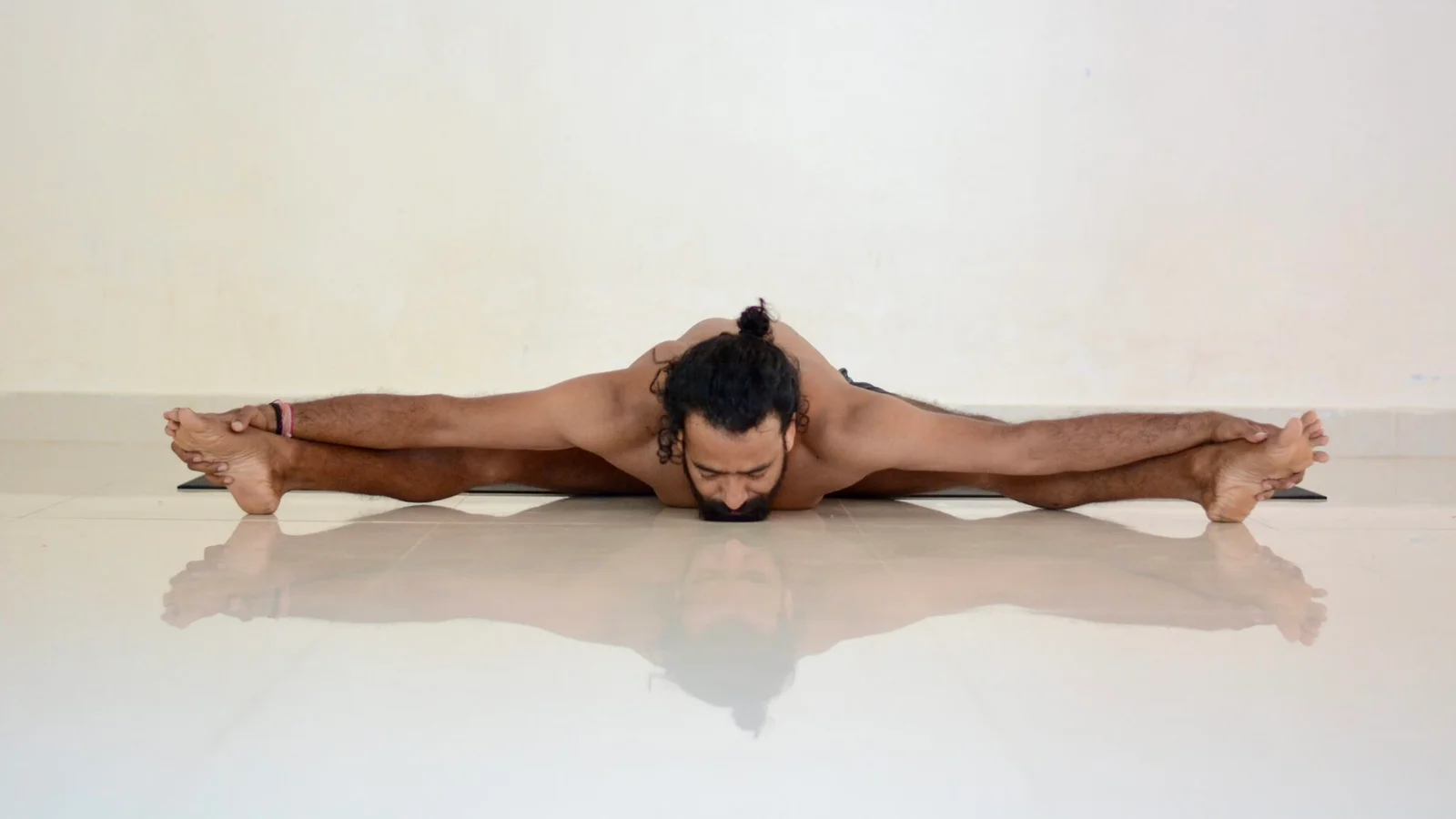
This is an advanced stage of Ashtanga Vinyasa flow. This stage requires several years of dedication and great levels of practice! There are four series: A, B, C, and D. This aims at centring the body, mind, and soul’s strength.
The Key component of Ashtanga Vinyasa Flow is Tristana! Tristana defines the three important places where one needs to give attention and perform the required action. These three things are:
1- The Breathing System: Firstly, the breathing work needs to be attended to and controlled. One should remain in one posture for five to eight breaths when in the ashtanga Vinyasa flow.
2- Drishti: It means where to focus while practising different asanas. There should be one point that a person should focus on while performing yoga asanas. There are nine Drishtis in Ashtanga. The nose, navel, thumb, hands, feet, towards the sky, between the eyebrows, left side, and the right side.
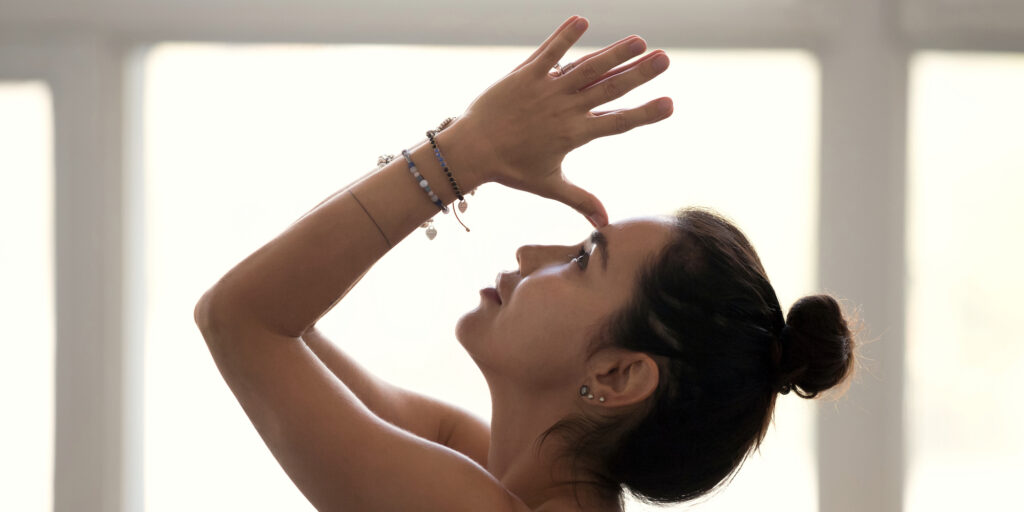
3- Bandhas: Bandha stands for ‘locks’ or ‘to bind’. Yoga says that we all have energy flow. While performing yoga, it flows upward through our spine into seventy-two hundred nadis. Nadis are the energy channels in our body. One should be aware of which bandha to involve in which pose and how to work on it in order to keep it activated and in good condition. The six Bandhas of our bodies are Mula Bandha, Jalndhara Bandha, Uddiyana Bandha, Hasta Bandha, Pada Bandha, and Maha Bandha.
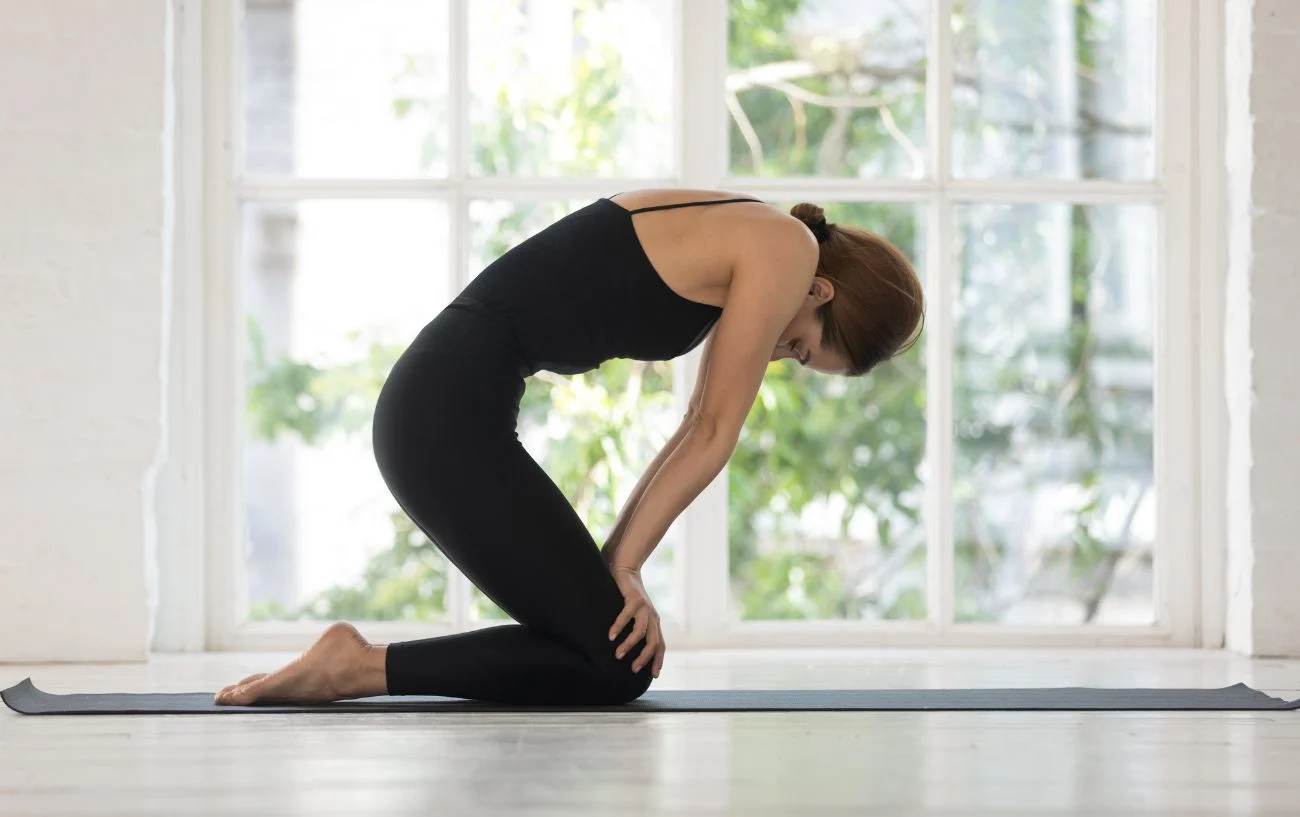
Physical Benefits of Ashtanga Vinyasa Flows
This yoga style helps in:
- Developing strength
- Improving body flexibility
- Opening up the various energy centres in the body and mind activates our energy channels.
- Ensure good energy flows within the body
- Improved blood circulation
- Helps in good weight management
- Strengthens the body’s immune system
- Shields against various health ailments
- Helps in building muscles naturally
- Helps burn out excess calories
- It improves the respiratory system and lung health
- It ensures strong gut health
- Detoxifies the body naturally
Besides physical benefits, it also clears and calms the mind. It activates the brain power and helps in maintaining great mental health.
Difference Between Ashtanga and Vinyasa Yoga.
Ashtanga loves structure and routine, whereas Vinyasa loves creativity and variety.
Ashtanga focuses on mastering the traditional yoga flow, whereas Vinyasa allows one to adapt practice as per one’s energy and mood.
Ashtanga involves clear milestones of progress, but Vinyasa involves a free-flowing, flowing sequence.
Ashtanga focuses more on yoga flows that meet the classical yoga philosophy, whereas Vinyasa focuses on flows targeting particular health benefits.
Ashtanga alone is physically demanding, whereas Vinayaa is for all energy levels.
Read More: AcroYoga for Every Body