Quick Guide: Marma Points & Marma Therapy at a Glance
- Sanskrit Term: Marma Sthana (मर्म स्थान — vital energy junctions / anatomical crossroads).
- Classical Source: Sushruta Samhita (Sharira Sthana, Chapter 6: Pratyeka Marma Nirdesha).
- Total Points: 107 classical anatomical points (often counted as 108 in yogic and southern traditions including Adhipati).
- The 3 Supreme Mahamarmas: Hridaya (Heart), Basti (Lower Abdomen / Bladder), and Shira (Head / Brain).
- Primary Modalities: Marma Abhyanga (medicated oil massage), light acupressure, Shirodhara, herbal pastes (Lepa), and pranic breath synchronization.
- Main Therapeutic Benefits: Dissolves stagnant Prana, calms Vata nervous agitation, relieves musculoskeletal pain, balances endocrine organs, and restores restorative sleep.
- Key Safety Rule: Marmas are sensitive bio-energetic hubs. Stimulation must always be gentle and rhythmic; forceful compression is strictly avoided in classical Ayurveda.
In the ancient science of Ayurveda, the human body is understood as an intricate matrix of consciousness and matter. Long before modern science mapped the neuromuscular junctions and lymphatic watersheds, ancient Ayurvedic seers identified 107 vital energy crossroads known as Marma points (मर्म स्थान).
The Sanskrit word Marma originates from the root “Mru”, which signifies that which is vulnerable, sensitive, or life-sustaining. Classical treatises describe a marma point as an anatomical bridge where physical tissue merges with Prana (the subtle life-force energy). When energy flows freely across these points, the body exhibits vitality, resilience, and emotional poise. When physical injury, chronic stress, or toxic accumulation (Ama) obstructs a marma, physical pain and systemic disharmony inevitably follow.
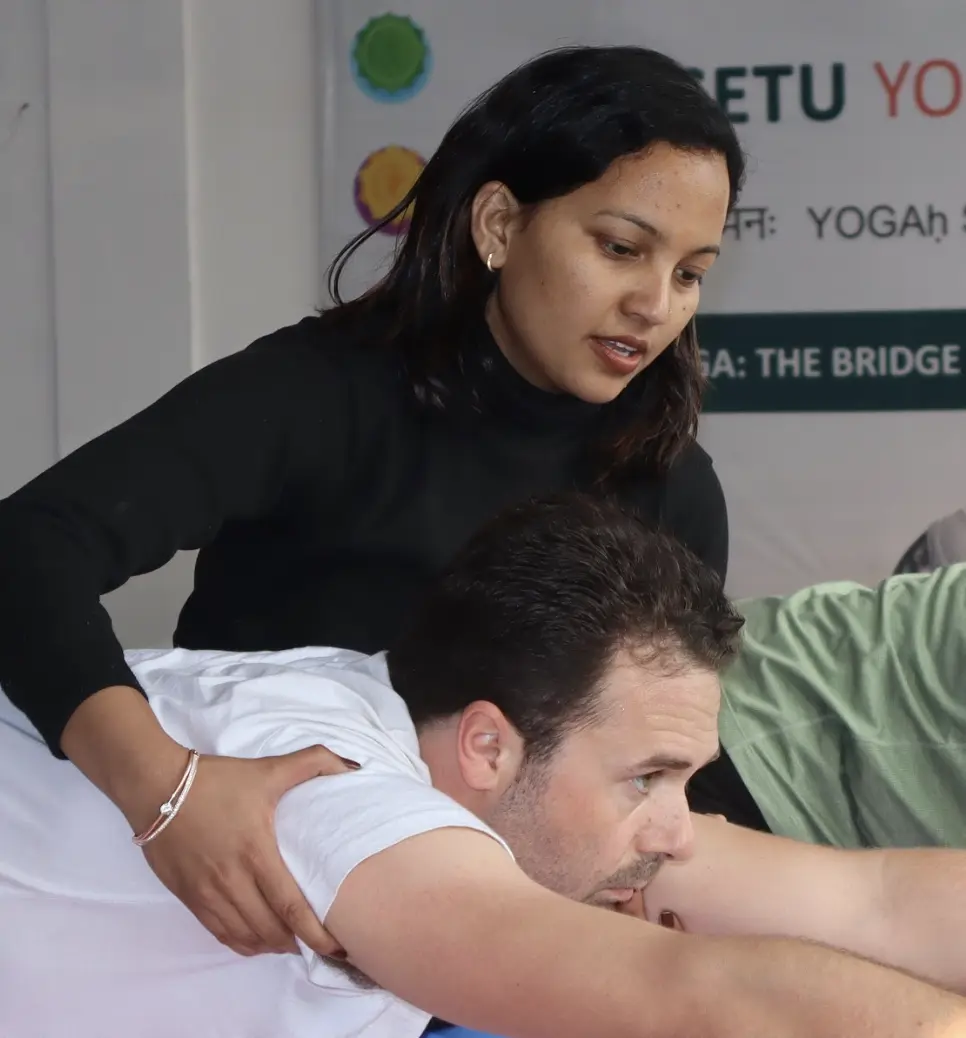
Through Marma Therapy (Marma Chikitsa), trained practitioners utilize gentle touch, warm herbal oils, herbal poultices, and focused breathwork to clear blockages, harmonize the three Doshas (Vata, Pitta, Kapha), and stimulate spontaneous self-healing. At our Ayurveda Retreat in Rishikesh, marma therapy serves as a core therapeutic pillar alongside authentic Panchakarma bodywork.
What Are Marma Points? The Classical Anatomical Definition
The foundational authority on Ayurvedic surgery and anatomy, Acharya Sushruta, documented the detailed science of marmas in the Sushruta Samhita over 2,500 years ago:
“मर्माणि नाम मांस सिरा स्नायु अस्थि सन्धि संनिपाताः। तेषु स्वभावत एव विशेषात् प्राणास्तिष्ठन्ति॥”
— Sushruta Samhita, Sharira Sthana (6.16)
Translation: “Marma points are the specific junctions where five anatomical structures meet: Mamsa (muscles), Sira (vessels and veins), Snayu (ligaments and tendons), Asthi (bones), and Sandhi (joints). In these locations, Prana (vital life essence) naturally and specifically resides.”
Because these five biological structures converge at a marma, an injury to these points can cause severe physiological dysfunction or even loss of consciousness. Conversely, when handled with therapeutic care, stimulating a marma sends neuro-reflexive signals through the central nervous system, releasing cellular holding patterns and flushing metabolic waste from the deep connective tissues.
The 5 Anatomical Classifications of Marma Points
Ayurveda classifies the 107 marma points based on the predominant anatomical tissue (*Rachananusara*) present at the junction:
| Tissue Category | Total Points | Primary Structure | Representative Points |
|---|---|---|---|
| Mamsa Marma | 11 | Muscle tissue & myofascial layers | Talahridaya (palms/soles), Indrabasti (calf/forearm) |
| Sira Marma | 41 | Blood vessels, arteries, veins & fluid pathways | Matrika (carotid region), Sthapani (glabella), Hridaya |
| Snayu Marma | 27 | Ligaments, tendons & deep aponeuroses | Kshipra (finger/toe webs), Ani, Kurpara |
| Asthi Marma | 8 | Bony contours & cranial landmarks | Katikataruna (pelvic bones), Shankha (temples), Nitamba |
| Sandhi Marma | 20 | Joint articulations & synovial junctions | Janu (knee), Gulpha (ankle), Manibandha (wrist) |
| Total Count | 107 | Plus Adhipati (Crown Center) counted as the 108th supreme point in yogic marma lineages | |
Regional Distribution: Where Are the 107 Marma Points Located?
To systematically locate and treat the marmas, Sushruta organized them across five primary body territories (Shadanga Sharira):
- Head and Neck (Shiro-Greeva) — 37 Points: This region holds the dense concentration of sensory marmas, cranial nerves, and pineal-pituitary relays. Important points include Sthapani (Third Eye), Adhipati (Crown), Shankha (Temples), and Manya (Neck).
- Upper Extremities (Urdhwa Shakha / Arms & Hands) — 22 Points: 11 points on each arm. These regulate cardiac rhythm, thoracic respiration, motor dexterity, and shoulder mobility. Key points include Talahridaya (Palm Center), Kshipra (Thumb-index web), and Kurpara (Elbow joint).
- Lower Extremities (Adha Shakha / Legs & Feet) — 22 Points: 11 points on each leg. These govern locomotion, pelvic stability, grounding, and lower spinal alignment. Notable points include Talahridaya (Sole of foot), Gulpha (Ankle), and Janu (Knee).
- Chest and Abdomen (Uras & Udara) — 12 Points: Covering the vital organs of respiration and assimilation. Key points include Hridaya (Center of chest), Nabhi (Umbilicus), and Stanamula (Base of chest).
- Back and Spine (Prishta) — 14 Points: Anchored along the vertebral column and sacred sacral-iliac junction. These include Katikataruna (Hip/Sacrum), Kukundara (Sacroiliac joint), and Brihati (Upper back).
The 3 Supreme Mahamarmas: Pillars of Life & Consciousness
While all 107 points are functionally significant, classical Ayurvedic masters (including Acharya Charaka in the Charaka Samhita, Siddhi Sthana Chapter 9) singled out three master crossroads known as the Trimarmas or Mahamarmas. Injury or energetic collapse in any of these three areas directly threatens physical existence:
1. Shira (The Head / Crown)
Energetic Seat: Prana Vayu, Tarpaka Kapha, and the Ajna/Sahasrara Chakras.
The head is the master control room of sensory perception, motor coordination, and consciousness. Protecting and nourishing Shira through gentle scalp marma abhyanga and Shirodhara relieves insomnia, anxiety, migraines, and cognitive burnout.
2. Hridaya (The Heart Center)
Energetic Seat: Sadhaka Pitta, Avalambaka Kapha, and Ojas (Vital Immunity).
Located at the center of the chest, Hridaya is not only the physical pump of life-giving blood, but also the emotional seat of consciousness and deep contentment. Gentle attention here dissolves deep-seated grief and soothes chest tightness.
3. Basti (The Lower Pelvic Center)
Energetic Seat: Apana Vayu and the Muladhara/Svadhisthana Chakras.
Encompassing the lower urinary bladder, pelvic floor, and colon region, Basti governs waste elimination, reproductive vitality, and fluid equilibrium. Keeping this zone balanced relieves constipation, menstrual cramping, and chronic lower back stiffness.
5 Key Marma Points for Daily Self-Care & Stress Relief
While deep surgical and therapeutic Marma interventions require clinical expertise, several prominent points can be safely gently massaged at home to reset the nervous system:
- Sthapani Marma (Third Eye Center): Located precisely between the eyebrows directly above the bridge of the nose. Gently circling this point with a drop of warm Brahmi oil or sesame oil calms restless thoughts, relieves ocular fatigue from screens, and induces deep sleep.
- Adhipati Marma (Crown of the Head): Located eight finger-widths above the eyebrows at the top-center of the skull. Applying light pressure with the palm or middle finger grounds scattered mental energy, alleviates high blood pressure symptoms, and restores spiritual equanimity.
- Talahridaya Marma (Center of the Palm & Sole): Situated right in the hollow of the palm and the upper-middle arch of each foot sole. Stimulating Talahridaya with warm oil boosts circulation, draws excess heat away from the head, and grounds emotional shock.
- Kshipra Marma (Web of Hand & Foot): Found in the soft webbing between the thumb and index finger (and big toe and second toe). Massaging Kshipra enhances lymphatic drainage, supports respiratory depth, and eases acute headaches.
- Nabhi Marma (The Navel): The geometric center of the physical body. Gentle clockwise circling around the umbilicus with warm castor or sesame oil regulates Samana Vayu, enhances nutrient assimilation, and dissolves abdominal bloating.
Classical Methods of Marma Therapy in Ayurveda
Ayurvedic physicians employ several specialized techniques to stimulate, cleanse, and unblock the marma points depending on a person’s Prakriti (constitution) and current Vikriti (imbalance):

1. Marma Abhyanga (Medicated Oil Massage)
The primary and most soothing modality in Ayurvedic clinics. Practitioners apply warm, herb-infused oils such as Mahanarayan Taila, Ksheerabala Taila, or Dhanwantharam Taila directly over the points using circular clockwise strokes. The oil penetrates deep into the myofascial fibers, lubricating the ligaments and dissolving stored stress toxins.

2. Shirodhara (Continuous Medicated Stream)
A continuous, rhythmic stream of warm herbal oil, medicated milk (Ksheeradhara), or buttermilk (Takradhara) is directed precisely across Sthapani Marma on the forehead. This continuous tactile flow creates alpha brainwave synchrony, releasing deep psychiatric trauma, neurological fatigue, and chronic insomnia.

3. Upanaha & Lepa (Herbal Pastes & Warm Poultices)
For marmas afflicted with chronic stiffness or localized inflammation (such as Janu Marma in the knees or Gulpha Marma in the ankles), warm pastes composed of Ashwagandha, Ginger, Castor root, and Turmeric are applied and wrapped. The warmth draws out accumulated coldness and relieves arthritic pain.

4. Agni Karma (Targeted Thermal Stimulation)
An ancient Ayurvedic procedure where controlled, precise heat is applied through specialized metallic probes (Panchadhatu Shalaka) near congested marma points. This rapidly relieves chronic muscular spasm, calcification, and tendonitis by resetting local nerve pain thresholds.

5. Rakta Mokshana (Micro-Circulatory Detoxification)
In cases of severe inflammatory heat or Pitta stagnation affecting specific marma junctions, clinical blood-purification techniques (such as therapeutic leech therapy or Siravedha) are performed under sterile conditions by experienced Ayurvedic doctors to alleviate intractable swelling and localized pain.

6. Acupressure & Pranic Touch
Gentle, sustained fingertip pressure applied to the exact center of the marma for 1 to 3 minutes, synchronized with deep diaphragmatic breathing. This unblocks the nadis and redirects fresh arterial blood into the surrounding tissue.
Step-by-Step: How to Practice Marma Self-Massage at Home
Practicing gentle marma self-massage takes only 10 to 15 minutes each day and provides a profound reset for your nervous system. Follow these classical practitioner guidelines:
- Choose Your Medicated Oil: Select an organic carrier oil matched to your constitutional need:
- Vata Imbalance (dryness, anxiety, joint stiffness): Warm Sesame oil, Mahanarayan oil, or Ashwagandha oil.
- Pitta Imbalance (inflammation, irritability, excess body heat): Coconut oil, Brahmi oil, or Chandanadi oil.
- Kapha Imbalance (congestion, fluid retention, heaviness): Mustard oil or Eucalyptus-infused sesame oil.
- Find a Quiet, Grounded Posture: Sit in an upright, relaxed seated posture (Sukhasana or Vajrasana) with your spine elongated. Take five slow, deep belly breaths to steady your mental focus.
- Warm the Oil: Rub a few drops of warm oil between your palms until friction generates gentle soothing warmth.
- Apply Rhythmic Circular Motion:
- Clockwise Circles (5–7 rotations): Tonifies, strengthens, and directs Prana into weakened tissues.
- Counter-Clockwise Circles (5–7 rotations): Pacifies, detoxifies, and disperses excess heat or trapped nervous tension.
- Apply Steady Sustained Pressure: Place the pad of your thumb or middle finger gently on the center of the marma. Inhale deeply, hold a soft pressure for 3 to 5 seconds, and exhale while softening your touch. Repeat for 3 to 5 breath cycles.
- Rest in Receptive Stillness: Conclude by sitting quietly for 2 minutes, noticing the warmth, tingling sensation, and calmness radiating across your physical frame.
Proven Health Benefits of Marma Therapy
Regular marma therapy produces verifiable improvements across physical, emotional, and energetic health:
- Myofascial Pain Relief: By releasing tension at the exact intersections of tendons and bones, marma therapy relieves chronic cervical pain, sciatica, frozen shoulder, and joint stiffness.
- Autonomic Nervous System Regulation: Marma stimulation lowers elevated sympathetic tone (fight-or-flight) and enhances parasympathetic vagal activity, reducing cortisol and blood pressure.
- Optimized Lymphatic Drainage: Rhythmic pressure flushes cellular waste and lymphatic fluid from stagnation zones, reducing peripheral edema.
- Digestive Vitality (Agni Deepana): Abdominal marma points restore peristaltic rhythm, soothing bloating, acid reflux, and chronic sluggish bowels (complemented by poses in our guide on Yoga Asanas for Constipation).
- Restoration of Sound Sleep: Massaging cranial marmas (*Sthapani* and *Adhipati*) stimulates the pineal gland, harmonizing melatonin production and dissolving sleep disturbances.
Safety Rules & Contraindications
Because marmas are high-voltage pranic hubs, observe these vital safety precautions:
- Never Use Aggressive Force: Marma points require subtle tactile resonance, not deep painful bruising. If an area feels acutely sore or throbbing, reduce pressure immediately.
- Avoid During Acute Fever or Infection: In the presence of acute febrile illness or active infections, stimulating marmas can disperse toxins deeper into systemic circulation.
- Pregnancy Precautions: Pregnant women must avoid deep stimulation of lower abdominal, pelvic, and ankle marmas (such as *Gulpha* and *Talahridaya*) because they strongly stimulate downward-moving *Apana Vayu*, which can trigger uterine contractions.
- Avoid Directly Over Broken Skin or Varicose Veins: Never apply pressure directly onto open lesions, swollen varicose veins, or recent surgical sites.
Frequently Asked Questions About Marma Points & Marma Therapy
What is the difference between Marma points and acupuncture points?
While both systems map energetic pathways (Ayurvedic Nadis and Chinese Meridians), Marma points are anatomical crossroads encompassing muscles, vessels, ligaments, bones, and joints. Marma therapy primarily uses warm medicated herbal oils, fingers, and hands to harmonize the three Doshas, whereas acupuncture relies on fine needles inserted along meridian lines.
How many Marma points are there in the human body?
According to classical Ayurvedic surgery in the Sushruta Samhita, there are exactly 107 marma points categorized into five body regions: 37 in the head and neck, 22 in the arms, 22 in the legs, 12 in the chest and abdomen, and 14 along the back. In southern traditions and yogic lineages, the crown center (*Adhipati*) is highlighted to bring the total to 108.
Can Marma therapy help relieve chronic back and neck pain?
Yes. Marma therapy is exceptionally effective for musculoskeletal discomfort. Gentle stimulation of spinal points like Katikataruna and Kukundara releases hypertonic deep postural muscles, reduces nerve impingement, and restores natural synovial lubrication to vertebral joints.
Which oil is best for Marma massage?
Warm, unrefined organic sesame oil is the universal base for Vata balance and pain relief. For inflammatory conditions or excess mental heat (Pitta), cool Brahmi or coconut oil is preferred. For stubborn joint stiffness, classical Ayurvedic formulations like Mahanarayan Taila or Dhanwantharam Taila yield optimal therapeutic penetration.
Can beginners practice Marma self-massage safely?
Yes, provided you focus on safe exterior points such as Sthapani (Third eye), Adhipati (Crown), and Talahridaya (Palms and soles) using mild, rhythmic pressure and warm oil. Deep manipulative therapy on vulnerable cervical or abdominal points should only be performed by a qualified Ayurvedic doctor.
Experience Doctor-Guided Marma Healing in Rishikesh
Whether you are seeking physical recovery through residential Ayurvedic Panchakarma or want to become certified in classical Marma Therapy, Om Setu Yogashala hosts immersive programs guided by traditional Himalayan doctors by the sacred Ganga.
Related Articles & Recommended Reading:
Medical Disclaimer: This guide is intended solely for educational and traditional study purposes and does not constitute medical advice. If you suffer from cardiovascular pathology, acute systemic infection, or are pregnant, consult a qualified healthcare provider or Ayurvedic doctor before undergoing intensive marma therapy.