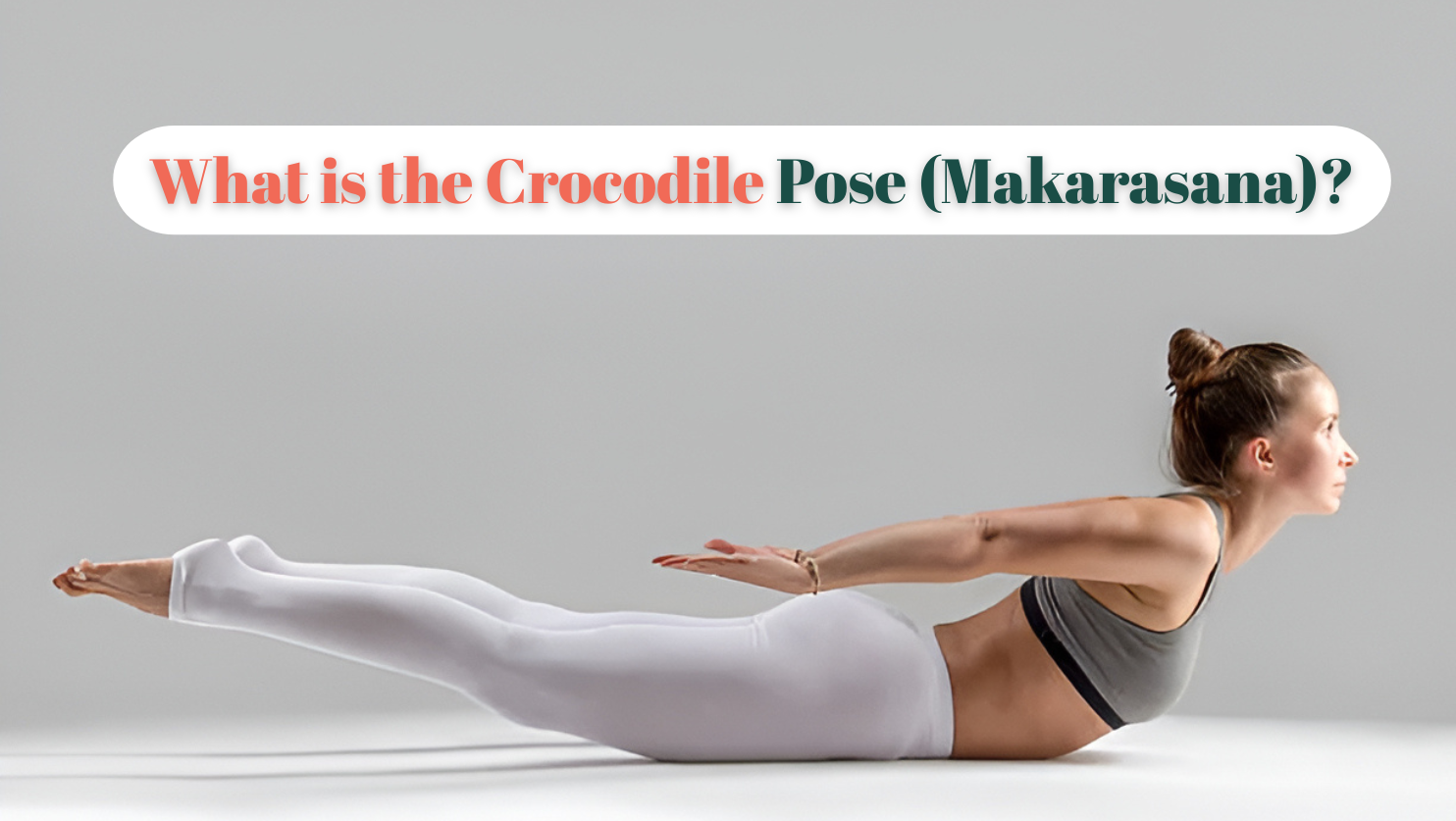
Quick Guide: Makarasana (Crocodile Pose)
- Sanskrit Name: Makarasana (मकरासन) — Makara (Crocodile / Mythic Sea Creature) + Asana (Posture).
- Classical Source: Gheranda Samhita (Chapter 2, Verse 40).
- Pose Type: Prone restorative posture (lying face down).
- Primary Therapeutic Value: Spinal decompression, sciatica and cervical relief, diaphragmatic breath retraining, and vagal nerve activation.
- Ideal Practice Time: 3 to 10 minutes, either between intense prone backbends (Cobra/Bow), as a dedicated stress-relief practice, or before Pranayama.
Most yoga practitioners are familiar with Shavasana (Corpse Pose) as the ultimate restorative posture. Yet for individuals with lower-back compression, hyperlordosis, tight psoas muscles, or chronic anxiety, lying flat on the back can actually increase tension in the lumbar spine and encourage shallow chest breathing.
This is where Makarasana (Crocodile Pose) becomes an irreplaceable yogic medicine. Practiced lying flat on the abdomen with the forehead rested upon folded arms or the chin supported in the palms, Makarasana transforms the floor into an alignment tool. By gently resisting anterior belly expansion, it directs the breath into the posterior lower ribs and lumbar region, decompressing the spine and calming the central nervous system within minutes.
What is Makarasana? (Sanskrit Roots & Classical Shastras)
In Sanskrit, Makara (मकर) denotes a legendary aquatic creature—often depicted as a crocodile or a blend of sea creatures—associated with Varuna, the Vedic lord of water, and Kama, the deity of desire. The posture is named after the crocodile because it embodies the reptile’s signature stillness: resting motionless on the riverbank, breathing imperceptibly, yet deeply alert and grounded.
While Patanjali does not mention individual asana names in the Yoga Sutras, Makarasana is formally codified in the classical text Gheranda Samhita:
अधःकायं शिरोऽभ्युच्चं पादौ च विस्तृतौ कुरु ।
कराभ्यां धारयेन्मूर्ध्नं मकरासनमुच्यते ॥ २.४० ॥“Adhah-kayam shiro’bhyuchcham padau cha vistritau kuru |
Karabhyam dharayen-murdhnam makarasanam uchyate || 2.40 ||”
Translation: “Lying prone with the chest and head gently elevated, spread both legs wide. Support the head with both arms or hands. This posture is celebrated as Makarasana.”
The Biomechanics: Why Makarasana Relieves Back Pain Better Than Shavasana
When you lie face down in Makarasana, three remarkable physiological mechanisms take place simultaneously:
1. 360-Degree Posterior Diaphragmatic Breathing
In a standard standing or seated position, human beings frequently fall into paradoxical or chest-dominated breathing. When lying prone on the mat, the anterior abdominal wall is compressed against the floor. As the diaphragm contracts downwards during inhalation, the abdominal contents cannot push forward—forcing the breath to expand laterally into the lower intercostal muscles and backward into the dorsal lung fields and kidneys. This 3-dimensional expansion gently massages the psoas major and the quadratus lumborum (QL) muscles from within.
2. Passive Decompression of the Sacrolumbar Spine
When the legs are separated with heels turned outward or inward, the pelvic floor and gluteal muscles disengage completely. The lumbar vertebrae (L1–L5) settle into a neutral, supported alignment, opening the intervertebral foramina and removing mechanical pinching from the sciatic nerve roots.
3. Vagal Tone & Nervous System Down-Regulation
The rhythmic mechanical contact between the abdomen and the floor stimulates the mechanoreceptors of the enteric nervous system and the abdominal vagus nerve branches. Within 90 to 120 seconds of conscious crocodile breathing, heart rate variability increases and the sympathetic fight-or-flight overdrive subsides.
Step-by-Step Alignment Guide: How to Practice Makarasana
There are two primary classical variations of Makarasana. Both are valid and serve complementary therapeutic goals:
Variation A: The Restorative Forehead Rest (For Lower Back & Stress Relief)
- Lie Prone: Lie flat on your stomach upon a comfortable yoga mat or folded blanket.
- Arm Placement: Cross your forearms across the front of your mat, grabbing opposite elbows or placing one palm flat over the other. Rest your forehead gently on your stacked forearms or wrists. Keep your neck elongated; do not crank your chin.
- Leg & Foot Positioning: Separate your legs comfortably, wider than hip-width apart (roughly mat-width). Allow your toes to point outwards with your heels turning inward toward each other (or alternatively, big toes touching with heels rolling outward—choose whichever variation allows your glutes and lower back to fully release).
- Breath Awareness: Close your eyes. Inhale slowly through your nose, feeling the belly push gently against the floor and your lower back visibly rise. Exhale smoothly, feeling the lumbar spine settle and soften.
- Hold Duration: Remain in this stillness for 3 to 7 minutes without fidgeting.
Variation B: The Supported Chin-Cup (For Cervical Spondylosis & Upper Spine)
- From a prone position, raise your head and upper chest slightly.
- Bring your elbows together onto the floor beneath your collarbones.
- Cup your chin in the palms of your hands with your elbows resting firmly on the mat.
- Allow the back of the neck to remain long and the gaze softened downward.
- Therapeutic Focus: This gentle passive thoracic extension restores the natural inward curvature (lordosis) of the cervical and lumbar spine, offering immense relief to desk workers suffering from forward head posture.
Top 7 Therapeutic Benefits of Crocodile Pose
- 1. Calms Acute Lower Back Pain & Sciatica: By disengaging the piriformis, glutes, and erector spinae muscles, Makarasana removes compressive pressure from the sciatic nerve pathway and relieves chronic sacral aching.
- 2. Corrects Cervical Spondylosis & “Text Neck”: The chin-supported variation gently realigns misaligned cervical vertebrae, releasing chronic trapped tension in the upper trapezius and levator scapulae muscles.
- 3. Optimizes Respiratory Lung Capacity: Because the posterior lung segments have greater surface area than anterior segments, prone breathing in Makarasana improves ventilation-perfusion matching—a principle recognized both in ancient Pranayama and modern pulmonary care.
- 4. Stimulates Sluggish Digestion (Agni): The gentle rhythmic compression against the digestive tract during deep breathing massages the stomach, pancreas, and intestines, assisting sluggish motility.
- 5. Lowers Blood Pressure & Mitigates Anxiety: By shifting autonomic dominance from the sympathetic to the parasympathetic nervous system, it helps lower elevated resting heart rates and stress-induced hypertension.
- 6. Natural Neutralizer Between Prone Backbends: In an active asana sequence, Makarasana serves as the indispensable resting counter-pose between intense spinal extensions like Bhujangasana (Cobra), Shalabhasana (Locust), and Dhanurasana (Bow).
- 7. Excellent Preparation for Meditation & Yoga Nidra: When the body cannot settle comfortably on the back due to restlessness or physical pain, 5 minutes in Makarasana anchors mental chatter and prepares the mind for deep introspection.
Common Alignment Mistakes to Avoid
- Clenching the Buttocks: If your glutes are contracted, the lumbar spine cannot decompress. Consciously wiggle your hips from side to side upon entering the posture until your thighs feel heavy and melted into the earth.
- Forcing Elbow Placement Too Far Forward: In the chin-supported variation, placing your elbows too far ahead hyperextends the cervical spine and strains the neck. Place the elbows directly beneath your shoulders for effortless skeletal support.
- Shallow Chest Breathing: Breathing into the upper chest defeats the purpose of the pose. Keep your awareness on the expansion and contraction of your navel against the mat.
Contraindications: Practicing with Safety
Makarasana is universally gentle, but certain physiological conditions require caution or modifications:
- Second and Third Trimester of Pregnancy: Avoid lying flat on the belly. Pregnant practitioners should substitute with side-lying Savasana supported by bolsters.
- Recent Abdominal or Thoracic Surgery: Avoid direct prone pressure until tissues are fully healed and cleared by a physician.
- Extreme Herniated Discs in Acute Spasm: If prone extension causes tingling or shooting nerve sensations down the leg, place a folded blanket or thin pillow under your lower abdomen and pelvis to reduce the spinal angle.
Experience Restorative Healing Along the Sacred Ganga
True restorative yoga is not about passive collapsing; it is an exact anatomical science of releasing cellular stress. In the tranquil Himalayan surroundings of Tapovan, Rishikesh, our master teachers guide you through personalized alignment, therapeutic anatomy, and traditional yogic relaxation:
- Looking to Decompress & Heal? Discover profound deep rest, sound baths, and traditional Ayurvedic therapies in our All-Inclusive Yoga Retreats in Rishikesh or Authentic Ayurveda Retreats.
- Aspiring Yoga Teachers & Therapists: Learn the biomechanics of restorative postures, hands-on adjustments, and Patanjali philosophy in our Yoga Alliance registered 200-Hour Yoga Teacher Training in Rishikesh.
Frequently Asked Questions
Why is Makarasana called the Crocodile Pose?
The name comes from the Sanskrit word Makara (crocodile or sea creature). Just as a crocodile rests completely motionless with its head elevated above the river water while remaining deeply grounded and calm, the practitioner embodies absolute stillness and diaphragmatic ease while resting on the earth.
Is Makarasana good for back pain and slipped discs?
Yes, Makarasana is one of the most widely recommended therapeutic prone postures for lumbar back pain, sciatica, and mild slipped discs. Lying prone naturally reduces anterior disc pressure, unloads the lumbar vertebrae, and releases chronic spasm in the gluteal and quadratus lumborum muscles.
Which way should your heels point in Makarasana?
Classically, the legs are separated mat-width apart with the toes pointing outwards and heels turning inwards toward each other to open the sacrum. However, if this creates tightness in your outer hips, you may turn your big toes together and let your heels roll outwards. Choose whichever foot angle allows your buttocks and lower back to soften completely.
How long should you hold Crocodile Pose?
For general rest between prone backbends, 1 to 2 minutes (10 to 15 breaths) is sufficient. For clinical back pain relief, diaphragmatic retraining, or stress reduction, stay in Makarasana for 5 to 10 minutes, maintaining continuous gentle awareness of the breath expanding against the floor.