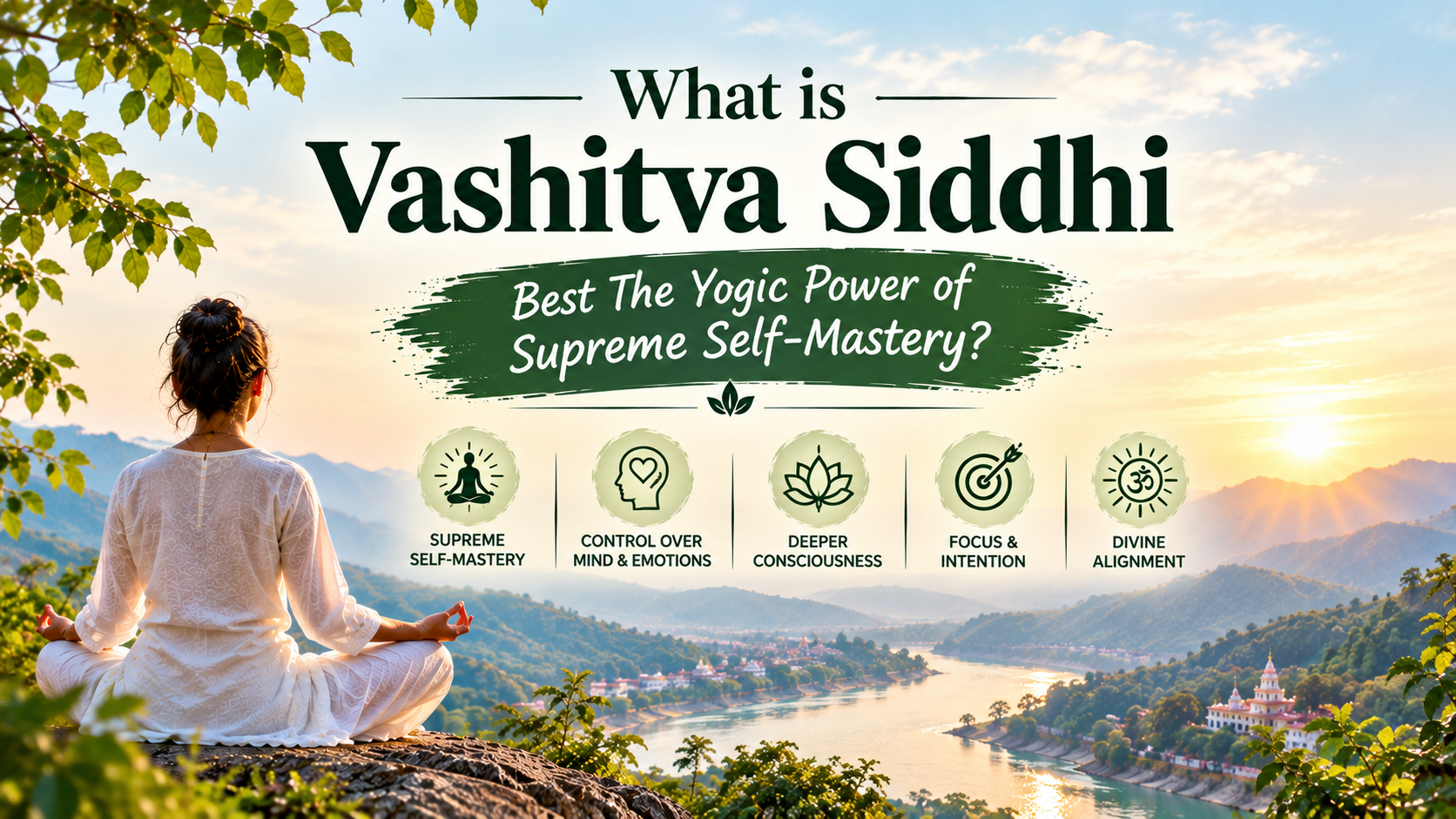
Among the esoteric accomplishments known as the Ashta Siddhis (Eight Classical Supernormal Powers), Vashitva Siddhi is perhaps the most widely misinterpreted in modern pop-culture. While sensationalists often reduce it to a crude form of mental manipulation, hypnosis, or dominating the will of others, authentic Vedic philosophy defines Vashitva in the exact opposite light: as the supreme realization of complete self-mastery. It is the spiritual triumph over one’s own senses, subconscious desires, and psychological turbulence—creating an inner serenity so potent that external nature effortlessly aligns with the yogi’s presence.
Quick Facts: Vashitva Siddhi
- Sanskrit Root: Vash (वश्) — meaning to master, bring under discipline, harmonize, or tame without force.
- Siddhi Position: The 7th of the classical Ashta Siddhis described in Patanjali’s Yoga Sutras and the Puranas.
- Core Mechanism: Inner sensory subjugation (Indriya Jaya) and elemental harmonization (Bhuta Jaya).
- Spiritual Foundation: Anchored in Ahimsa Pratishta—the state of absolute non-violence that spontaneously neutralizes external aggression.
- Crucial Warning: Any attempt to use subtle energy to coerce, deceive, or manipulate others incurs severe karmic backlash and strips the practitioner of spiritual attainments.
Scriptural Meaning & Classical Foundations of Vashitva
The concept of Vashitva originates in the Vibhuti Pada (Book III) of Maharishi Patanjali’s Yoga Sutras, as well as medieval texts like the Shiva Samhita and Vyasa Bhashya. In classical yoga psychology, external phenomena cannot be truly harmonized until the mind has conquered its own internal fluctuations (Vrittis).
“अहिंसाप्रतिष्ठायां तत्सन्निधौ वैरत्यागः ॥”
Translation (Patanjali Yoga Sutras 2.35): “When an accomplished yogi is firmly grounded in unshakeable non-violence (Ahimsa), all living beings completely abandon their hostility in that presence.”
This sacred aphorism explains the authentic mystery behind legendary stories of Himalayan yogis meditating untouched amidst wild tigers, venomous serpents, and hostile forces. Vashitva is not an aggressive hypnotic projection; it is the radiating field of divine tranquility. When an adept eliminates fear, greed, anger, and coercion within themselves, the surrounding universe reflects back that absolute peacefulness.
True Vashitva vs. Hypnotic Control: The Vital Distinction
In modern times, spiritual seekers frequently confuse genuine yogic mastery with psychological manipulation. It is essential to recognize the profound gulf between these two states:
| Dimension | Hypnosis / Ego-Manipulation | Authentic Vashitva Siddhi |
|---|---|---|
| Originating Source | Ego (Ahamkara), desire for domination, personal ambition | Pure Consciousness (Purusha), absolute self-discipline |
| Direction of Energy | Forced outward onto other minds without consent | Turned inward to master one’s own senses and passions |
| Impact on Others | Temporary subjection, mental fatigue, karmic resistance | Spontaneous calm, deep trust, spiritual inspiration, healing |
| Karmic Consequence | Severe spiritual degradation and psychological binding | Liberation (Moksha) and non-attachment to worldly illusion |
The Three Pillars of Developing Vashitva in Classical Yoga
Traditional lineage masters teach that Vashitva is cultivated systematically through progressive refinement of body, breath, and mind:
1. Kaya Sanyama (Physical & Sensory Restraint)
The foundation of self-mastery begins with bodily discipline. Through the systematic practice of Asana (steady postures) and Pratyahara (the voluntary withdrawal of the senses from external objects), the practitioner frees themselves from compulsive physical reactions.

When the physical impulses—hunger, fatigue, thermal discomfort, and restlessness—are no longer capable of perturbing the mind, the first threshold of Vashitva is established. A yogi who cannot govern their own bodily urges can never hope to influence subtle cosmic energies.
2. Prana Sanyama (Pranic Control & Breath Harmonization)
In yogic anatomy, breath and mind are twin reflections of the same primordial vitality. Patanjali emphasizes that when breath is agitated, thoughts scatter; when breath is suspended in stillness (Kevala Kumbhaka), the mind becomes razor-sharp and motionless.
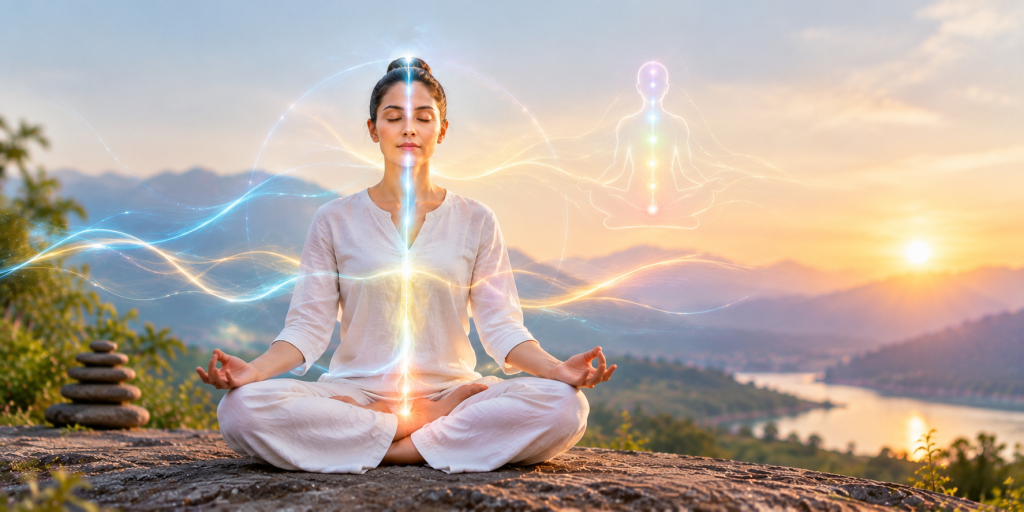
Through dedicated practice of Nadi Shodhana (alternate nostril breathing), Ujjayi, and the activation of internal locks (Bandhas during Kundalini Awakening), vital prana is redirected from outward sensory dissipation into the central spinal channel (Sushumna Nadi), granting the practitioner supreme emotional equanimity.
3. Chitta Nirodha (Mental Stillness & Ego-Dissolution)
The pinnacle pillar is the quietude of mental modifications. In ordinary consciousness, our mental faculties are continuously hijacked by likes (Raga), dislikes (Dvesha), and existential anxiety (Abhinivesha).

Through sustained concentration (Dharana) and meditative absorption (Dhyana), the practitioner transcends the reactive ego. In this state of profound stillness, the yogi no longer reacts impulsively to external provocations. This inner unshakeability is the true essence of Vashitva Siddhi.
Practical Mind-Mastery Tips for Everyday Modern Life
While the ultimate culmination of Vashitva manifests as a mystical siddhi, its underlying principles offer an indispensable blueprint for thriving amid modern chaos and sensory overload:
- Practice Conscious Digital Detox: Resist the urge to compulsively check notifications. Establish clear boundaries to protect your mental real estate from algorithmic manipulation.
- Cultivate the Power of Mauna (Intentional Silence): Spend at least 30 to 60 minutes each morning in total verbal and digital silence. Conserving communicative energy replenishes deep cognitive reserves.
- Pause Before Reacting: When confronted with emotional triggers, stress, or conflict, pause for three conscious diaphragmatic breaths before responding. Self-command begins in that deliberate micro-gap.
- Anchor in Ethical Grounding (Yama and Niyama): Pure charisma emerges naturally from truthfulness (Satya), non-covetousness (Asteya), and selfless service, not from calculated interpersonal strategies.
Cultivate Supreme Self-Mastery & Inner Peace in Rishikesh
Immerse yourself in authentic Himalayan meditation, pranayama, and sacred silence at Om Setu Yogashala. Cleanse stress, reclaim your focus, and master your mind under the guidance of traditional yogic masters.
Interconnection Within the Ashta Siddhi System
Vashitva Siddhi does not operate in isolation; it represents the moral and meditative anchor of the entire Ashta Siddhi lineage. Explore our comprehensive scholarly guides on the companion yogic powers:
- What is Prakamya Siddhi? — The supernormal power of irresistible willpower and manifestation.
- What is Prapti Siddhi? — The power of subtle omnipresence and effortless attainment.
- What is Mahima Siddhi? — The power of cosmic expansion and universal consciousness.
- What is Laghima Siddhi? — The yogic attainment of feather-light weightlessness and levitation.
- Kundalini Awakening Guide — The primordial serpent fire that activates all subtle spiritual centers.
Frequently Asked Questions
Does Vashitva Siddhi mean controlling or hypnotizing other people?
No. True Vashitva Siddhi is the absolute mastery of oneself—your thoughts, senses, and primal impulses. A yogi with Vashitva influences others through genuine moral purity, harmlessness (Ahimsa), and serene presence, never through psychological coercion or manipulation.
How does a yogi develop Vashitva in classical yoga?
Vashitva is developed systematically through the eight limbs of classical Raja Yoga: ethical foundations (Yama/Niyama), physical mastery (Asana), sensory withdrawal (Pratyahara), pranic regulation (Pranayama), and meditative absorption (Dharana and Dhyana).
What is the spiritual danger of misusing subtle influence?
Ancient scriptures caution that seeking supernormal powers (Siddhis) to feed the ego or dominate others creates deep karmic entanglements, halts spiritual evolution, and inevitably causes the loss of all inner peace and spiritual insight.
Can practicing Vashitva principles help with modern stress and anxiety?
Yes. In our digital age filled with sensory distraction, learning sensory detachment (Pratyahara), conscious breathwork, and emotional stillness protects your mental health, reduces chronic burnout, and restores centered confidence.
Conclusion
Vashitva Siddhi is not a magical trick or an instrument of dominion; it is the ultimate crown of yogic discipline—conquering the one frontier that truly matters: the self. By anchoring your practice in non-violence, purifying the prana, and learning to sit in uninterrupted stillness, you naturally radiate an inspiring, grounded presence that elevates everyone around you. In mastering yourself, you master all of life.