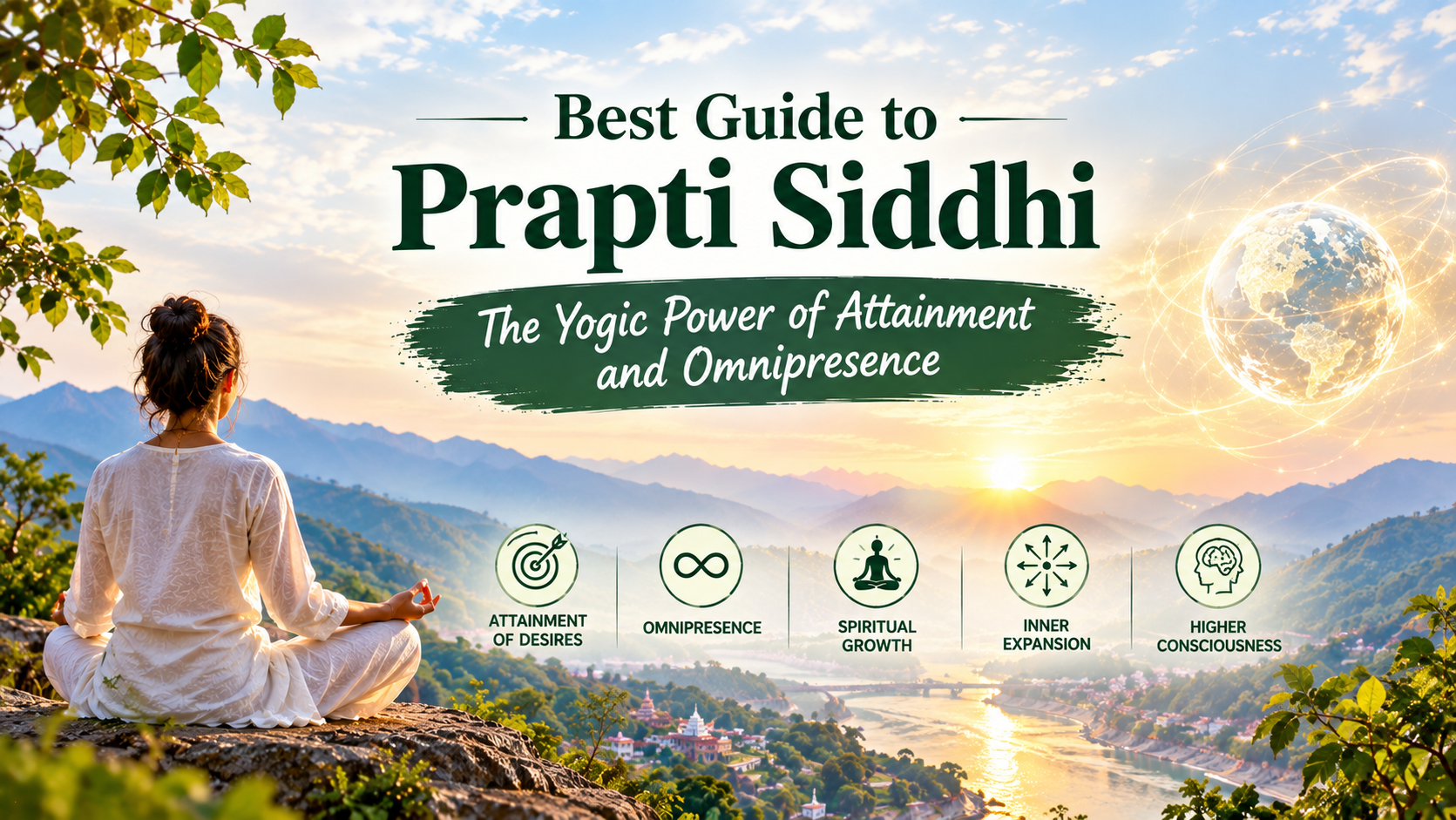
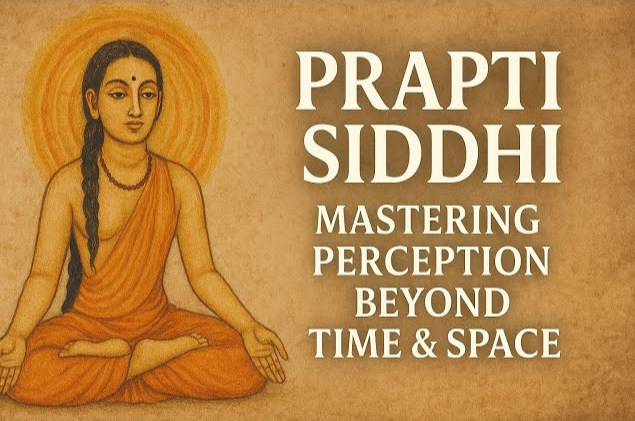
Have you ever contemplated the possibility of reaching beyond physical space to access knowledge, objects, or spiritual insight effortlessly? In ancient Vedic wisdom and classical yogic treatises, this extraordinary faculty is known as Prapti Siddhi—the mystical power of attainment, non-local reach, and boundless spiritual connection. Mentioned as the fifth of the revered Ashta Siddhis (eight classical yogic perfections), Prapti represents the complete dissolution of spatial distance in consciousness.
In Chapter 3 (Vibhuti Pada) of Sage Patanjali’s Yoga Sutras, as well as the Vishnu Purana, Srimad Bhagavatam, and the Hanuman Chalisa, these transcendent powers are documented not as mere folklore, but as natural milestones on the path of advanced meditation, breath mastery, and sensory transcendence (Pratyahara).
Quick Facts: Prapti Siddhi at a Glance
What is Prapti Siddhi? Etymology and Yogic Meaning
The term Prapti (प्राप्ति) is derived from the Sanskrit verbal root Pra-āp (प्र-आप्), which translates directly to ‘obtaining,’ ‘acquiring,’ ‘reaching,’ or ‘attaining.’ In classical yoga philosophy, Prapti Siddhi is defined as the capability of an accomplished yogi to extend their subtle perception and pranic presence across any physical distance without bodily locomotion.
Ancient commentary by Sage Vyasa on Patanjali’s Yoga Sutras describes Prapti poetically: “A yogi standing on the earth can touch the moon with their fingertip.” While allegorical, this illustrates that in higher states of Samadhi, the illusion of separation created by the senses dissolves. The yogi is not trapped inside the narrow container of the physical body; their energetic field is co-extensive with the entire field of space (Akasha).
Prapti Siddhi in Sacred Scriptures: Lord Hanuman & The Vedic Tradition
Throughout Vedic literature, the prime exemplar of the Ashta Siddhis is Lord Hanuman, celebrated for mastering the eight supernatural perfections through supreme devotion (Bhakti) and unyielding discipline (Brahmacharya). In Goswami Tulsidas’ revered Hanuman Chalisa, Chaupai 31 immortalizes this blessing:
अष्टसिद्धि नौ निधि के दाता। अस बर दीन जानकी माता॥
“Ashta Siddhi Nau Nidhi Ke Daata, Asa Bara Deen Janaki Maata”
Translation: Mother Janaki (Sita) bestowed upon Hanuman the divine boon to be the giver of all eight Siddhis and nine divine treasures.
In the Ramayana, Lord Hanuman demonstrates Prapti Siddhi during his mission across the ocean to Lanka. By tuning his pranic awareness to the frequency of Mata Sita, he bypassed impossible geographical distances, locating her amidst the dense groves of Ashok Vatika. Similarly, his ability to fetch the life-saving Sanjeevani Booti from the distant Dronagiri mountain in the Himalayas in a single night exemplifies supreme command over spatial attainment.
The Yogic Science of Non-Locality: Akasha Tattva & Subtle Perception

Modern quantum physics describes quantum non-locality and quantum entanglement—the proven phenomenon where particles separated by vast light-years communicate and influence each other instantaneously without any physical travel. Interestingly, this mirrors the exact principles taught by Vedic Rishis millennia ago under the doctrine of Akasha Tattva (the Element of Space).
In yogic cosmology, space is not empty void; it is the fundamental medium through which all sound (Shabda), light, and consciousness vibrate. When an accomplished yogi enters Samyama (the simultaneous synthesis of Dharana, Dhyana, and Samadhi) upon Akasha, the boundaries of local sensory perception dissolve. This unlocks subtle faculties including:
- Divya Drishti (Clairvoyance): The capacity to perceive forms, landscapes, or events occurring thousands of miles away.
- Divya Shrotra (Clairaudience): Hearing the subtle vibrations and spiritual mantras echoing through the cosmic ether.
- Duradarshana & Telepathic Transmission: Intuitive mental connection and instant perception of another being’s thoughts or pranic state.
Prapti Siddhi vs. Prakamya vs. Mahima Siddhi: Key Differences
Because several of the Ashta Siddhis sound conceptually similar to newcomers, it is essential to understand the exact philosophical distinctions between Prapti, Prakamya, and Mahima:
| Attribute | Prapti Siddhi (Attainment) | Prakamya Siddhi (Willpower) | Mahima Siddhi (Expansion) |
|---|---|---|---|
| Primary Power | Reaching and obtaining what is distant across space | Manifesting desires & unstoppable willpower | Expanding consciousness into infinite cosmic magnitude |
| Focus of Mastery | Spatial reach & omnipresence | Intent, Iccha Shakti & elemental transformation | Magnitude, subtle body expansion & cosmic oneness |
| Associated Element | Akasha (Space) | Agni (Fire) & Manas (Mind) | Akasha (Ether) & Sahasrara |
| Classical Example | Hanuman locating Mata Sita across the southern sea | Yogi breathing underwater or defying fire | Lord Hanuman assuming the colossal Vishwaroop form |
Explore the Complete Ashta Siddhi Series:
- What is Prakamya Siddhi? – The Power of Unyielding Will & Desire Realization
- What is Mahima Siddhi? – The Power of Infinite Cosmic Expansion
- What is Laghima Siddhi? – The Yogic Power of Lightness & Levitation
- What is Anima Siddhi? – The Power of Becoming Infinitesimally Small
Cultivating the Seed of Prapti in Your Daily Sadhana
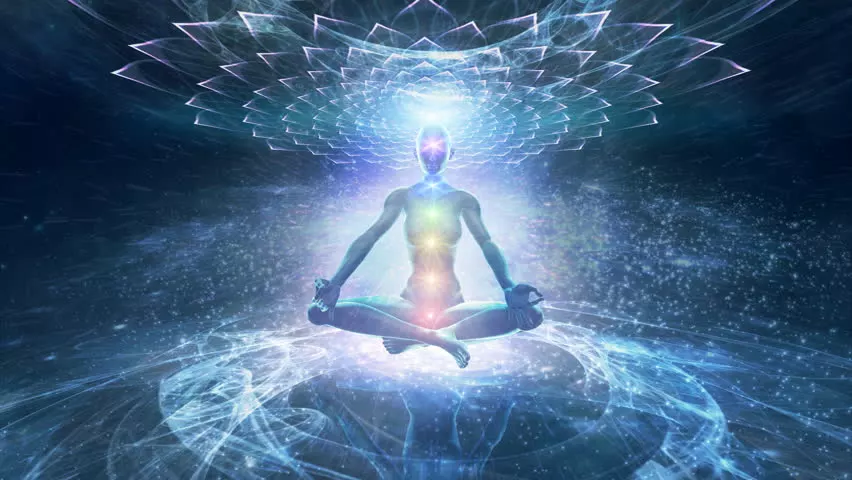
While literal teleportation remains a legendary feat attributed to realized masters, the energetic and psychological seed of Prapti can be awakened by any sincere practitioner through disciplined sadhana. In authentic Hatha and Raja Yoga, this involves three core practices:
1. Pratyahara (Sensory Withdrawal) & Ajna Chakra Dhyana
Most human energy is constantly scattered outwardly through the five senses—eyes chasing stimulation, ears absorbing noise, and the intellect obsessing over material cravings. Through systematic Pratyahara (the fifth limb of Ashtanga Yoga), the yogi retracts attention inward, gathering prana at the Ajna Chakra (the Third Eye center between the eyebrows). Focusing on the steady inner light at Ajna awakens profound intuitive perception and sharpens mental concentration beyond ordinary cognitive limits.
2. Transcending Raga (Attachment) and Lobha (Greed)
The paradox of Prapti Siddhi is that true attainment occurs only when personal grasping completely ceases. When the mind is contaminated by Raga (selfish craving) or Lobha (greed), consciousness shrinks into fear of lack. When a practitioner purifies their intent through selfless action (Karma Yoga) and surrender (Ishvara Pranidhana), they align with universal abundance. They discover that what is truly needed for their spiritual evolution arrives naturally without frantic clinging.
3. Pranayama & Nadi Shodhana
Breath is the bridge between physical matter and subtle space. Consistent daily practice of alternate nostril breathing (Nadi Shodhana) and retained breath (Kumbhaka) purifies the 72,000 nadis, allowing prana to enter the central channel (Sushumna Nadi). When prana flows unhindered through Sushumna, the practitioner experiences moments of profound stillness, transcending the illusion of physical constriction.
Prapti Siddhi vs. The Modern ‘Law of Attraction’
In modern self-help culture, the ‘Law of Attraction’ is widely promoted as a technique to manifest cars, wealth, or romantic partners using affirmations and positive visualization. How does this compare with the authentic yogic concept of Prapti Siddhi?
While both acknowledge that consciousness influences reality, their foundations are worlds apart:
- The Modern Law of Attraction often operates from the egoic level—feeding the personal identity’s desires, material appetite, and superficial security.
- Prapti Siddhi in Classical Yoga operates from the level of universal consciousness. It is achieved only after years of self-purification, where egoic attachment is surrendered and the individual will merges seamlessly with the divine cosmic will. Rather than trying to ‘pull’ things from the outside, Prapti recognizes that the Self and the cosmos are already one.
Awaken Your Subtle Energy by the Sacred Ganges
Whether you seek a rejuvenating Yoga Retreat in Rishikesh or an internationally accredited 200-Hour Yoga Teacher Training, Om Setu Yogashala offers authentic traditional Hatha, Ashtanga, pranayama, and Vedic philosophy under the guidance of Himalayan masters.
Frequently Asked Questions About Prapti Siddhi
1. What is Prapti Siddhi in yoga?
Prapti Siddhi is the fifth of the classical Ashta Siddhis (eight supernatural perfections) documented in Patanjali’s Yoga Sutras and the Puranas. It represents the yogic power of non-local attainment—the ability to perceive, access, or obtain anything across vast physical distances without bodily travel, achieved through mastery over Akasha (space) and intense concentration.
2. How does Prapti Siddhi differ from Prakamya Siddhi?
While Prapti Siddhi governs spatial attainment (reaching distant places, clairvoyance, and accessing what is far away), Prakamya Siddhi governs unyielding willpower (the capacity to realize any intention, transform physical states, or defy natural obstacles like water or fire).
3. What is the difference between Prapti and the modern Law of Attraction?
The modern Law of Attraction relies primarily on mental affirmations and ego-driven desires for material gain. In contrast, Prapti Siddhi is a profound yogic accomplishment requiring the dissolution of ego, sensory withdrawal (Pratyahara), and merging individual consciousness into the universal field of Akasha.
4. How does Lord Hanuman demonstrate Prapti Siddhi?
In the Ramayana and Hanuman Chalisa, Lord Hanuman exemplifies Prapti Siddhi by effortlessly crossing the vast ocean to find Mata Sita in Lanka, and later locating and transporting the sacred Sanjeevani herb from the distant Dronagiri mountain overnight.
Conclusion: Transcending Distance and Discovering Inner Abundance
In our modern world dominated by frantic striving, digital anxiety, and fear of scarcity, the wisdom of Prapti Siddhi offers a profound spiritual antidote. It reminds us that separation is an optical illusion of the senses. When we quiet mental chatter, purify our intentions, and rest in deep meditation, we discover that true attainment is not about aggressively taking from the world, but about awakening to the boundless abundance already woven into the fabric of life.
Through dedicated Hatha yoga sadhana, conscious pranayama, and meditation on the sacred banks of Mother Ganga in Rishikesh, you can cultivate the inner clarity and expansive peace that form the genuine essence of Prapti Siddhi.