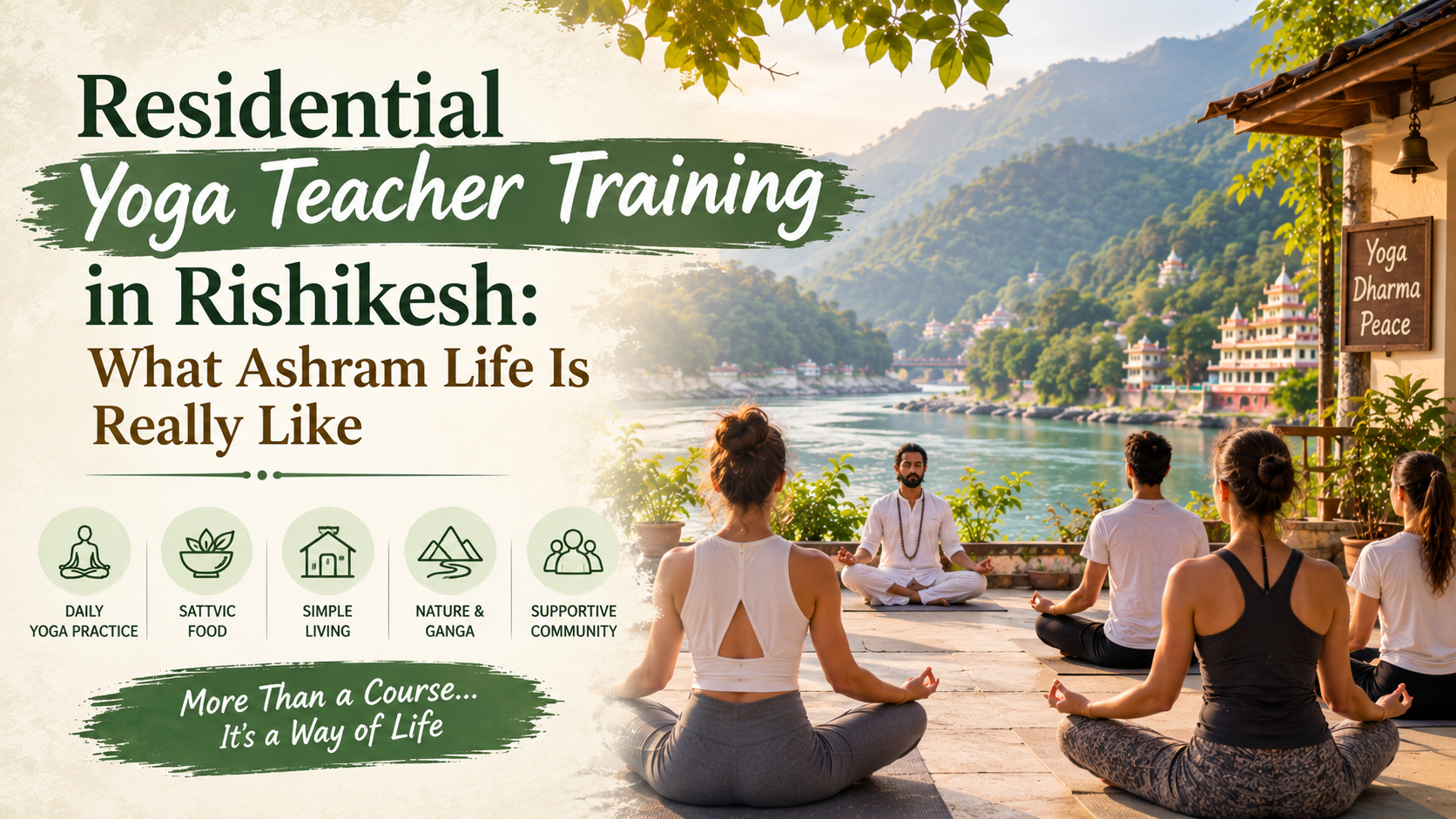
Embarking on a yoga teacher training course in Rishikesh is far more than an academic pursuit—it is an immersive life experience. Choosing a residential program means stepping away from daily distractions and immersing yourself in traditional ashram living in the foothills of the Himalayas.
However, many first-time travelers have practical questions before arriving: What is the daily schedule like? What kind of food is served? How comfortable are the rooms? And how does batch size affect your learning? Here is an authentic look at what daily life looks like during a residential yoga teacher training program in Tapovan, Rishikesh.
Why Choose a Residential Program Over Day-Commuting?
While some schools allow students to arrange independent hotel stays and commute to classes, a residential training provides three critical advantages:
- Total Yogic Immersion: Living on campus allows you to live the philosophy rather than just study it from a textbook. Early morning wake-ups, quiet contemplation, and evening discussions naturally integrate into your daily habits.
- Stress-Free Logistics: You do not have to negotiate local transport, worry about finding hygienic restaurants, or navigate traffic to make your 7:00 AM asana class on time.
- Sangha (Yogic Community): Living with fellow trainees from across the world fosters deep bonds and peer support, which becomes invaluable during an intensive 24-day physical and mental journey.
A Typical Day on Campus: The Daily Ashram Rhythm
A disciplined daily routine (dinacharya) is at the core of traditional yogic training. While the pace is rigorous, the schedule is structured to balance physical exertion with mental rest and self-study:

| Time | Activity | What Happens |
|---|---|---|
| 06:00 | Wake Up & Herbal Tea | Cleansing morning routine before entering the practice hall. |
| 07:00 – 08:30 | Asana Practice | Classical Hatha or Ashtanga Vinyasa dynamic morning flow. |
| 08:30 – 09:30 | Pranayama & Breathwork | Controlled breath regulation, cleansing kriyas, and mudras. |
| 09:30 – 10:30 | Sattvic Breakfast | Freshly prepared nutritious vegetarian meal. |
| 11:00 – 12:30 | Philosophy or Anatomy | Lectures on Patanjali Yoga Sutras, biomechanics, and alignment. |
| 13:00 – 14:00 | Sattvic Lunch | Wholesome midday meal followed by personal rest. |
| 15:00 – 16:30 | Teaching Practicum | Alignment clinics, hands-on adjustments, and student-led sequences. |
| 17:00 – 18:30 | Free Time / Ganga Walk | Sunset walks, visiting local temples, or attending the Ganga Aarti. |
| 19:00 – 20:00 | Sattvic Dinner | Warm, easily digestible evening meal. |
| 20:30 – 21:30 | Self-Study & Journaling | Reviewing notes, journaling, and silent contemplation. |
| 21:30 | Lights Out | Early sleep to allow deep muscular recovery. |
Nutrition on Campus: The Ayurvedic Sattvic Diet
Nutrition plays a vital role in keeping trainees energized through six to eight hours of daily training without feeling sluggish or heavy:

- Prepared Fresh Daily: Meals are cooked using pure vegetarian, whole-food ingredients according to Ayurvedic cooking principles.
- Gut Health & Clarity: Dishes emphasize fresh seasonal vegetables, pulses, lentils, whole grains, and herbal teas that promote internal lightness and vitality.
- Special Dietary Accommodations: Vegan, gluten-free, and Jain diets can be accommodated upon advance notice prior to batch commencement.
- Zero Guesswork: Having all three meals prepared on campus protects international students from common traveler stomach upsets (“Delhi belly”).
Campus Accommodations & Living Facilities
Living in an ashram setting does not mean sacrificing modern hygiene and comfort. Trainees require restful, clean spaces to recharge between classes:
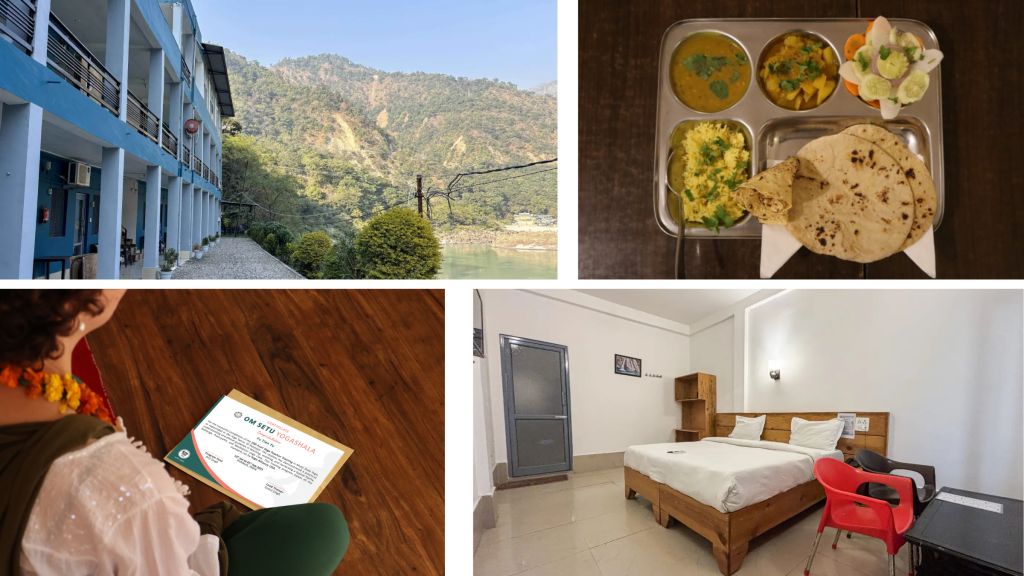
- Room Configurations: Students can choose between Twin Shared Rooms (shared with one same-gender trainee) or Private Rooms for added quiet and solitude.
- Essential Modern Amenities: Rooms feature private attached washrooms with 24-hour hot water, air conditioning for warmer months, room heaters for winter evenings, and complimentary Wi-Fi.
- Location Matters: Staying in Tapovan places you just a 2-minute walk from the sacred River Ganga, allowing you to meditate on the banks or attend the evening Aarti during your downtime.
The Power of Small Batch Sizes (6 to 10 Students)
One of the most overlooked factors when booking a teacher training is the student-to-teacher ratio. Many commercial schools in Rishikesh enroll 30 to 40 students per cohort. Residential In an overcrowded hall, it is easy to get lost in the back row, and teachers cannot monitor everyone’s alignment safely.

- Frequent Alignment Checks: In a group of 6 to 10 students, lead trainers can observe and correct your posture every few minutes, preventing repetitive-stress injuries.
- Personalized Feedback: Trainees receive tailored modifications for their unique skeletal anatomy and flexibility levels.
- Confidence in Practicum: When leading your teaching practicum, presenting before a small, supportive group reduces stage fright and allows for detailed, constructive critiques.
- Direct Access to Gurus: You have regular opportunities to ask philosophical and personal practice questions directly to senior teachers like Bhupendra Nautiyal (E-RYT 500).
Frequently Asked Questions
What is covered in the residential program fee?
The fee covers your complete 24-day stay, private or shared room, three daily sattvic meals, printed course manuals, yoga props, excursions, and your certification diploma. International flights, visa fees, and personal shopping are separate.
Is Rishikesh safe for solo female travelers during residential training?
Yes. Tapovan, Rishikesh is one of the safest destinations in India for international solo travelers. Our residential campus maintains 24/7 security and a peaceful, supportive environment where women make up the majority of trainees every month.
Can I request a private room if I am an introvert?
Yes. Both twin-shared and private single rooms are available. If you need privacy for study, rest, or remote work, booking a private room in advance is highly recommended as private rooms fill up quickly.
Read More: What Does “Yoga Alliance Certified” Really Mean? RYS vs RYT Explained
Are weekends free?
Yes. Sundays are generally designated as rest days. Students use this time to explore Rishikesh’s historic ashrams, trek to nearby waterfalls, or simply rest and recover.
Next Steps
Experience the authenticity of residential yogic living in Tapovan, Rishikesh:
- View Details of our 200-Hour Residential Yoga Teacher Training
- Explore Campus Accommodation & Food Facilities
- Reserve Your Room via WhatsApp (+91 9411789107)