Quick Guide: Apana Vayu Mudra at a Glance
- Sanskrit Name: Apana Vayu Mudra (अपान वायु मुद्रा) — also classically revered as Mrit Sanjeevani Mudra (मृत संजीवनी मुद्रा – The Resuscitation Seal).
- Core Function: A powerful therapeutic synthesis combining Vayu Mudra (air reduction & pain relief) with Apana Mudra (detoxification & downward elimination).
- Primary Benefits: Regulates heart palpitations, soothes chest tightness, aids sluggish digestion, flushes metabolic toxins, and halts acute anxiety attacks.
- Recommended Duration: 15 to 45 minutes daily, practiced in a single sitting or divided into three 15-minute sessions.
- Crucial Medical Note: While traditionally valued as energetic first-aid for chest tightness, it is a complementary therapeutic practice and never a substitute for emergency medical care during acute cardiac events.
In the subtle anatomy of Yoga and Ayurveda, the human hands are not merely instruments of action—they are potent energetic control panels. The fingers house dense concentrations of neuro-vascular endings and pranic nadis (meridians), each connected to one of the five cosmic elements (Pancha Mahabhutas) and the five physiological life-forces (Pancha Pranas).
Among the hundreds of hand mudras preserved in classical Shastras, Apana Vayu Mudra holds an elevated position. Often called Mrit Sanjeevani Mudra (the gesture that revives life), this precise configuration of the fingers acts like an energetic bypass valve. By simultaneously subduing erratic, turbulent air (Vayu) and grounding downward elimination (Apana), it restores equilibrium to the cardiovascular, nervous, and digestive systems within minutes of stillness.
What is Apana Vayu Mudra? The Science of the “Heart Seal”
The name reflects its precise physiological targeting:
- Apana (अपान): The downward-moving sub-dosha of Vata, governing the lower abdomen, pelvic floor, colon, kidneys, and systemic elimination.
- Vayu (वायु): The element of air, motion, and nerve impulses throughout the body.
- Mudra (मुद्रा): An energetic seal or electromagnetic circuit that redirects subtle prana back into internal organs.
What makes Apana Vayu Mudra unique is that it is a dual-action compound mudra:
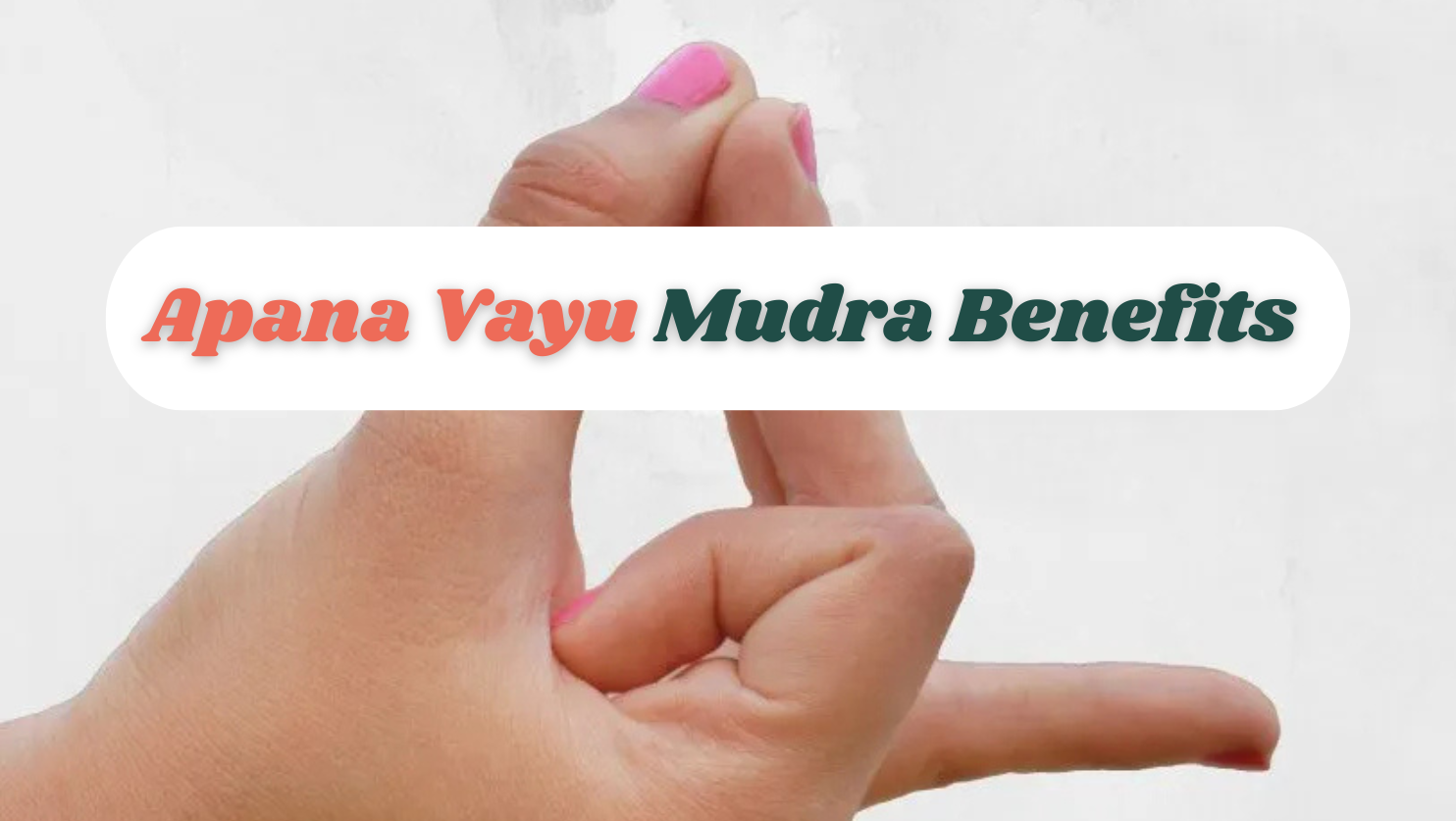
- The Vayu Component: By folding the index finger to the base of the thumb, you suppress excess air element, reducing gas, muscular spasms, arterial constriction, and acute anxious panic.
- The Apana Component: By joining the middle and ring fingers to the tip of the thumb, you activate the space and earth elements, stimulating the body’s natural excretory organs to eliminate cellular toxins (Ama) and ground scattered mental energy.
The Five Elements in Your Fingers: How It Works
In Mudra Shastra, every finger represents an elemental building block of human biology:
| Finger | Element (Tattva) | Action in Apana Vayu Mudra |
|---|---|---|
| Thumb | Fire (Agni) | Acts as the central catalyst, harmonizing and energizing all connecting elements. |
| Index Finger | Air (Vayu) | Pressed to the root of the thumb to subdue aggravated wind, nerve agitation, and cardiac tension. |
| Middle Finger | Space (Akasha) | Touches the tip of the thumb to clear physical congestion and create spaciousness in the chest. |
| Ring Finger | Earth (Prithvi) | Touches the tip of the thumb to ground nervous exhaustion, strengthen digestion, and rebuild vitality. |
| Little Finger | Water (Jala) | Remains pointed straight to allow metabolic fluids to circulate freely. |
Step-by-Step Guide: How to Practice Apana Vayu Mudra
To establish the complete pranic circuit, practice with both hands simultaneously following these steps:
- Choose a Stable Asana: Sit comfortably with an upright spine in Sukhasana (Easy Pose), Padmasana (Lotus Pose), or Vajrasana (Thunderbolt Pose). If sitting on the floor is uncomfortable, sit on a firm chair with both feet flat on the ground.
- Index Finger to Thumb Mound: Fold your index finger downward so the tip of the finger rests snugly at the base (mound) of your thumb. Apply gentle, steady pressure with the thumb over the folded index knuckle.
- Middle & Ring Fingers to Thumb Tip: Bring the tips of your middle finger and ring finger to touch the tip of your thumb. Maintain light, relaxed contact without clenching.
- Extend the Little Finger: Keep your little (pinky) finger extended straight out and completely relaxed.
- Rest the Hands: Place the backs of both hands flat upon your knees or thighs with your palms facing upward toward the sky.
- Relax the Breath: Close your eyes. Soften your jaw, shoulders, and chest. Allow your breath to become slow, smooth, and diaphragmatic. Keep your awareness centered either at the heart center (Anahata Chakra) or at the navel (Manipura Chakra).
Top 7 Health & Healing Benefits of Apana Vayu Mudra
- 1. Deep Cardiac Soothing & Palpitation Relief: By soothing acute air imbalances in the chest cavity, this mudra helps relieve non-emergency heart flutter, functional palpitations, and nervous tightness in the pericardium.
- 2. Stimulates Sluggish Gut Motility: Activating Apana Vayu directs prana into the colon and urinary bladder, relieving stubborn flatulence, bloating, and irregular bowel movements.
- 3. De-escalates Panic Attacks & Acute Anxiety: In moments of sensory overload or sudden dread, holding Apana Vayu Mudra forces rapid parasympathetic tone, slowing down runaway heart rates and hyperventilation.
- 4. Flushes Metabolic Toxins (Ama): By harmonizing liver, kidney, and sweat excretion, it supports gentle systemic detoxification.
- 5. Alleviates Tension Headaches & Acidity: Headaches accompanied by nausea or gastric gas often stem from upward-surging Vata (Udavarta). This mudra redirects the energy downward, reducing cranial pressure.
- 6. Normalizes Blood Pressure Fluctuations: When practiced consistently for 15 to 30 minutes daily alongside conscious breathing, it helps soothe autonomic nervous spikes that elevate blood pressure.
- 7. Excellent Anchor for Pranayama & Meditation: Holding the mudra prevents physical fidgeting and mental drift, serving as an exceptional mudra for Nadi Shodhana (Alternate Nostril Breathing) and seated contemplation.
Best Timing, Duration & Daily Practice Rules
- Best Time: Early morning during Brahma Muhurta or at dusk (Sandhya time). However, unlike dynamic physical postures, mudras can be practiced at any time of day when stress or digestive discomfort arises.
- Daily Duration: Aim for 30 to 45 minutes daily for deep therapeutic benefits. This can be achieved in a single unbroken morning meditation or split into three 15-minute sessions throughout the day.
- Practice on Empty or Full Stomach? Safe to practice on an empty stomach. For digestive relief, practice 30 to 45 minutes after meals while seated in Vajrasana.
Precautions & Critical Medical Disclaimer
Apana Vayu Mudra is gentle, natural, and safe, but requires clear discernment:
- Emergency Cardiac Protocol: If you or someone near you experiences symptoms of an acute myocardial infarction (crushing retrosternal chest pain, radiating pain into the left arm or jaw, cold sweats, or shortness of breath), immediately call emergency medical services. You may hold the mudra while awaiting emergency medical personnel, but never rely on it as a substitute for professional hospital care.
- High Kapha Excess: Individuals with sluggishness or heavy fluid retention should avoid holding this mudra for excessive durations (over 45 minutes continuously), as its strong downward grounding can increase lethargy.
Deepen Your Study of Mudras & Subtle Anatomy in Rishikesh
Mudras yield their deepest transformative power when integrated with classical Pranayama, Bandhas, and traditional Ayurvedic lifestyle wisdom. At Om Setu Yogashala in Tapovan, Rishikesh, we teach the subtle sciences at the root of authentic yoga:
- Looking for Restorative Healing? Experience personalized Ayurvedic therapies, dosha balancing, and therapeutic yoga in our Authentic Ayurveda Retreats in Rishikesh or All-Inclusive Yoga Retreats.
- Master Yoga Therapy & Subtle Physiology: Study the 5 Koshas, 5 Pranas, Mudras, and Bandhas in our Yoga Alliance certified 200-Hour Yoga Teacher Training in Rishikesh.
Frequently Asked Questions
Why is Apana Vayu Mudra called Mrit Sanjeevani Mudra?
In ancient Yogic lore, Mrit Sanjeevani refers to the legendary celestial herb that restores life. Apana Vayu Mudra earned this title because it acts as an immediate energetic stabilizer for acute heart distress, severe breathlessness, and traumatic anxiety, restoring vital circulation when the body is in crisis.
What is the difference between Apana Mudra and Apana Vayu Mudra?
In simple Apana Mudra, only the middle and ring fingers touch the thumb, focusing primarily on digestion and pelvic excretion. In Apana Vayu Mudra, the index finger is also folded down to the root of the thumb (adding Vayu Mudra), which specifically calms the nervous system, alleviates muscular spasms, and supports cardiac function.
How long should you practice Apana Vayu Mudra each day?
For general stress relief and health maintenance, 15 to 30 minutes daily is sufficient. For therapeutic concerns like chronic digestive sluggishness or heart palpitation tendencies, practice for 45 minutes daily, either continuously or split into three 15-minute intervals.
Can Apana Vayu Mudra be practiced while sitting in a chair?
Yes. While classical floor postures like Sukhasana or Vajrasana are ideal, you can practice Apana Vayu Mudra seated upright in a chair with your feet flat on the floor, or even while resting supine in bed if recovering from illness.