Quick Guide: Yoga for Constipation at a Glance
- Ayurvedic Diagnosis: Vibandha — caused by aggravated Vata Dosha and obstructed Apana Vayu (the downward eliminating force).
- Most Effective Pose: Pavanamuktasana (Wind-Relieving Pose) — compress the right leg first (ascending colon), then the left leg (descending colon).
- Best Posture After Meals: Vajrasana (Thunderbolt Pose) — redirects arterial blood from legs directly to digestive viscera.
- The Golden Morning Rule: Drink 1–2 glasses of warm water (Ushapan) 10 minutes before practice to trigger the gastrocolic reflex.
Infrequent bowel movements, abdominal bloating, straining, and stubborn pelvic tightness affect millions of people worldwide. While over-the-counter laxatives offer temporary emergency relief, they do nothing to address sluggish intestinal motility, chronic muscular tension, or the underlying dehydration of the colon.
In classical Yogic and Ayurvedic medicine, healthy bowel evacuation is not merely a matter of fiber intake—it is a functional reflex dependent on the parasympathetic nervous system, the downward flow of Apana Vayu, and rhythmic intra-abdominal pressure. Through a disciplined sequence of compressing, twisting, and squatting asanas, you can naturally stimulate intestinal peristalsis and re-establish effortless daily bowel regularity.
Why Constipation Occurs: The Ayurvedic View of Vata & Apana Vayu
In Ayurveda, constipation is known as Vibandha (विबन्ध). It is primarily a pathology of Vata Dosha, which possesses the qualities of coldness, dryness, and irregular motion.
Within the five sub-doshas of Vata, the colon and pelvic cavity are governed by Apana Vayu (अपान वायु)—the downward kinetic force responsible for urination, menstruation, and bowel elimination. When an individual suffers from chronic emotional stress, irregular sleep, dry processed food, or excessive sitting:
- Internal Dryness (Rukshata): The colon absorbs too much water, leaving stool hard, compacted, and sluggish.
- Obstructed Apana (Udavarta): The natural downward flow of energy reverses upward (Udavarta), causing flatulence, acid reflux, brain fog, and chronic fatigue.
- Impaired Agni (Mandagni): The central digestive fire weakens, generating toxic metabolic waste known as Ama (आम).
Yoga asanas physically correct this imbalance by applying direct mechanical compression to the ascending, transverse, and descending colon, while activating the parasympathetic “rest-and-digest” response of the vagus nerve.
The Golden Morning Protocol: Ushapan (उषापान)
Before stepping onto your mat to relieve constipation, practice the ancient Ayurvedic cleansing ritual of Ushapan:
The Ushapan Ritual: Immediately upon waking, drink 1 to 2 glasses (500–750 ml) of lukewarm water (optionally stored overnight in a pure copper vessel or infused with a slice of fresh lemon). Sit quietly or walk briskly for 2 minutes before beginning your postures.
Warm water expands the gastric lining, triggering the gastrocolic reflex—a physiological signal sent from the stomach to the colon that initiates rhythmic peristaltic contractions. Practicing the following asanas after Ushapan acts like a natural internal pump, gently urging waste toward elimination.
Top 7 Proven Yoga Asanas for Immediate Constipation Relief
1. Pavanamuktasana (पवनमुक्तासन – Wind-Relieving Pose)
Pavanamuktasana is the uncontested gold standard for releasing trapped intestinal gas and stimulating sluggish colon motility.
The Crucial Anatomical Rule: Right Leg First!
Always bend and hug your right knee to your chest first. The right thigh compresses the ascending colon. Hold for 5–8 slow diaphragmatic breaths. Release, then hug your left knee to your chest to compress the descending colon. Finally, hug both knees simultaneously to compress the transverse colon. This follows the natural anatomical direction of fecal transit.
2. Malasana (मलासन – Garland / Yogic Squat Pose)
Modern seated toilets force the colon into an unnatural 90-degree angle, where the puborectalis muscle chokes the rectum like a kinked garden hose. Malasana restores the evolutionary human squatting posture (a 35-degree anorectal angle).
- How to Practice: Stand with feet slightly wider than hip-width apart, toes turned outward 45 degrees. Bend your knees deeply and lower your hips toward the floor. Bring your palms together in Anjali Mudra and gently press your elbows against the inner knees to widen the pelvic floor.
- Physiological Benefit: The puborectalis muscle relaxes completely, straightening the anorectal canal and allowing waste to pass with minimal strain.
3. Vajrasana (वज्रासन – Thunderbolt Pose)
While almost all yoga postures must be performed on an empty stomach, Vajrasana is the only classical posture recommended immediately after eating.
- How to Practice: Kneel on your mat with your knees touching and big toes together. Settle your buttocks comfortably into the hollow formed by your parted heels. Keep your spine erect and rest your hands on your thighs.
- Physiological Benefit: Sitting on the heels temporarily restricts arterial blood flow to the lower legs, redirecting a surge of oxygen-rich blood directly to the stomach, liver, and intestines, supercharging digestive fire (Agni). Sit for 10 minutes after lunch or dinner.
4. Ardha Matsyendrasana (अर्धमत्स्येन्द्रासन – Half Lord of the Fishes Pose)
Spinal twists act like a mechanical wringer on the abdominal viscera. By compressing one side of the belly while lengthening the other, twisting postures squeeze stagnant deoxygenated blood and trapped gases out of the intestinal loops.
- How to Practice: Sit with legs extended. Bend your right knee and place your right foot flat on the floor outside your left hip. Inhale to lengthen your spine tall; exhale to twist your torso toward the right, wrapping your left arm around your right knee.
- Safety Cue: Always rotate from the naval and ribcage with an elongated spine; never force the twist by torquing your neck or lower back.
5. Bhujangasana (भुजंगासन – Cobra Pose)
Prone backbends offer anterior abdominal elongation, stretching the rectus abdominis while applying gentle hydrostatic pressure to the liver, gallbladder, and kidneys.
- How to Practice: Lie flat on your stomach with legs together. Place your hands under your shoulders, elbows hugged close to your ribs. Inhale to lift your chest forward and up using your back strength, keeping your pubic bone grounded. Hold for 5 steady breaths.
- Physiological Benefit: Stimulates bile release from the gallbladder, which is essential for lubricating the intestinal walls and softening hardened stools.
6. Katichakrasana (कटिचक्रासन – Standing Spinal Rotation)
Part of the classical Laghu Shankhaprakshalana (short intestinal cleansing sequence), Katichakrasana uses dynamic standing rotational momentum to rapidly mobilize water through the digestive tube.
- How to Practice: Stand with feet shoulder-width apart. Inhale as you swing your arms smoothly from side to side, allowing your torso and neck to follow. The left hand wraps around the right shoulder while the right arm wraps behind the waist. Repeat 10 to 15 times rhythmically.
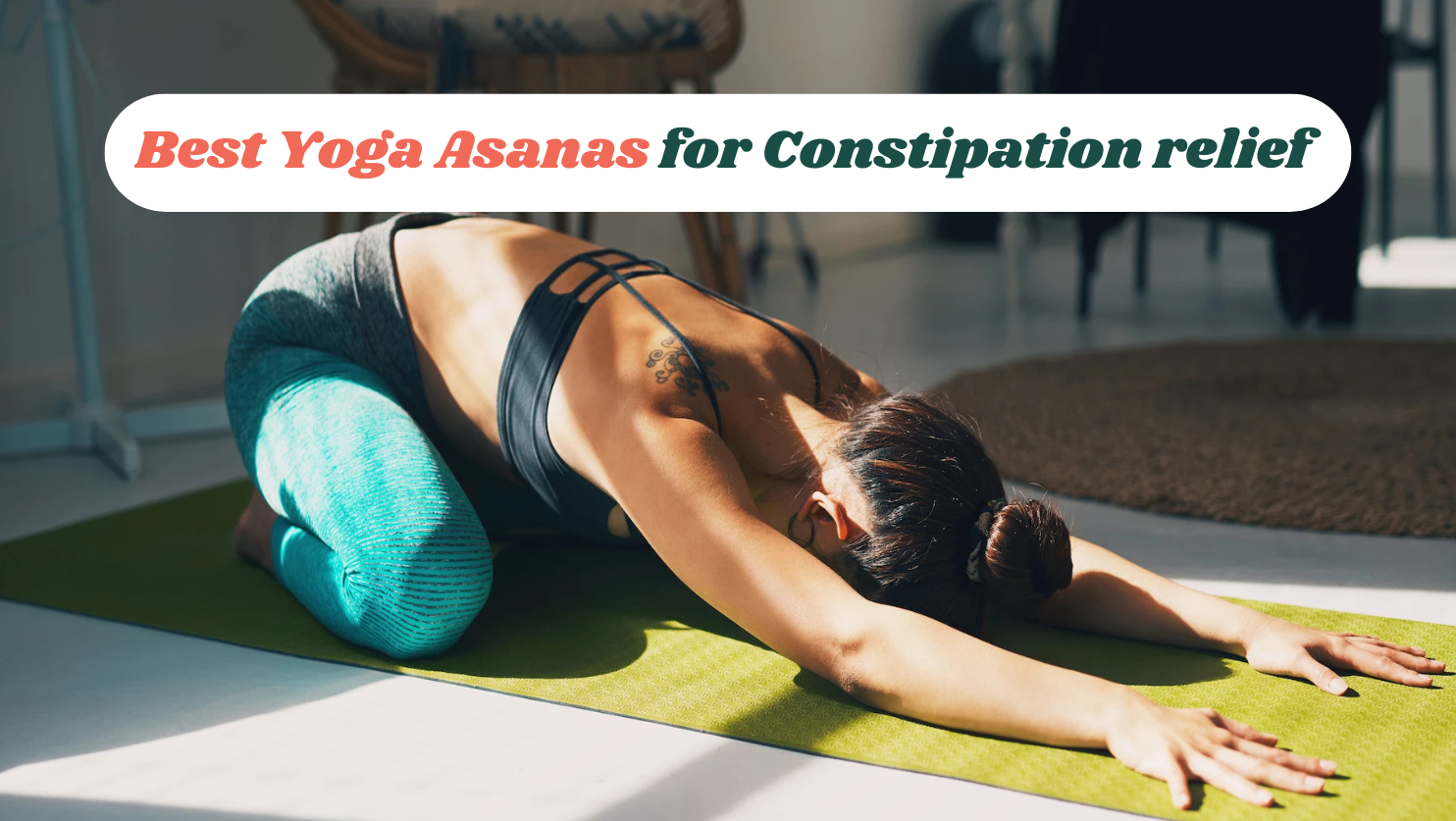
7. Balasana (बालासन – Child’s Pose)
Chronic constipation is often driven by a hyper-sympathetic nervous system—the pelvic floor and anal sphincters chronically contract when the body feels stressed, rushed, or unsafe.
- How to Practice: From hands and knees, take your knees wide, bring your big toes together, and sink your hips all the way back onto your heels. Rest your forehead on the mat and extend your arms forward.
- Physiological Benefit: Compresses the lower abdomen gently while sending a potent parasympathetic signal down the vagus nerve, signaling the enteric nervous system that it is safe to release.
The 10-Minute Morning Bowel Routine
For individuals struggling with chronic morning sluggishness, perform this sequence immediately after drinking 2 glasses of warm water:
- Warm-Up (2 mins): 10 rounds of Katichakrasana (Standing Spinal Twist).
- Pelvic Opening (2 mins): Malasana (Deep Yogic Squat) with slow diaphragmatic breaths.
- Colon Massage (3 mins): Pavanamuktasana (Right leg for 6 breaths → Left leg for 6 breaths → Both legs for 6 breaths).
- Organ Squeeze (2 mins): Ardha Matsyendrasana (1 minute per side).
- Rest & Release (1 min): Balasana (Child’s Pose).
Contraindications: Practicing with Safety
- Abdominal Hernia & Peptic Ulcers: Avoid deep abdominal compression poses (intense Pavanamuktasana or aggressive twists). Focus on gentle standing stretches and diaphragmatic breathing.
- Acute Appendicitis or Inflammatory Bowel Disease: Never force abdominal postures during acute intestinal flare-ups.
- Pregnancy: Avoid deep twists and prone backbends like Cobra. Substitute with gentle cat-cow and supported Malasana with a block under the hips.
- Severe Lower Back Disc Herniations: When practicing Pavanamuktasana, do not curl the chin to the knees; keep the back of the head flat on the floor to maintain neutral cervical-lumbar alignment.
Heal Your Gut with Authentic Ayurvedic Detox in Rishikesh
When constipation becomes chronic, it is a sign that the digestive tract requires a comprehensive reset rather than sporadic home remedies. In the pristine spiritual environment of Rishikesh, Om Setu Yogashala combines traditional Hatha Yoga with classical Ayurvedic gut therapies:
- Suffering from Sluggish Digestion & Toxins? Experience traditional herbal enemas (Basti), abdominal warm oil therapy (Udarabhyanga), and detoxifying sattvic nutrition in our Authentic Ayurveda Retreats in Rishikesh.
- Seeking Complete Mind-Body Renewal? Immerse yourself in daily cleansing kriyas, restorative asana, and sound healing in our All-Inclusive Yoga Retreats in Rishikesh.
- Study Yoga Therapy & Anatomy: Master the science of therapeutic sequencing, koshas, and holistic health in our Yoga Alliance certified 200-Hour Yoga Teacher Training in Rishikesh.
Frequently Asked Questions
Which yoga asana is best for immediate constipation relief?
Pavanamuktasana (Wind-Relieving Pose) and Malasana (Yogic Squat) are the most effective postures for prompt bowel stimulation. Compressing the right thigh against the ascending colon, followed by the left thigh against the descending colon, mechanically pushes trapped intestinal gas and stimulates peristalsis within minutes.
Can I do yoga for constipation immediately after waking up?
Yes, early morning is the ideal time. Drink 1 to 2 glasses of lukewarm water (the Ayurvedic practice of Ushapan) right upon waking to activate the gastrocolic reflex, then perform gentle morning postures like Katichakrasana, Malasana, and Pavanamuktasana to encourage natural evacuation.
Why is Vajrasana recommended after meals for digestion?
Vajrasana is the only classical yoga posture safe and recommended immediately after eating. Sitting on the heels temporarily restricts arterial circulation to the thighs and calves, redirecting substantial blood supply to the stomach and mesenteric vessels to ignite digestive fire (Agni) and prevent sluggish transit.
How does stress cause constipation, and how does yoga fix it?
Under psychological stress, the sympathetic “fight-or-flight” nervous system shunts blood away from the intestines and contracts the anal sphincter muscles, completely halting bowel motility. Restorative postures like Balasana and deep diaphragmatic breathing activate the vagus nerve, restoring the parasympathetic tone required for peristalsis.