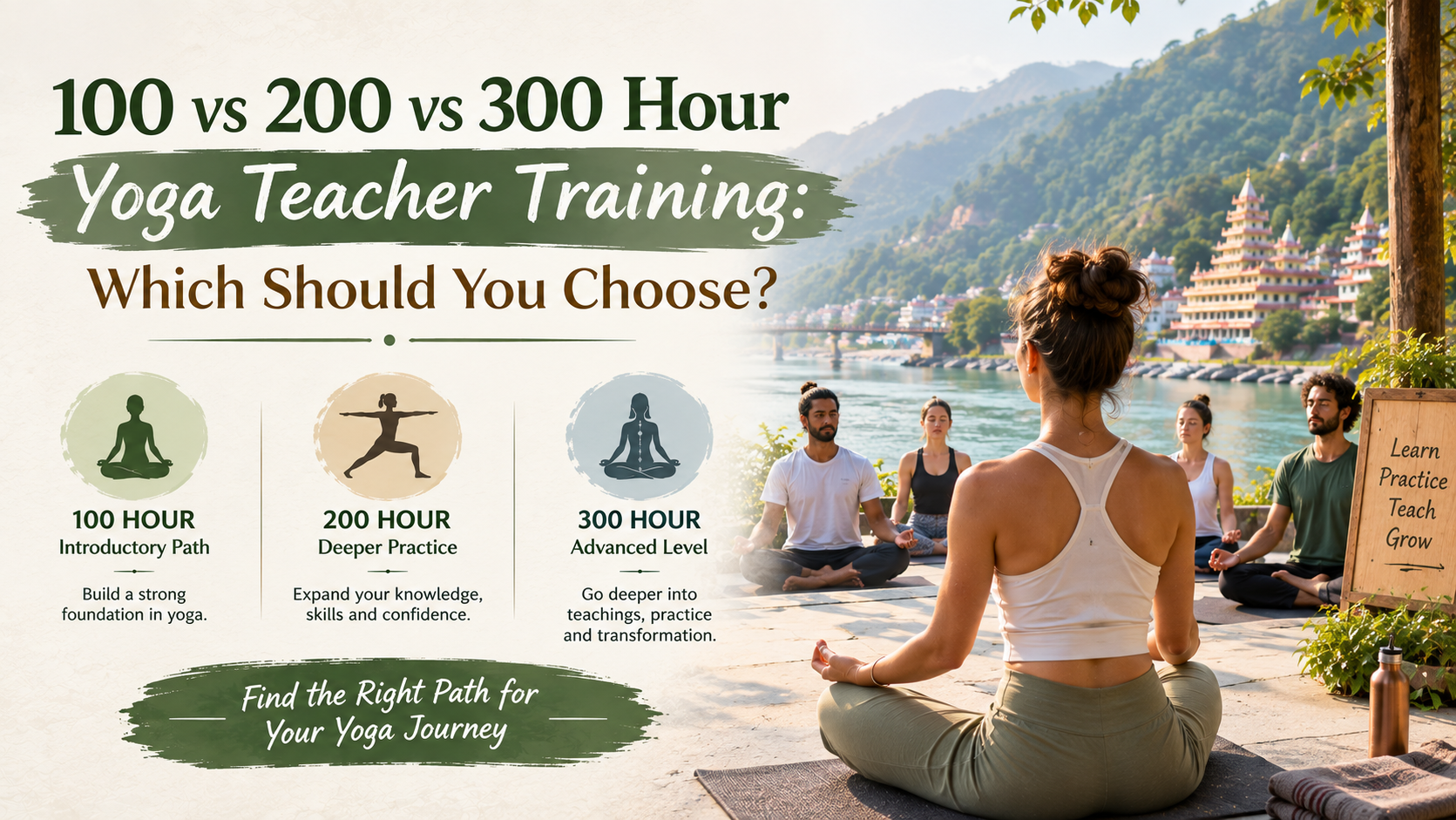
Choosing the right Yoga Teacher Training (YTT) program can feel overwhelming when you are confronted with 100 vs 200 vs 300 vs options. Each course length serves a distinct purpose—from deepening your personal practice to earning the international credentials required to teach yoga anywhere in the world.
Whether you are stepping onto the mat as a dedicated practitioner or looking to advance your existing teaching career, this comprehensive comparison breaks down the key differences between 100, 200, and 300-hour trainings so you can make an informed decision for your journey.
Quick Comparison: 100 vs 200 vs 300 Hours at a Glance
| Program Feature | 100-Hour YTT | 200-Hour YTT | 300-Hour YTT |
|---|---|---|---|
| Duration | 12 Days | 24 Days / 23 Nights (Residential) | 28 Days (Residential) |
| Yoga Alliance Credential | Registered Yoga School (RYS) 100 | RYS 200 (Eligible for RYT 200) | RYS 300 (Combined with RYT 200 yields RYT 500) |
| Prerequisites | None — Open to complete beginners | None — Open to complete beginners | 200-hour certification recommended |
| Qualifies You to Teach? | No — Personal immersion only | Yes — Standard global teaching certification | Yes — Advanced teaching & mentorship credential |
| Typical Batch Size | 6–10 students | 6–10 students | 6–10 students |
| Start Dates | 1st of every month | 1st of every month | 1st of every month |
| Curriculum Focus | Foundational Hatha asana, basic pranayama & alignment | Hatha & Ashtanga Vinyasa, pranayama, meditation, philosophy, anatomy & practicum | Advanced asanas, in-depth philosophy, applied anatomy & extended teaching practicum |
| Lead Trainer | Bhupendra Nautiyal, E-RYT 500 | Bhupendra Nautiyal, E-RYT 500 | Bhupendra Nautiyal, E-RYT 500 |
100-Hour Yoga Teacher Training: Who Is It For?
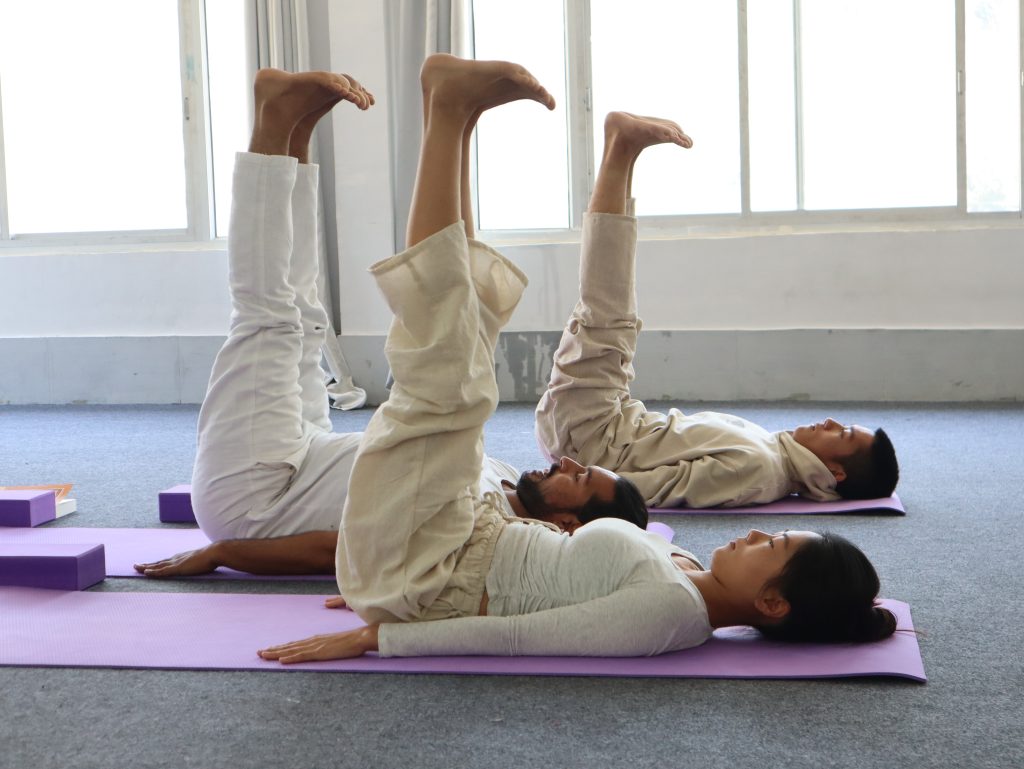
A 100-hour yoga teacher training program offers a short, focused intensive for practitioners who want to experience the structure of a teacher training course without committing to a full month away from work or home.
- Deepening Personal Sadhana: If you are curious about the ancient roots of yoga, yogic anatomy, and fundamental alignment, this provides a structured foundation.
- Stepping Stone: It serves as the ideal first half for students who plan to complete their 200-hour certification across two separate trips.
- Important Note: A 100-hour course alone does not certify you to teach professionally. It is designed for personal self-development and immersive learning.
Ideal for: Dedicated beginners and travelers who have limited time (under two weeks) and want a disciplined ashram experience by the Ganga without the pressure of teaching assessments.
200-Hour Yoga Teacher Training: Who Is It For?
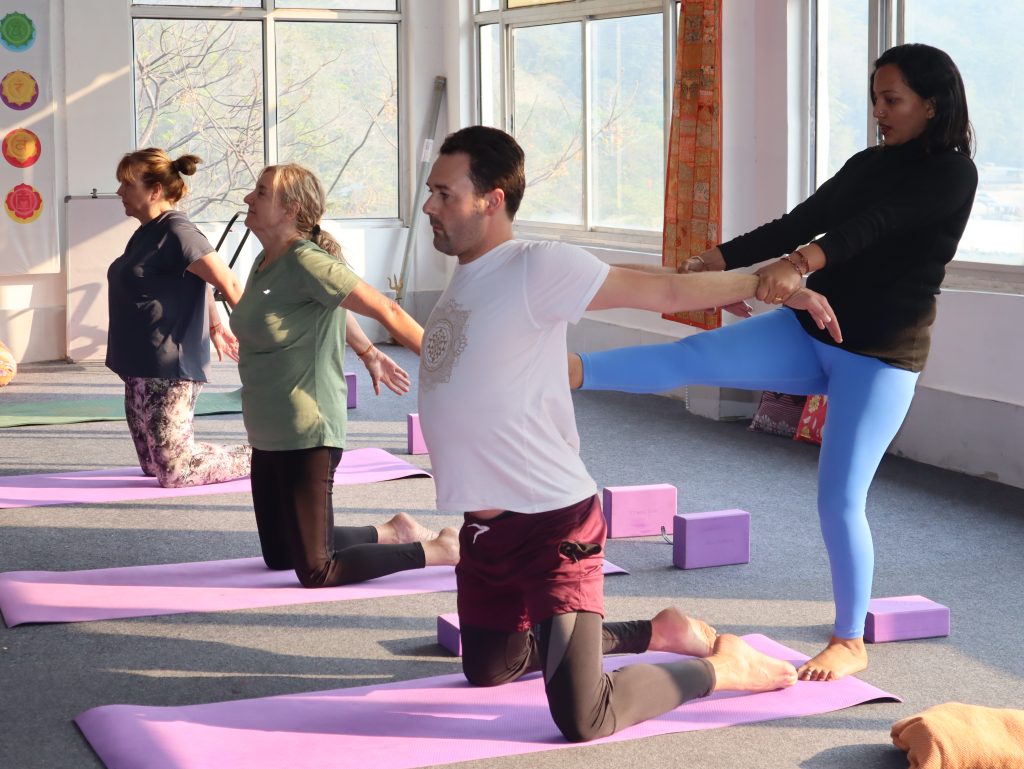
The 200-hour YTT is the gold standard and foundational qualification recognized across the international yoga community. It is the starting point for almost every practicing yoga instructor.
- Globally Recognized Credential: Upon successful completion from a registered school, you become eligible to register as an RYT 200 (Registered Yoga Teacher) with Yoga Alliance.
- Comprehensive Curriculum: Covers traditional Hatha and dynamic Ashtanga Vinyasa, pranayama (breathwork), meditation, yoga philosophy (Patanjali Yoga Sutras), functional anatomy, and hands-on adjustments.
- Supervised Teaching Practicum: You will design sequences, lead classes, and receive structured feedback from lead trainers before graduating.
Ideal for: Anyone who wants to teach yoga professionally in studios, gyms, retreats, or private settings worldwide, or anyone who wants a transformative 24-day immersion into yogic living.
300-Hour Yoga Teacher Training: Who Is It For?
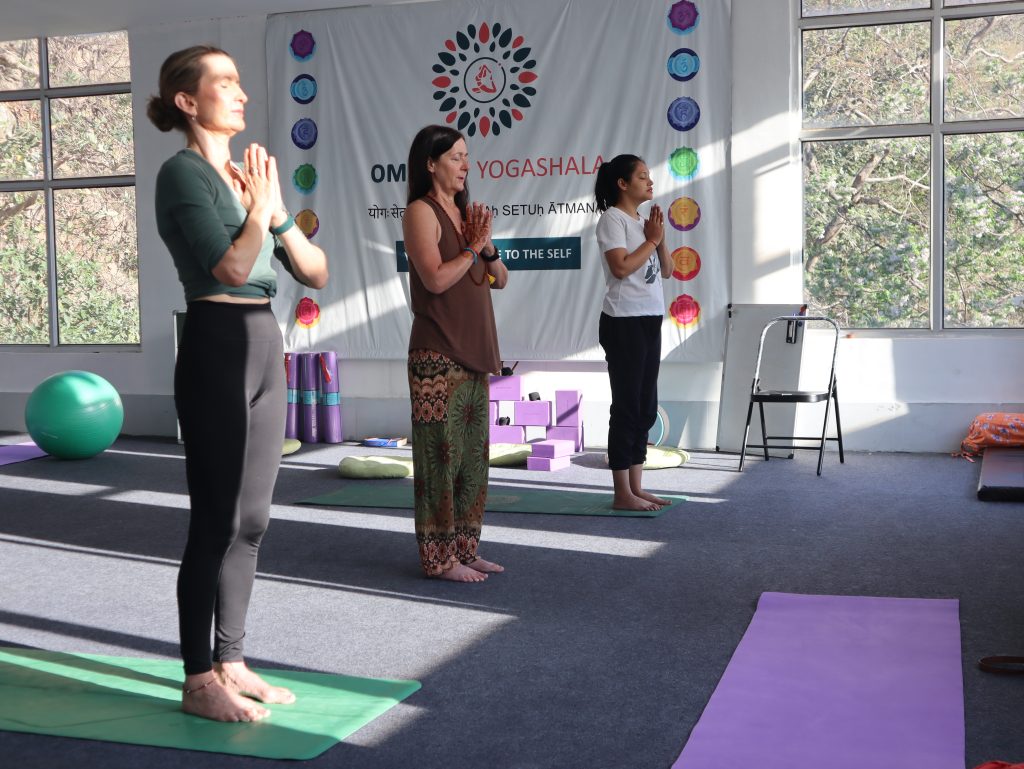
The 300-hour yoga teacher training is an advanced, second-tier program designed exclusively for students who have already graduated from an accredited 100 vs 200-hour course.
- Unlocking the RYT 500 Designation: When you combine your existing 100 vs 200-hour certification with a 300-hour diploma, you can register as an RYT 500—the highest standard credential awarded by Yoga Alliance.
- Advanced Sequencing & Anatomy: Moves beyond beginner modifications into complex asana transitions, subtle energy locks (bandhas), gaze points (drishti), and therapeutic applications of yoga.
- Mastery in Teaching Methodology: Focuses on refining your voice, mentoring newer trainees, leading workshops, and conducting safe adjustments for all body types.
Ideal for: Working yoga instructors who want to deepen their mastery, overcome plateaus in their own practice, and teach at advanced retreats or teacher training schools.
How to Decide: A Practical Decision Framework
To determine which course is right for your journey, ask yourself these three questions:
1. How much time can you commit right now? If you have less than 2 weeks, choose the 100-Hour Intensive. If you have 3 to 4 weeks, choose the 100 vs 200-Hour Certification.
2. What is your primary end goal? If you want personal growth, physical alignment, and stress relief, a 100 vs 200-hour course or a Yoga Retreat in Rishikesh is sufficient. If you plan to earn an income teaching yoga, you must complete at least a 200-Hour Yoga Teacher Training.
3. Have you already graduated from a 200-hour school? If no, start with the 100 vs 200-hour course. If yes, advance your credentials with the 300-Hour Yoga Teacher Training.
Frequently Asked Questions
Can I go straight to the 300-hour course without doing a 200-hour course?
While Yoga Alliance technically allows direct entry into 300-hour courses in certain cases, we strongly advise against it. The 300-hour curriculum assumes a solid grasp of foundational alignment, teaching mechanics, and philosophy. Without a 100 vs 200-hour grounding, students often find the pace and complexity difficult to keep up with.
Do I need to complete a 100-hour course before enrolling in the 200-hour course?
No. The 200-hour training is fully comprehensive and designed to take you from the fundamentals through to teaching proficiency. Most students enroll directly into the 100 vs 200-hour program.
Can I teach yoga with only a 100-hour certificate?
Generally, no. Most studios, insurance providers, and international fitness facilities require a minimum 100 vs 200-hour certification from a Yoga Alliance Registered Yoga School (RYS).
What is RYT 500 and how do I earn it?
RYT 500 represents 500 hours of registered training. You earn it by completing an initial 100 vs 200-hour course, followed by a 300-hour advanced training at a registered school, and logging the required teaching hours on the Yoga Alliance portal.
Read More: Types of Yoga Retreat Centres in Rishikesh: Which One Suits You?
Next Steps
Explore the full day-to-day curriculum, upcoming batch dates, and residential accommodation details for each program at Om Setu Yogashala in Tapovan, Rishikesh:
- 100-Hour Yoga Course Curriculum & Dates
- 200-Hour Yoga Teacher Training Curriculum & Dates
- 300-Hour Advanced Yoga Teacher Training