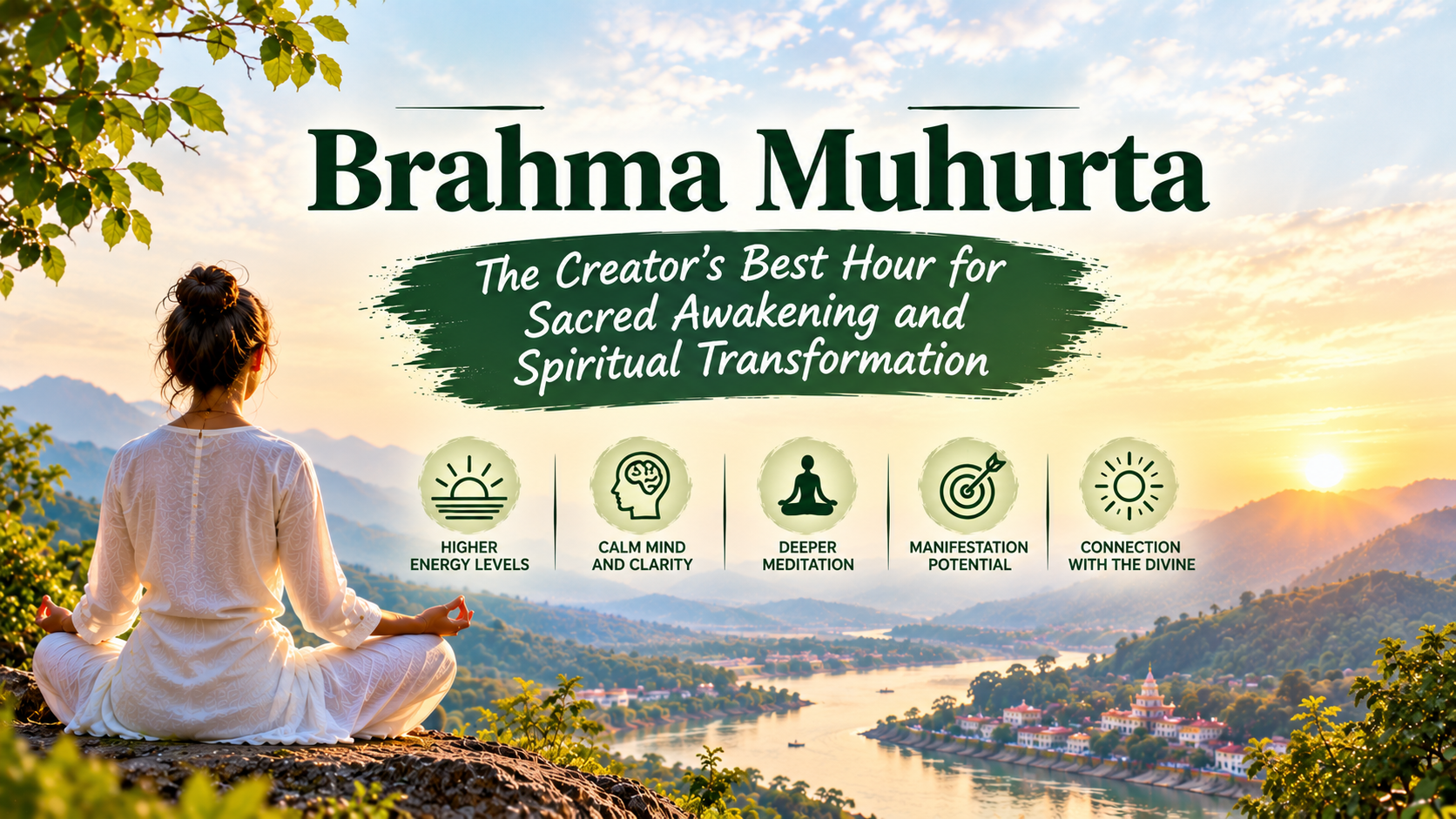
In the sacred science of Ayurveda and the classical yogic traditions of Rishikesh, time is not treated merely as a mechanical measurement, but as an energetic current that directly influences human physiology and consciousness. Among the daily divisions of time, none holds greater reverence than Brahma Muhurta—literally translated as the “Hour of the Creator” or the “Time of Divine Consciousness”. Occurring precisely one hour and thirty-six minutes (96 minutes) before sunrise, this pristine pre-dawn window offers seekers the ideal atmospheric and psychological conditions for deep meditation, pranic vitality, and spiritual transformation.
Quick Facts: Brahma Muhurta
- Sanskrit Meaning: Brahma (the Supreme Reality / the Creator) + Muhurta (a traditional 48-minute unit of time).
- Exact Timing: Begins 96 minutes before local sunrise and concludes 48 minutes before sunrise (spanning the 29th muhurta of the 24-hour cycle).
- Dominant Guna: Saturated with Sattva Guna (absolute purity, peace, and cognitive lucidity), before the rajasic agitation of the waking world begins.
- Ayurvedic Constitution: Governed by Vata Dosha, which naturally facilitates the upward movement of Prana through the central energetic channel (Sushumna Nadi).
- Primary Scriptural Text: Ashtanga Hridaya (Sutrasthana 2.1) by Sage Vagbhata and the Manu Smriti.
- Optimal Activities: Meditation (Dhyana), breathwork (Pranayama), sacred chanting (Japa), philosophical study (Svadhyaya), and setting unshakeable daily intentions.
Scriptural Foundations: The Voice of Ancient Ayurveda
The imperative to rise during this sacred threshold is ancient. In classical Ayurvedic literature, the daily routine (Dinacharya) begins with an unambiguous commandment for longevity and spiritual alignment.
“ब्राह्मे मुहूर्ते उत्तिष्ठेत् स्वस्थो रक्षार्थमायुषः ।
तत्र सर्वार्थशान्त्यर्थं स्मरेच्च मधुसूदनम् ॥”
Translation (Ashtanga Hridaya, Sutrasthana 2.1): “A healthy person desirous of preserving life, health, and vitality should awaken during Brahma Muhurta. At this auspicious hour, one should contemplate the Divine for inner peace and holistic wellbeing.”
In Vedic timekeeping, one complete solar day comprises 30 muhurtas, with each muhurta lasting exactly 48 minutes. The 29th muhurta of this cycle is Brahma Muhurta, followed immediately by Samudra Muhurta (or Rudra Muhurta) before dawn. Medieval treatises like the Hatha Yoga Pradipika and Gheranda Samhita emphasize that without establishing this early morning discipline, mastering the higher stages of yoga—such as sensory withdrawal (Pratyahara), concentration (Dharana), and meditative absorption (Dhyana)—remains extraordinarily difficult because the mind quickly becomes entangled in worldly sensory distractions.
Key Spiritual Benefits of Brahma Muhurta
Waking during this divine hour aligns human biorhythms with the subtle vibration of the Earth, accelerating spiritual growth across multiple dimensions:
- Pristine Sattvic Atmosphere: Because the collective human consciousness is still asleep, the global psychic atmosphere is devoid of aggressive ambition, anxiety, and noise. This external stillness mirrors and deepens your internal silence.
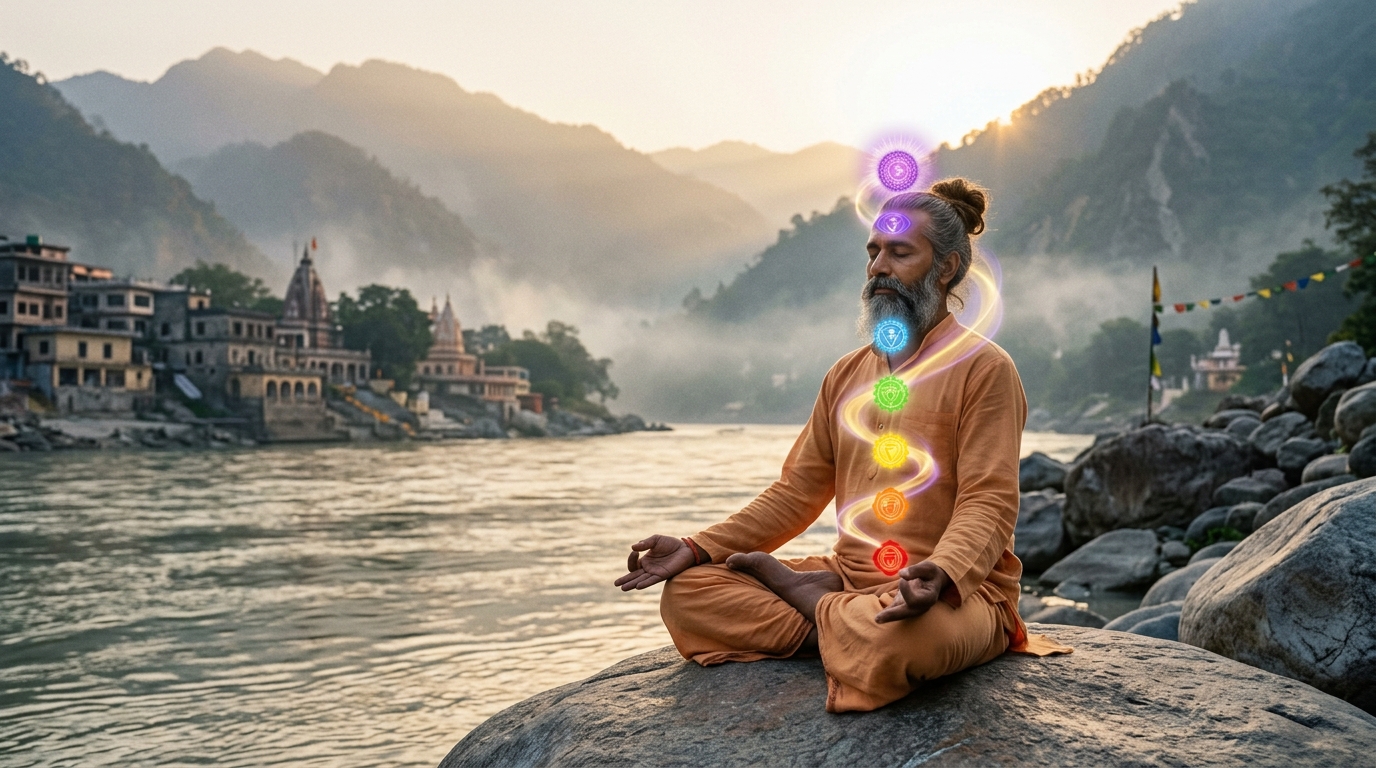
- Effortless Awakening of Sushumna Nadi: The pre-dawn balance between nocturnal coolness and solar warmth creates an energetic equilibrium between Ida (lunar) and Pingala (solar) nadis, opening the central channel (Sushumna) for safe Kundalini energy rising.
- Unlocking Creative Intellect (Buddhi): The Manu Smriti notes that intellectual faculties operate at ten-fold greater retention and insight during this hour, making it the supreme time for studying sacred scriptures or working on higher creative aspirations.
- Cultivation of Self-Mastery: Overcoming the inertia of sleep at 4:30 AM is an intentional act of will that strengthens sensory control (Vashitva Siddhi) and anchors the practitioner in unshakable grounding (Garima Siddhi).
The Scientific & Biological Foundations of Early Awakening
Modern chronobiology, neuroscience, and respiratory medicine provide compelling empirical validation for the ancient wisdom of Brahma Muhurta:
| Physiological Marker | Pre-Dawn Biological Mechanism | Health & Meditative Benefit |
|---|---|---|
| Atmospheric Oxygen | Highest concentration of nascent oxygen (nascent ozone / O3) before sunrise | Deeply oxygenates brain tissues, cleanses red blood cells, and boosts immune vitality |
| Hormonal Transition | Melatonin levels gradually decrease while cortisol gently rises to initiate wakefulness | Prevents morning grogginess (sleep inertia) and stabilizes metabolic circadian rhythm |
| Pineal Gland Activation | Peak neurochemical synthesis in the pineal body (the yogic Third Eye or Ajna Chakra) | Enhances intuitive perception, theta-wave production, and effortless meditation |
Step-by-Step 6-Stage Morning Sadhana Routine
To successfully integrate Brahma Muhurta into your modern life without burnout, establish this authentic sequential progression practiced in traditional Himalayan ashrams:
1. Exact Timing Calculation
Check the exact sunrise time for your city. Count backward by 96 minutes (1 hour and 36 minutes). For example, if sunrise in Rishikesh occurs at 6:00 AM, your Brahma Muhurta window commences at 4:24 AM and continues until 5:12 AM.
2. Karatala Prarthana (Waking Mindfulness)
Upon waking, avoid checking your smartphone or turning on harsh LED lights. Gently rub your palms together to stimulate psychic nerve endings, cup them over your closed eyes, and recite the traditional prayer to awaken the divine creative energy residing in your hands:
“कराग्रे वसते लक्ष्मीः करमध्ये सरस्वती । करमूले तु गोविन्दः प्रभाते करदर्शनम् ॥”
(At the fingertips dwells Lakshmi; in the center dwells Saraswati; at the base dwells Govinda. Thus, we behold our hands at dawn.)
3. Ushapan (Sacred Water Therapy)
Drink one to two glasses of room-temperature water that has been stored overnight in a pure copper vessel (Tamra Jal). This simple Ayurvedic ritual gently stimulates the gastrointestinal tract, stimulates peristalsis, and aids in the natural elimination of systemic toxins (Ama).
4. Shaucha & Shatkarma (Internal Cleansing)
Empty the bowels and bladder thoroughly. Wash your face and eyes with fresh cool water. If trained in classical yogic purification, practice Jala Neti (saline nasal irrigation) to clear mucosal blockages and open both nostrils for balanced pranic flow.
5. Sthira Asana & Nadi Shodhana Pranayama
Perform gentle spinal rotations and Cat-Cow stretches to awaken the joints. Settle into a steady cross-legged posture (Siddhasana or Padmasana) and practice 10 to 15 minutes of rhythmic Nadi Shodhana (Alternate Nostril Breathing) without retention, establishing energetic balance between the sympathetic and parasympathetic nervous systems.
6. Dhyana & Japa (Meditative Absorption)
With nadis cleansed and breath steady, rest your awareness at the eyebrow center (Ajna Chakra) or the spiritual heart (Anahata Chakra). In the pristine silence of 4:30 AM, repeat your personal mantra or simply abide in pure witnessing awareness (Sakshi Bhava) for 20 to 30 minutes.
Ayurvedic Contraindications: When NOT to Wake at Brahma Muhurta
Classical Ayurveda is a science of balance, not rigid dogmatism. Forcing an early wake-up call without adequate sleep or during physical depletion severely aggravates Vata Dosha, leading to chronic adrenal fatigue, anxiety, and digestive impairment.
- Pregnant and Postpartum Women: Rest and tissue recovery (Dhatu Poshana) take absolute priority over early waking.
- Young Children & Frail Elderly: Individuals under 10 or over 75 need extended rest to nurture bodily vitality.
- Acute Medical Conditions: High fever, severe diarrhea, acute insomnia, or post-surgical recovery demand continuous healing sleep.
- Severe Burnout: If you went to sleep past midnight, waking at 4:30 AM will spike cortisol. Prioritize getting 7 to 8 hours of restorative sleep first, then gradually shift your bedtime earlier.
Living the Tradition: Brahma Muhurta in Rishikesh
At Om Setu Yogashala in Rishikesh, nestled alongside the sacred Ganga at the foothills of the Himalayas, Brahma Muhurta is the living heartbeat of our sanctuary. As the ashram bell chimes softly in the pre-dawn silence, the fresh mountain prana flowing down from the high Himalayan peaks makes waking up feel natural, invigorating, and joyous.
Surrounded by sincere seekers and practicing in the collective field (Sangha), the habitual resistance of the conditioned mind effortlessly dissolves. The tranquility cultivated at 5:00 AM on the yoga mat becomes the grounded serenity that sustains your peace through every challenge of modern life.
Awaken Your Highest Potential in the Himalayan Foothills
Immerse yourself in authentic sunrise sadhana, daily pranayama, and timeless Vedic wisdom at Om Setu Yogashala in Rishikesh. Realign your biological clock, rejuvenate your body, and connect with living masters.
Explore Related Yogic Knowledge & Siddhi Guides
Continue your journey into classical Vedic spirituality and esoteric yogic disciplines with our in-depth scholarly guides:
- What is Vashitva Siddhi? — The supernormal power of supreme self-mastery, non-violence, and authentic charisma.
- Garima and Ishitva Siddhi Guide — The dual yogic powers of unshakeable grounding and divine cosmic governance.
- What is Prapti Siddhi? — The yogic power of subtle omnipresence and effortless attainment.
- What is Mahima Siddhi? — The power of infinite expansion and cosmic consciousness.
- Kundalini Awakening Guide — Ancient scriptural origins, spiritual benefits, and safe step-by-step guidance.
Frequently Asked Questions
Exactly what time is Brahma Muhurta?
Brahma Muhurta begins exactly 1 hour and 36 minutes (96 minutes) before sunrise and ends 48 minutes before sunrise. Because sunrise varies with seasons and geographical coordinates, the exact clock time shifts throughout the year (typically between 4:00 AM and 5:00 AM).
What should you avoid doing during Brahma Muhurta?
Classical scriptures strictly advise against consuming heavy meals, engaging in heated arguments, checking social media or stressful news, and engaging in sensory or sexual indulgence during this sacred window, as these activities disturb the pure Sattva Guna.
Is it harmful if I cannot wake up at 4:30 AM every day?
No. Forcing yourself to wake early when sleep-deprived harms your health. If your lifestyle prevents waking at 4:30 AM, focus on going to bed earlier first. You can also honor the spirit of Brahma Muhurta by meditating for 10 minutes upon waking at your regular hour.
Why is meditation significantly easier during Brahma Muhurta?
The absence of collective mental agitation, combined with natural pineal gland activity and the dominance of Sattva Guna, naturally quiets the brain’s default mode network. This allows practitioners to drop into deep theta-wave meditative stillness with minimal effort.
Conclusion
Brahma Muhurta is nature’s most magnificent gift to the spiritual seeker. By rising during this sacred pre-dawn threshold, you align with the timeless rhythms of the cosmos, bathe your consciousness in pure Sattva, and establish a profound anchor of inner peace that remains unshaken throughout the day. Honor the call of the Creator’s Hour, and witness the transformative blossoming of your body, mind, and spirit.