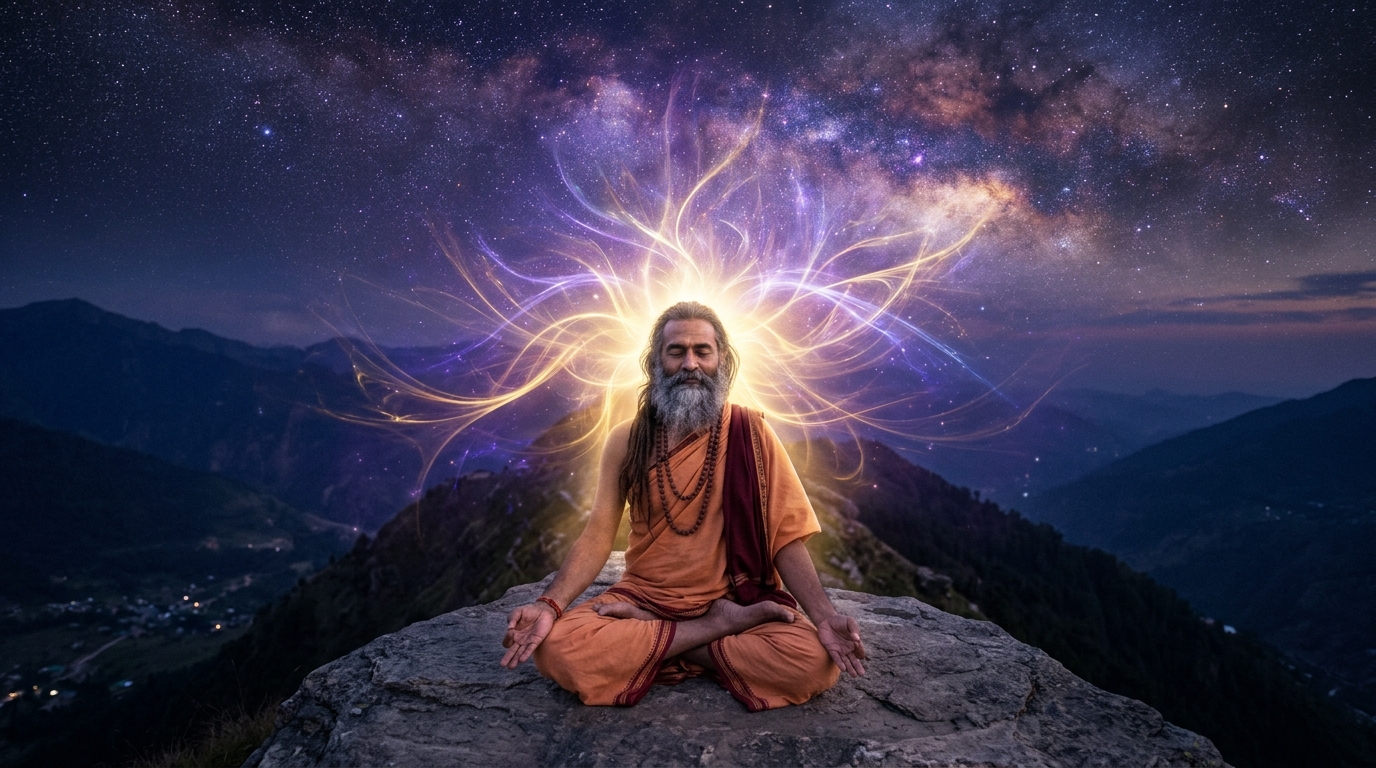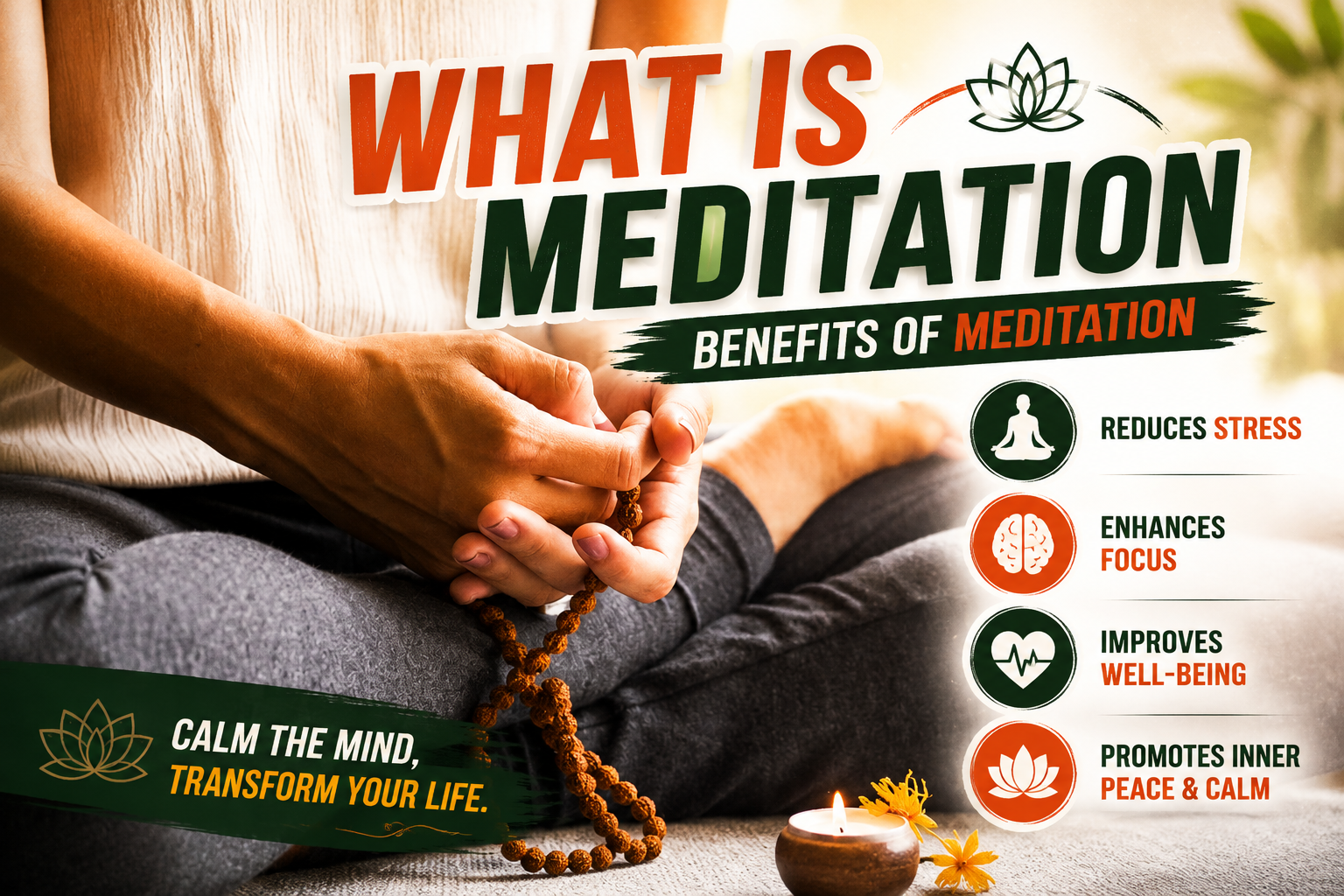
Meditation is the heart of classical yogic sadhana and an indispensable pillar of our Yoga Teacher Training in Rishikesh. While modern culture frequently describes meditation merely as a relaxation tool or stress-relief technique, in traditional yoga it is recognized as Dhyana—the seventh limb of Patanjali’s Ashtanga Yoga, representing an uninterrupted flow of refined awareness toward the true self.
The human mind is constantly propelled by desires, memories, fears, and internal chatter. The moment one ambition is fulfilled, another quickly takes its place, keeping us trapped in a perpetual cycle of craving and restlessness. Without conscious awareness, many people confuse the restless chasing of external desires with the genuine purpose of their lives.
Meditation provides the sacred pause needed to observe this mental momentum without becoming entangled in it. Just as unguided fire causes destruction while harnessed fire warms and illuminates, an untrained mind scatters your energy, whereas a concentrated, meditative mind directs your inner power toward peace, creative clarity, and self-realization.
During an immersive Yoga Retreat in Rishikesh, students step away from worldly noise to experience what meditation truly feels like. It is not sleep, nor is it forced mental suppression. Rather, meditation is a state of alert, luminous presence—relaxed yet fully awake—where the surface turbulence of thoughts gradually settles into deep internal stillness. Discover how to deepen this quietude in our guide on finding silence in your yoga practice.

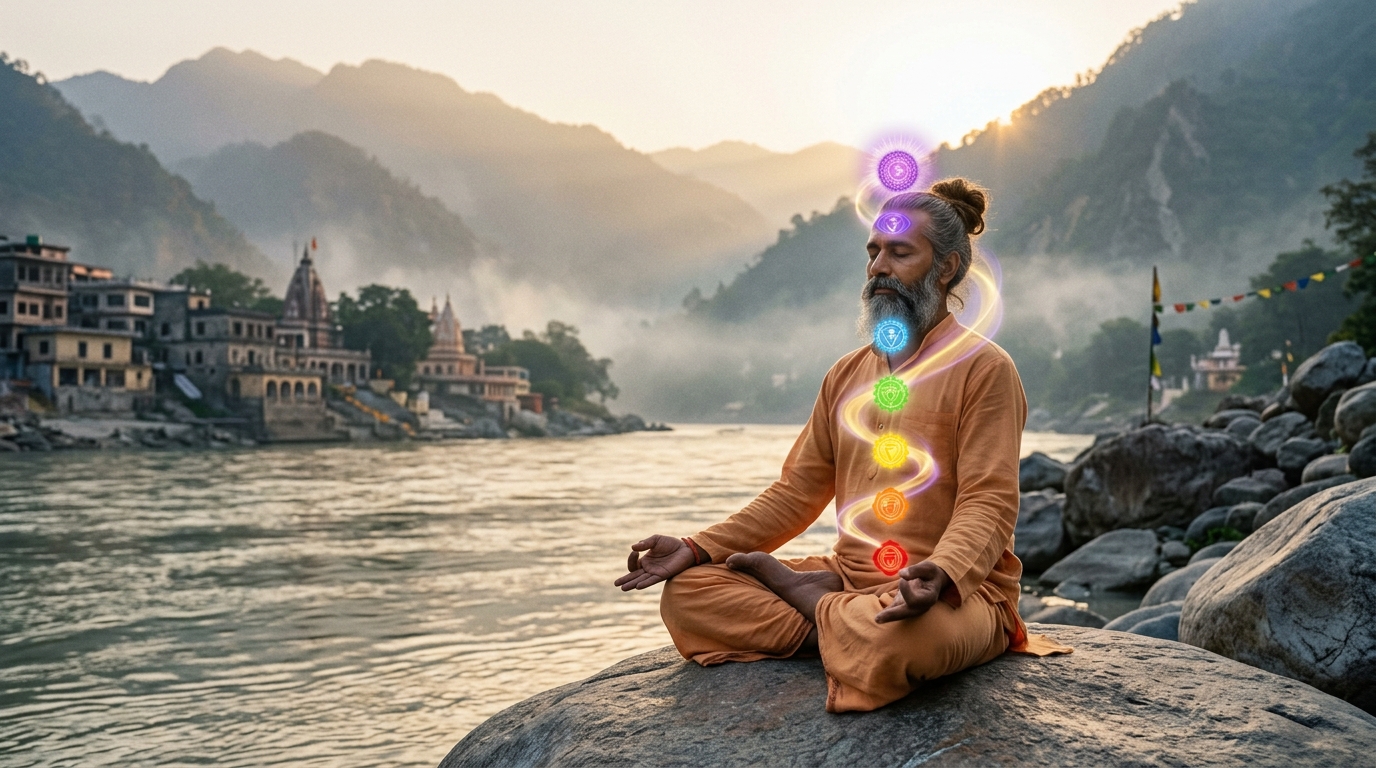
Sitting by the banks of the sacred Ganges in Rishikesh, the spiritual energy of the Himalayas naturally supports this inward journey, where students explore diverse meditation techniques on retreat. Yet whether you practice in an ashram or in your living room, meditation requires steady, patient discipline. In the initial days, the mind resists stillness; with daily practice, however, the nervous system recalibrates and an unmistakable sense of lightness, vitality, and equanimity begins to permeate every aspect of your life.
How to Meditate: A Step-by-Step Guide for Beginners
At Om Setu Yogashala, we teach that meditation is an organic state that arises naturally when the right conditions are established. While the classical scriptures describe numerous meditation techniques (such as breath awareness, mantra japa, and visualization), the simplest and most accessible method is conscious breath observation (Anapanasati or Prana Dharana), built on foundational pranayama breathwork:
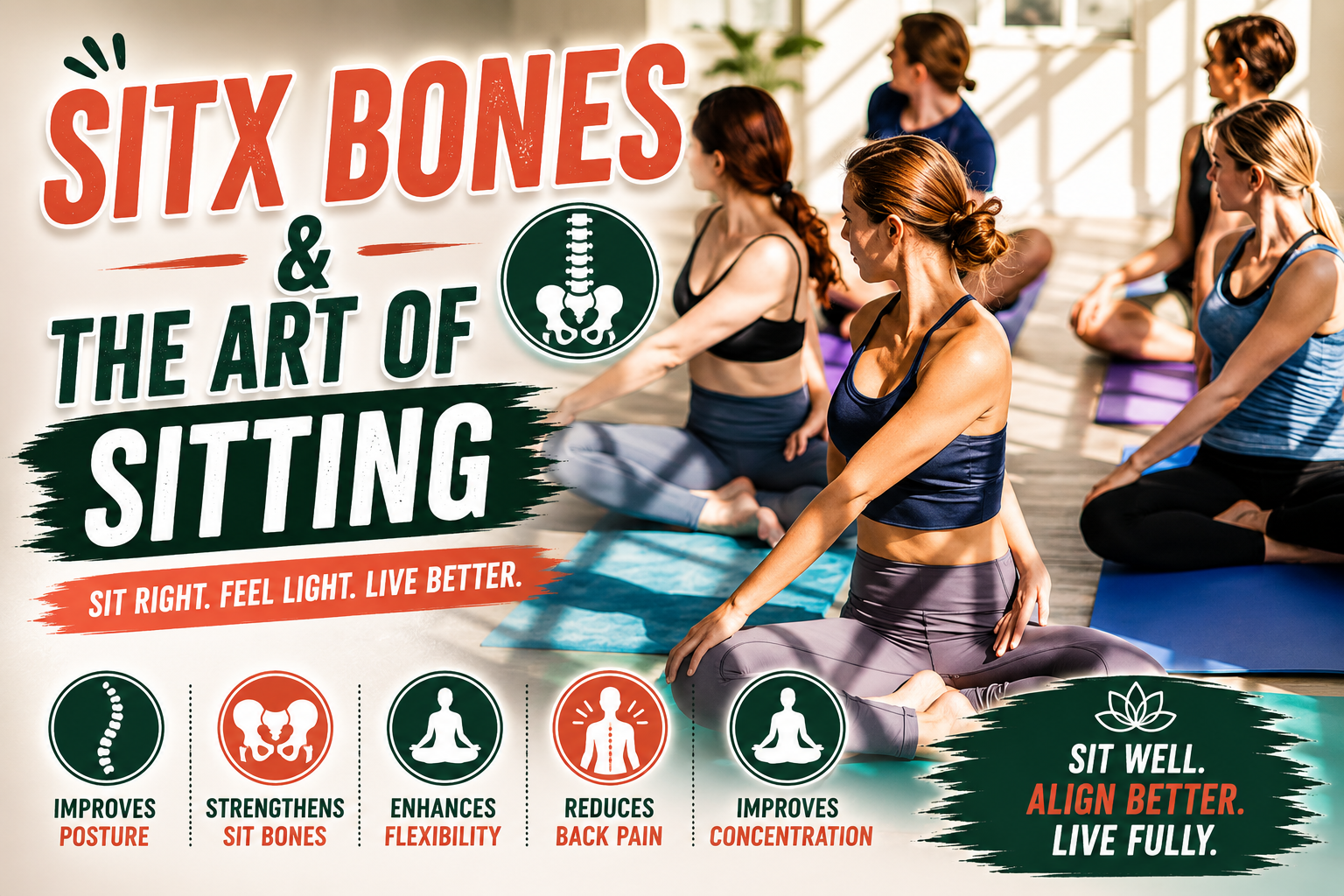
1. Establish an Erect, Comfortable Posture: Sit on a firm cushion or folded blanket in a stable seated posture (Sukasana, Padmasana, or Vajrasana). Ensure that your spine, neck, and head remain comfortably aligned in a straight vertical line. If sitting on the floor causes knee or hip discomfort, sit straight on a supportive chair with both feet resting flat on the ground.
2. Release Physical Tension: Softly close your eyes. Relax your facial muscles, drop your shoulders away from your ears, and rest your hands on your knees in Chin Mudra or Jnana Mudra. Take three slow, deep diaphragmatic breaths, consciously releasing tension with each exhalation.
3. Anchor Awareness on the Natural Breath: Allow your breathing to settle into its natural, effortless rhythm. Do not force or manipulate the breath. Anchor your attention at the tip of the nostrils or the gentle rise and fall of the navel. Feel the cool air entering and the warm air leaving with full, tender awareness.
4. Observe Thoughts Without Judgment: When thoughts, sensations, or sounds arise, do not fight them or try to force your mind into a blank void. Attempting to suppress thoughts only creates mental tension and headaches. Simply acknowledge the thought like a passing cloud in an open sky, and gently guide your attention back to the breath.
5. Start Small and Build Consistency: In the beginning, sit for just 5 to 10 minutes every morning. Consistency is far more impactful than duration. As your concentration deepens, you can comfortably extend your practice to 20, 30, or 45 minutes.

Throughout your sadhana in Hatha and Ashtanga Yoga, remember that meditation is not a slumbering unconsciousness. You remain fully conscious of your internal environment while detached from reactive impulses. In this alert stillness, the true nature of the self reveals itself.

Key Guidelines for an Effective Meditation Practice
To cultivate depth and avoid common obstacles in meditation, observe these practical recommendations:
1. Select a Dedicated, Quiet Space: Practice in a clean, quiet corner free from heavy foot traffic, electronic notifications, and visual clutter. Over time, this dedicated space absorbs meditative vibrations and makes settling into stillness effortless.
2. Practice During Brahma Muhurta: The early morning hours (between 4:00 AM and 6:00 AM, known as Brahma Muhurta) are considered the most spiritually potent time for meditation. The atmosphere is quiet, the air is charged with prana, and the mind is naturally calm before daily duties begin. Sunset (Sandhya) is another auspicious window.
3. Ensure Physical Comfort: Choose an asana where you can remain steady and motionless (Sthira Sukham Asanam) without pain. Physical discomfort distracts the mind; support your posture with cushions or blocks whenever needed.
4. Practice on an Empty Stomach: Avoid meditating immediately after heavy meals. Digestion redirects blood and prana to the digestive tract, inducing drowsiness (tamas). Allow at least 2 to 3 hours after eating before sitting for meditation.
Core Benefits of Regular Meditation
1. Calms the Nervous System: Shifts physiology from chronic sympathetic stress to parasympathetic restoration.
2. Sharpens Concentration: Develops Ekagrata (one-pointed focus), reducing cognitive distraction.
3. Cultivates Mental Clarity: Clears mental fatigue and helps you make decisions from grounded discernment.
4. Improves Conscious Communication: Cultivates reflective listening and reduces reactive emotional outbursts.
5. Cellular Rejuvenation: Enhances restorative rest and promotes deep holistic regeneration across body and mind.

5 Proven Physiological & Health Benefits
1. Regulates Blood Pressure & Heart Rate: By triggering the relaxation response, meditation lowers vascular tension, stabilizes blood pressure, and reduces resting heart rate.
2. Eases Chronic Stress-Induced Pain: Relieves tension headaches, neck and shoulder tightness, and psychosomatic discomfort by reducing neuromuscular tension.
3. Balances Neurotransmitters: Studies indicate regular meditation boosts serotonin, dopamine, and GABA production, fostering steady mood balance and emotional wellbeing.
4. Strengthens Immune Resilience: By curbing chronic systemic inflammation driven by elevated cortisol, meditation bolsters your body’s natural defense mechanisms.
5. Enhances Vital Energy (Prana): Optimizes respiratory efficiency and cellular oxygenation, elevating sustained energy throughout the day without nervous exhaustion.
Mental, Cognitive & Neurological Transformation
Meditation shifts brainwave activity from agitated beta frequencies (13–30 Hz) into coherent alpha (8–12 Hz) and theta (4–8 Hz) patterns. In this state, the brain experiences deep restorative recovery while remaining keenly aware. Neuroscientific research confirms that sustained meditation practice strengthens the prefrontal cortex—the region governing executive function, emotional regulation, and decision-making—while reducing the reactivity of the amygdala (the brain’s fear and stress center).
1. Emotional Stability: Dissolves knee-jerk emotional reactivity and cultivates quiet poise during adversity.
2. Enhanced Creative Flow: Quietens the inner critic, opening space for original thinking and spontaneous insight.
3. Awakened Intuition: Cleanses mental filters so that deep intuitive wisdom (Pratibha) can be heard clearly.
4. Inner Contentment (Santosha): Cultivates profound joy independent of changing external circumstances.
5. Balanced Discernment (Viveka): Combines razor-sharp focus with expansive awareness, preventing mental fatigue.
6. Reduced Anxiety & Overthinking: Halts repetitive rumination and restores inner equilibrium.
7. Integration of Acumen & Consciousness: Sharp intelligence balanced by spacious peace results in mastery over life’s challenges.
5 Benefits of Meditation for Students & Beginners
1. Strengthens Self-Confidence: Overcomes performance anxiety and fosters steady self-assurance.
2. Superior Memory Retention: Heightens cognitive assimilation, helping students retain complex subject matter.
3. Balanced Sleep Architecture: Regulates circadian cycles and ensures refreshing, deep sleep before intensive study.
4. Greater Mental Stamina: Prevents study-induced burnout and maintains sustained concentration.
5. Emotional Flexibility: Helps young practitioners adapt gracefully to academic, personal, and social transitions.
Deepen your practice and experience guided meditation by the sacred Ganges on our Yoga & Meditation Retreat in Rishikesh.
This article is for educational and general information purposes and does not substitute for personalized medical advice. If you have chronic health conditions or severe clinical depression, please consult your physician before undertaking prolonged silent meditation practices.
Practice & Study Authentic Yoga in Rishikesh
Join small-group residential Yoga Teacher Training courses (6–10 students) or immersive Himalayan wellness retreats at Om Setu Yogashala in Tapovan, Rishikesh.