Quick Guide: Pranayama at a Glance
- Sanskrit Root: Prāṇāyāma (प्राणायाम) — Prāṇa (vital life-force energy) + Āyāma (conscious expansion, regulation, and mastery).
- Classical Definition: The conscious regulation and cessation of the uncontrolled breath cycle (Patanjali’s Yoga Sutras 2.49 & Hatha Yoga Pradipika 2.2).
- The 4 Breath Phases: Puraka (Inhale), Antar Kumbhaka (Internal retention), Rechaka (Exhale), and Bahir Kumbhaka (External retention).
- 6 Primary Types: Nadi Shodhana (Balancing), Bhramari (Vagal calm), Ujjayi (Focus & heat), Kapalbhati (Cleansing kriya), Bhastrika (Vitalizing), and Sheetali/Sheetkari (Cooling).
- Physiological Mechanisms: Stimulates vagus nerve tone, improves Heart Rate Variability (HRV), optimizes arterial oxygen delivery (Bohr Effect), and transitions brainwaves into serene alpha/theta states.
- Best Time to Practice: Early dawn (*Brahmamuhurta*) or dusk on an empty stomach, seated with an erect, unstrained spine.
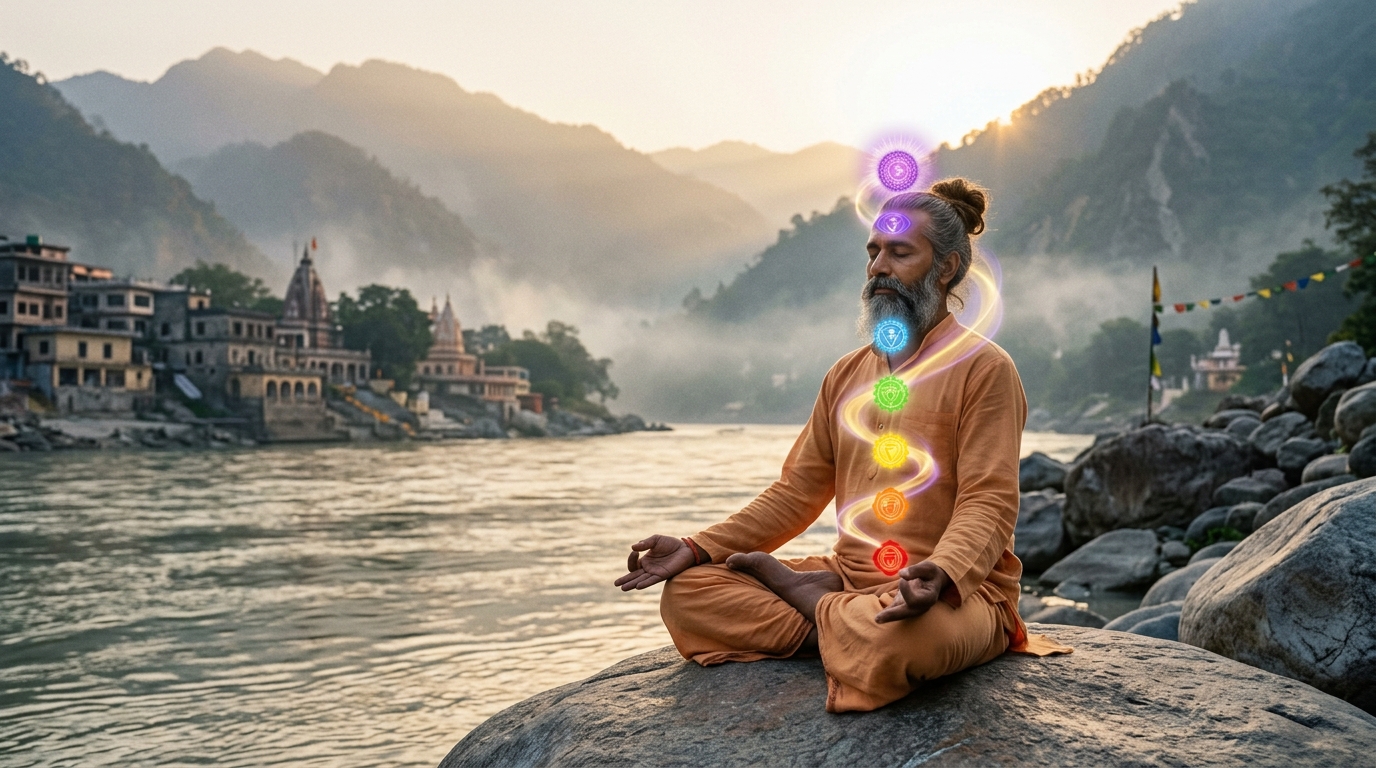
In authentic yogic practice, breath is far more than a mechanical exchange of oxygen and carbon dioxide. It is the direct physical manifestation of Prana — the universal life-force energy animating every nerve cell, organ, and thought pattern. In the classical tradition taught at Om Setu Yogashala in Rishikesh, mastering the breath is recognized as the sovereign gateway to mastering the mind.
The word Pranayama is composed of two Sanskrit roots: Prana (the vital life-force) and Ayama (expansion, extension, and conscious restraint). Pranayama is the fourth limb of Ashtanga Yoga, serving as the essential bridge connecting physical postures (Asana) with the internal meditative disciplines of withdrawal (Pratyahara), concentration (Dharana), and meditation (Dhyana).
“तस्मिन् सति श्वासप्रश्वासयोर्गतिविच्छेदः प्राणायामः॥”
— Patanjali Yoga Sutras (Sadhana Pada, 2.49)
Translation: “When stability of posture is established, the cessation or conscious regulation of the erratic motion of inhalation (Shwasa) and exhalation (Prashwasa) is Pranayama.”
In the Hatha Yoga Pradipika (2.2), Yogi Swatmarama declares: “Chale vate chalam chittam nischale nischalam bhavet” — when the breath wanders, the mind is unsteady; when the breath is stilled, the mind becomes motionless and the yogi attains longevity. Whether studied during our foundational 200-Hour Yoga Teacher Training in Rishikesh or experienced during an immersive Yoga Retreat in Rishikesh, pranayama is the core tool that transforms yoga from physical gymnastics into profound spiritual sadhana.

The 4 Classical Phases of the Breath Cycle (Chaturanga Pranayama)
In modern everyday life, most people breathe unconsciously in two shallow, hurried phases: inhale and exhale. Classical yoga expands breathwork into four distinct, intentional phases:
| Phase (Sanskrit) | Action | Energetic & Physiological Effect |
|---|---|---|
| 1. Puraka (पूरक) | Slow, continuous inhalation | Draws fresh oxygen and cosmic Prana into the lungs, expanding the ribcage three-dimensionally. |
| 2. Antar Kumbhaka (अन्तर कुम्भक) | Internal breath retention | Full lungs. Maximizes alveolar gas diffusion, stills brain electrical activity, and charges the cellular nadis. |
| 3. Rechaka (रेचक) | Smooth, controlled exhalation | Flushes metabolic carbon dioxide, pacifies sympathetic arousal, and releases deep somatic tension. |
| 4. Bahir Kumbhaka (बाह्य कुम्भक) | External breath retention | Empty lungs. Dissolves ego-identification, activates deep relaxation reflexes, and enters profound void (*Sunyata*). |
Crucial Practice Note: Beginners should focus exclusively on smooth, unhurried Puraka and Rechaka (such as a balanced 1:1 or 1:2 ratio). Retention (Kumbhaka) should only be introduced gradually under the supervision of a seasoned teacher to prevent arterial strain.
The 6 Essential Types of Pranayama: Practice, Science & Benefits
Classical Hatha texts and the Vedic tradition delineate various pranayama techniques, each producing distinct physiological and energetic outcomes. Here are the six primary types practiced and taught in our Himalayan school:
1. Nadi Shodhana (Alternate Nostril Breathing — Anulom Vilom)
The Harmonizer of Opposites: The human nervous system operates between two opposing poles: the sympathetic (fight-or-flight) and parasympathetic (rest-and-digest). In yogic anatomy, these correspond to Pingala Nadi (solar channel / right nostril / left brain hemisphere) and Ida Nadi (lunar channel / left nostril / right brain hemisphere).
- How to Practice: Sit with an erect spine. Adopt Nasagra or Vishnu Mudra with your right hand. Close the right nostril with your thumb and gently inhale through the left for a count of 4. Close both nostrils softly, then release the thumb and exhale smoothly through the right nostril for a count of 4 (or 8). Inhale through the right for 4, close, and exhale through the left for 4 (or 8). This completes one full round. Practice 10 to 12 rounds.
- Key Benefits: Equalizes air flow across both nasal passages, harmonizes left and right cerebral hemispheres, reduces systolic blood pressure, and stills racing thoughts before meditation.

2. Bhramari Pranayama (Humming Bee Breath)
The Neurological Calmer: Named after the black Indian bee (*Bhramari*), this technique utilizes auditory resonance and cranial vibration to induce rapid neural tranquility.
- How to Practice: Sit comfortably. Close your eyes and gently place your thumbs on the tragi (the small cartilage flaps over the ear canals) to seal external sounds (or practice *Shanmukhi Mudra*). Inhale deeply through both nostrils. On exhalation, make a smooth, low-pitched humming sound like a bee at the back of your throat. Feel the cranial bones and forehead reverberate with the sonic vibration. Repeat for 7 to 9 cycles.
- Scientific Mechanism: Clinical research demonstrates that humming during exhalation increases paranasal nitric oxide (NO) production by up to 15-fold, opening bronchial airways, improving pulmonary oxygenation, and activating the cranial vagus nerve to dissolve acute anxiety.
3. Ujjayi Pranayama (Victorious / Ocean Breath)
The Internal Furnace & Focus Anchor: The signature breath of Vinyasa and Ashtanga Yoga, characterized by a soft, rhythmic whispering sound akin to ocean waves breaking on the shore.
- How to Practice: Inhale and exhale through the nose while slightly contracting the glottis (the epiglottic valve at the back of the throat). The airflow should produce a soft, soothing audible hiss. Maintain a steady, unforced cadence throughout both inhalation and exhalation.
- Key Benefits: Creates gentle intra-thoracic pressure that stimulates carotid sinus baroreceptors, steadily lowering heart rate. The internal friction warms the respiratory passages and acts as an unbreakable sensory anchor during dynamic movement.
4. Kapalbhati (Skull Shining Breath / Shatkarma)
The Cleansing Fire: Technically classified as one of the six classical purification kriyas (*Shatkarmas*) in the Hatha Yoga Pradipika, Kapalbhati acts as a dynamic respiratory exercise that clears mental fog and stagnant mucous.
- How to Practice: Inhale naturally. Then, expel the breath in rapid, active, rhythmic contractions of the lower abdominal wall against the spine. Inhalation happens automatically and passively as the belly relaxes. Practice at a rate of 1 stroke per second, completing 3 rounds of 30 to 50 strokes, pausing for natural resting breaths between rounds.
- Key Benefits: Massages the visceral organs, fires up metabolic digestion (*Jatharagni*), expels stale carbon dioxide from the lung bases, and produces mental clarity (*Kapala* = skull, *Bhati* = shining/illuminating).
5. Bhastrika Pranayama (Bellows Breath)
The Pranic Generator: Modeled after the rhythmic pumping of a blacksmith’s bellows, Bhastrika is a powerful heating technique where **both inhalation and exhalation are active and forceful**.
- How to Practice: Sit tall. Inhale vigorously through the nose while expanding the chest and diaphragm fully, then exhale immediately and forcefully through the nose, drawing the belly inward. Maintain an even, energetic rhythm for 15 to 20 breaths, followed by a slow, deep inhalation and peaceful exhalation.
- Key Benefits: Clears excess Kapha (phlegm and heaviness), oxygenates the vascular system, elevates sluggish metabolic energy, and stimulates Kundalini prana along the spine.
6. Sheetali & Sheetkari (The Cooling Breaths)
The Internal Thermostat: Unique among pranayama practices because they draw air in through the mouth to actively lower core body temperature.
- Sheetali Technique: Roll the sides of your tongue into a straw-like tube and protrude it slightly past your lips. Inhale slowly through the curled tongue, drawing cool air across the moist surface. Close your mouth and exhale smoothly through both nostrils.
- Sheetkari (Alternative for non-curlers): If you cannot genetically curl your tongue, lightly touch your teeth together, curl your lips open, and draw air in with a gentle hissing sound across your teeth. Close the lips and exhale through the nose.
- Key Benefits: Directly pacifies aggravated Pitta Dosha (excess heat, acid reflux, skin eruptions, and fiery anger), quenches thirst, and cools the nervous system in hot climates.

Proper Seated Posture for Pranayama Practice
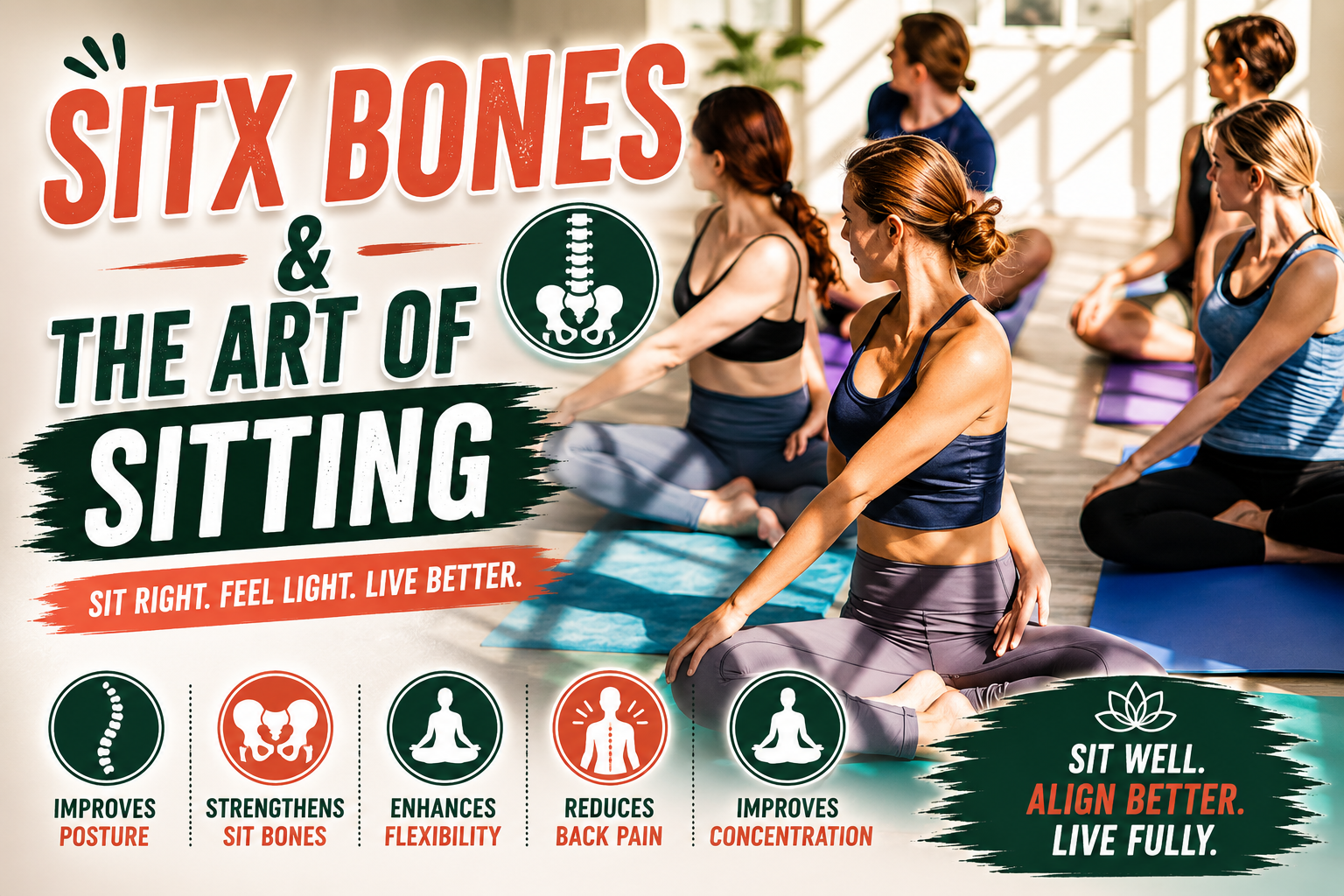
Patanjali’s sutra “Sthiram Sukham Asanam” (posture must be steady and comfortable) is an essential prerequisite for breathwork. If your physical posture is slumped or tense, the diaphragm is compressed, the lungs cannot expand into their posterior lobes, and subtle prana cannot ascend through the central spinal canal (Sushumna Nadi).
- Classical Asanas: Siddhasana (Accomplished Pose), Padmasana (Lotus Pose), Sukhasana (Easy Cross-Legged on a firm cushion), or Vajrasana (Thunderbolt Pose).
- Spinal Alignment: Keep the pelvis slightly tilted forward, the lumbar spine naturally curved, chest gently lifted without arching the ribs, and the chin lightly tucked (*Jalandhara Bandha* orientation) to elongate the cervical spine.
- Chair Modification: If floor sitting creates knee, hip, or lower back pain, sit near the front edge of a sturdy chair with feet flat on the floor, hip-width apart, and spine self-supported away from the backrest.

The Proven Neurological & Physiological Benefits of Pranayama
Modern clinical neuroscience and cardiovascular physiology now confirm what Himalayan masters have taught for millennia:
- Vagal Tone & Autonomic Balance: Conscious exhalation prolonging stimulates the cranial tenth nerve (Vagus Nerve), triggering acetylcholine release that slows heart rate, lowers blood pressure, and reverses chronic sympathetic fight-or-flight burnout.
- Optimized CO2 Tolerance & Oxygen Delivery (The Bohr Effect): Contrary to popular myth, deep breathing is not about hyperventilating large amounts of air; it is about slow, efficient respiration that maintains optimal arterial carbon dioxide levels, allowing red blood cells to deliver oxygen into brain tissue and muscles effortlessly.
- Enhanced Heart Rate Variability (HRV): Regular practice of resonant breathing (5.5 to 6 breaths per minute, as practiced in slow Nadi Shodhana) synchronizes cardiac rhythm with respiration, significantly increasing HRV — the clinical gold standard for cardiovascular resilience and stress recovery.
- Brainwave Modulation: Slow pranayama shifts cortical activity away from high-frequency beta waves (associated with stress and obsessive thinking) into rhythmic alpha (8–12 Hz) and theta (4–8 Hz) states, fostering deep creative insight and emotional calm.
- Immune & Respiratory Strengthening: Deep diaphragmatic excursion moves lymphatic fluid through thoracic ducts, flushes old air from pulmonary dead space, and strengthens intercostal muscle endurance.
The Spiritual Fruits of Pranayama: Patanjali’s Insights
In Chapter 2 of the Yoga Sutras, Maharishi Patanjali describes two profound spiritual transformations that unfold from sustained pranayama:
1. Removal of the Mental Veil (Sutra 2.52)
“ततः क्षीयते प्रकाशावरणम्” (Tatah kshiyate prakasha avaranam)
As the breath is refined, the dense veil of Rajas (restlessness) and Tamas (inertia) that obscures the luminous inner light of consciousness dissolves. Mental fog and reactive emotional patterns give way to clarity.
2. Fitness for Deep Concentration (Sutra 2.53)
“धारणासु च योग्यता मनसः” (Dharanasu cha yogyata manasah)
The scattered, monkey-like tendencies of the mind are tamed. The practitioner develops one-pointed attention (*Ekagrata*), making the transition into effortless meditation natural, organic, and sustainable.

A Safe 15-Minute Daily Pranayama Routine for Beginners
You do not need hours of complex retention to experience the profound benefits of breathwork. Commit just 15 minutes every morning following this sequence:
- Minutes 0–3: Centering & Diaphragmatic Awareness: Sit comfortably. Close your eyes. Place one hand on your heart and one on your abdomen. Observe the natural breath without controlling it. Then transition into gentle belly breathing: feeling the navel expand on inhalation and soften on exhalation (equal 4:4 count).
- Minutes 3–6: Kapalbhati (Purification): Practice 3 rounds of 30 gentle abdominal pumps, resting with deep, natural breaths between rounds. Clear the sinuses and awaken digestion.
- Minutes 6–11: Nadi Shodhana (Balancing): Practice 8 to 10 unhurried rounds of alternate nostril breathing without retention. Inhale for 4 counts, exhale smoothly for 4 or 6 counts.
- Minutes 11–14: Bhramari (Calming Resonance): Practice 6 to 8 slow cycles of humming bee exhalations. Feel the vibration soothing the brain tissue.
- Minute 14–15: Silent Absorption: Rest in total stillness. Observe the serene, motionless state of the mind and the subtle current of prana circulating freely throughout your body.
Safety Guidelines & Contraindications
Because pranayama alters nervous and circulatory hemodynamics, always observe these classical safety rules:
- Empty Stomach Rule: Never practice vigorous pranayama (especially Kapalbhati or Bhastrika) immediately after eating. Wait at least 3 to 4 hours after heavy meals, or practice early in the morning before breakfast.
- No Violent Strain: If you feel dizzy, breathless, or panicked, stop immediately and return to natural diaphragmatic breathing. In the words of the Hatha Yoga Pradipika, prana should be tamed gradually like a lion or elephant; reckless force damages the nervous system.
- Hypertension & Cardiac Precautions: Individuals with uncontrolled high blood pressure, heart disease, or glaucoma must avoid aggressive breath retention (*Kumbhaka*) and forceful rapid pumping (*Bhastrika*). Stick to gentle, soothing techniques like slow Nadi Shodhana and Bhramari.
- Pregnancy Considerations: Pregnant women should avoid forceful abdominal contractions (Kapalbhati) and Kumbhaka, focusing instead on gentle, cooling, and balancing breaths.
Frequently Asked Questions About Pranayama
What are the main types of Pranayama?
The primary types of Pranayama include Nadi Shodhana (Alternate Nostril Breathing for nervous equilibrium), Bhramari (Humming Bee Breath for anxiety and vagal calm), Ujjayi (Victorious Ocean Breath for heat and focus), Kapalbhati (Skull Shining Breath for detoxification), Bhastrika (Bellows Breath for vitality), and Sheetali/Sheetkari (Cooling Breaths for reducing internal heat and Pitta dosha).
What is the best time of day to practice Pranayama?
The ideal time is early dawn (*Brahmamuhurta*, roughly 90 minutes before sunrise) when the atmosphere is charged with stillness and pure Prana. The second best time is twilight at dusk. Pranayama should always be practiced on an empty stomach or at least 3 to 4 hours after a meal.
What is the difference between Kapalbhati and Bhastrika?
In Kapalbhati, exhalation is active and forceful while inhalation is completely passive. It is technically a cleansing kriya (*Shatkarma*) targeting the frontal brain and belly. In Bhastrika, both inhalation and exhalation are active, rapid, and deep, mimicking a blacksmith’s bellows to generate intense internal heat and vital prana throughout the entire thoracic cavity.
Can Pranayama help lower high blood pressure?
Yes. Slow, rhythmic practices such as Bhramari (Humming Bee Breath) and slow, unhurried Nadi Shodhana (Alternate Nostril Breathing) stimulate the vagus nerve, promote parasympathetic dominance, and boost arterial nitric oxide production, which helps relax blood vessels and lower systolic blood pressure safely.
How long should a beginner practice Pranayama each day?
A beginner should start with 10 to 15 minutes of unhurried, gentle practice daily. Emphasize diaphragmatic awareness, smooth natural ratios (such as 4-count inhale and 4-count exhale), and slow Nadi Shodhana without retention before advancing to longer sessions.
Master Authentic Pranayama in the Yoga Capital of the World
From small-group Yoga Alliance certified Teacher Trainings (6–10 students) to immersive residential retreats along the holy Ganga in Tapovan, Om Setu Yogashala guides you into authentic breath mastery under traditional Himalayan masters.
Related Articles & Recommended Reading:
Disclaimer: This article is intended solely for educational and traditional yogic study purposes. If you have cardiovascular disease, uncontrolled hypertension, or are pregnant, consult your physician before initiating intensive breath retention or rapid breathing exercises.