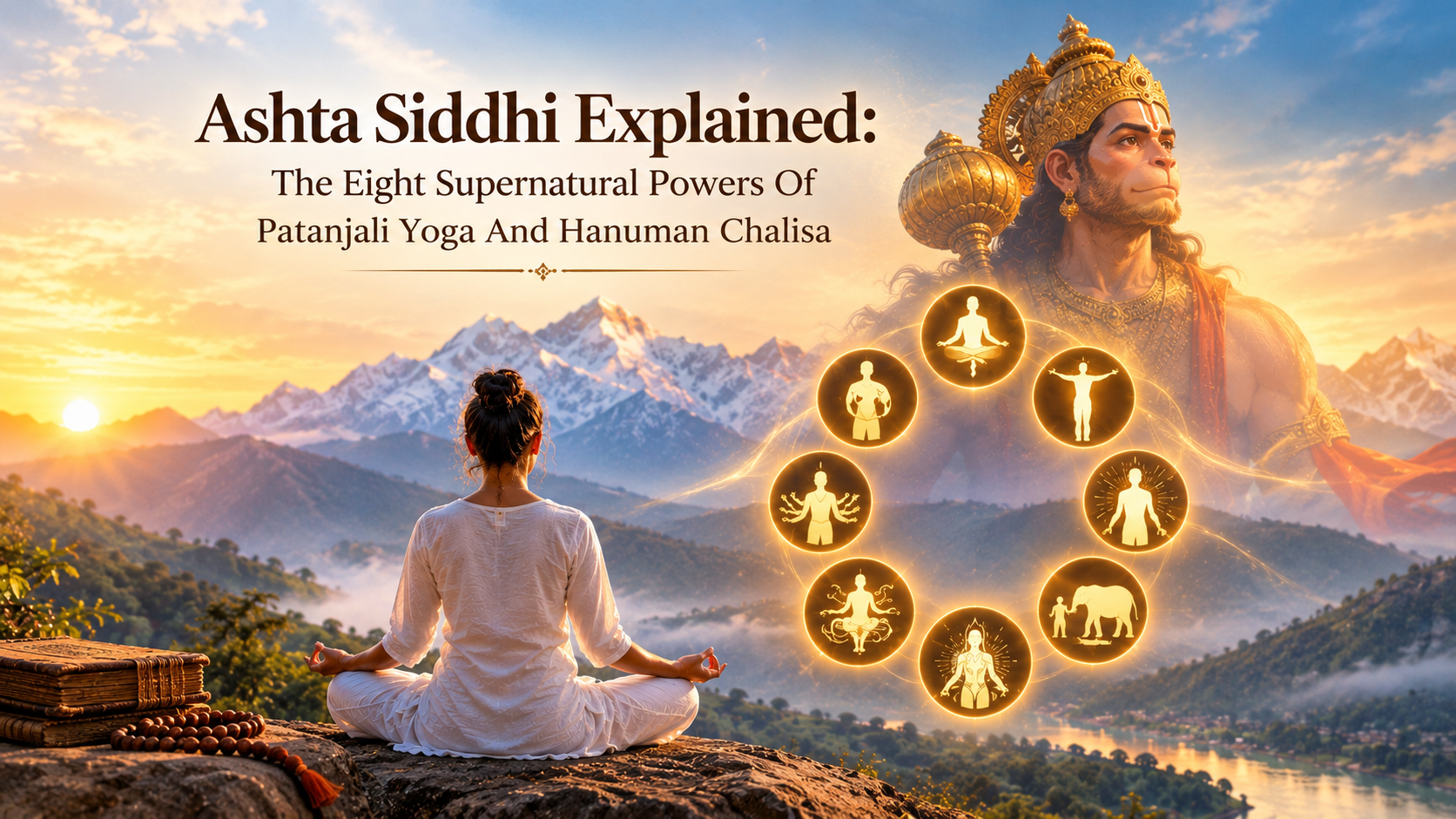
Across the timeless corridors of Vedic philosophy, classical Tantra, and Maharishi Patanjali’s Yoga Sutras, few doctrines have captivated spiritual seekers quite like the Ashta Siddhis (अष्ट सिद्धि)—the Eight Classical Supernormal Powers. Often dramatized as mystical abilities that bend the physical laws of nature, genuine yogic science reveals that the Siddhis are natural milestones of supreme consciousness. When an accomplished yogi purifies the mind, balances the five primordial elements (Pancha Mahabhutas), and dissolves the ego into pure awareness, these extraordinary faculties manifest as byproducts of spiritual liberation (Kaivalya).
Quick Facts: The Ashta Siddhis
- Sanskrit Root: Ashta (Eight) + Siddhi (Attainment, perfection, accomplishment of spiritual realization).
- Foundational Scriptures: Patanjali’s Yoga Sutras (Vibhuti Pada 3.44–3.45), Shrimad Bhagavatam (11.15), Shiva Samhita, and the Hanuman Chalisa.
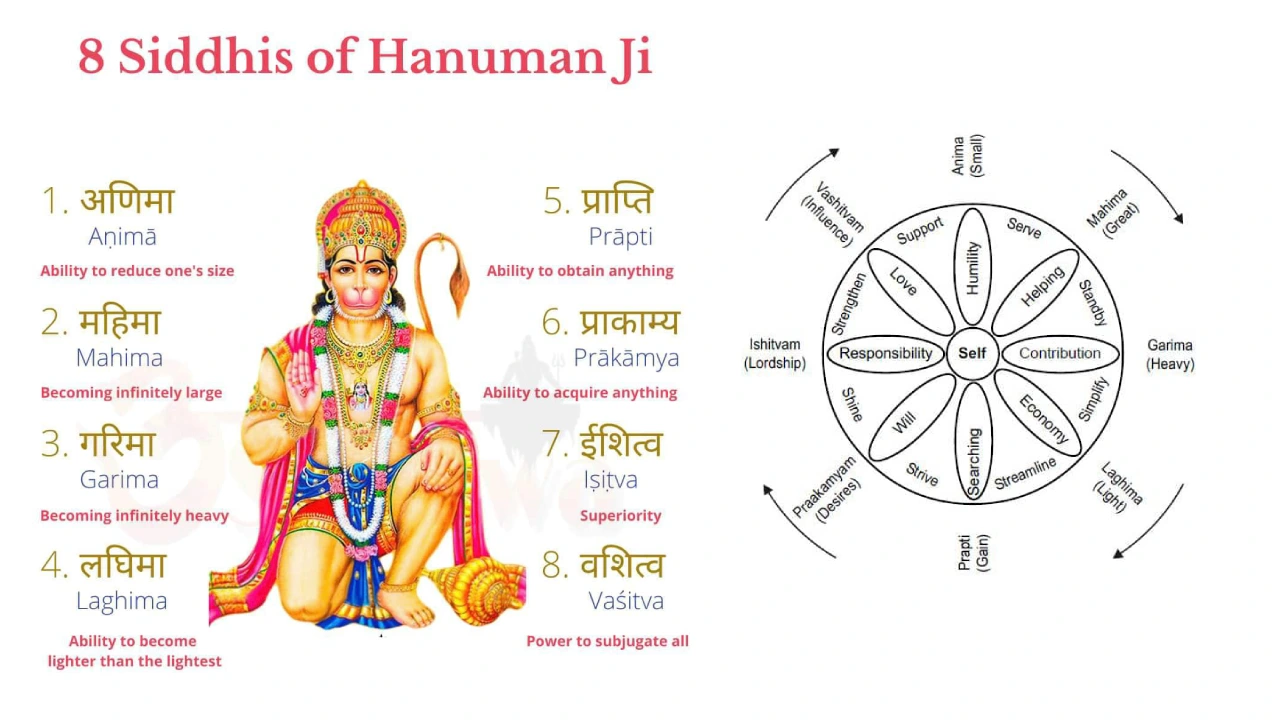
- The Eight Powers: Anima (atomicity), Mahima (vastness), Garima (density), Laghima (levitation), Prapti (omnipresence), Prakamya (irresistible will), Ishitva (divine governance), and Vashitva (supreme self-mastery).
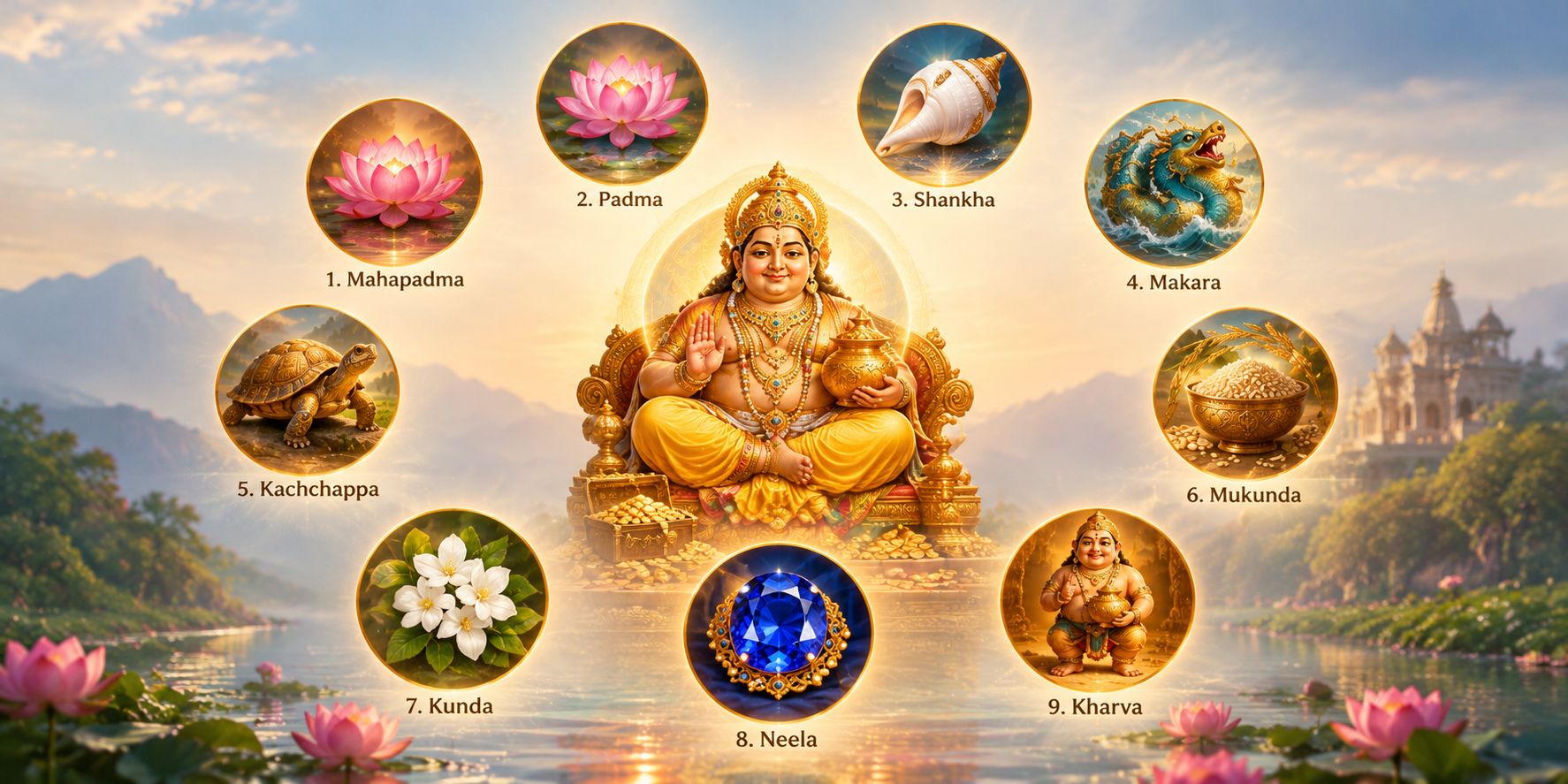
- Divine Bestower: Lord Hanuman, blessed by Mother Sita (Janaki Mata) as the supreme custodian of all eight siddhis and nine divine treasures (Nava Nidhis).
- Core Spiritual Mechanism: Cultivated through Samyama—the integrated fusion of Dharana (focus), Dhyana (meditation), and Samadhi (absorption).
- The Crucial Scriptural Warning: Patanjali cautions that treating Siddhis as personal trophies binds the soul to Samsara; true liberation lies in non-attachment.
Scriptural Foundations: From Patanjali to the Hanuman Chalisa
The earliest descriptions of supernormal attainments appear in the Upanishads and Puranas, but their systematic yogic formulation was codified in the Vibhuti Pada (Book III) of Patanjali’s Yoga Sutras.
“अष्ट सिद्धि नौ निधि के दाता ।
अस बर दीन जानकी माता ॥”
Translation (Hanuman Chalisa, Verse 31): “You are the bestower of the Eight Supernatural Powers (Ashta Siddhi) and the Nine Celestial Treasures (Nava Nidhi), as blessed by Mother Janaki (Sita).”
In the Yoga Sutras (3.44–3.45), Patanjali explains the metaphysical science behind these powers:
“ततोऽणिमादिप्रादुर्भावः कायसम्पत्तद्धर्मानभिघातश्च ॥”
Translation (Yoga Sutras 3.45): “From mastery over the gross, subtle, essential, relational, and purposeful dimensions of the elements arises the manifestation of Anima and the other Siddhis, along with physical perfection and immunity from elemental obstruction.”
Three Traditions, One Truth: How Scriptures View Siddhis
Different spiritual lineages approach the Ashta Siddhis through distinct contextual lenses:
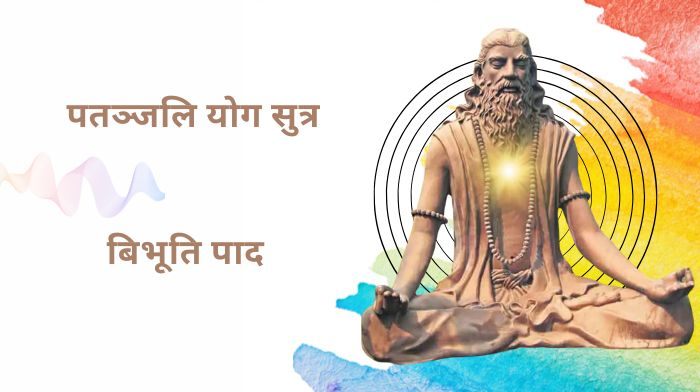
- Raja Yoga (Patanjali): Focuses on mental mastery. Siddhis are natural milestones of Samyama (concentration, meditation, and absorption). Patanjali explicitly warns in Sutra 3.37: “Te samadhav upasarga vyutthane siddhayah”—these powers are accomplishments to the worldly mind, but direct obstacles to Samadhi if embraced by the ego.
- Bhakti Yoga (Bhagavata Purana): In Canto 11, Chapter 15 of the Shrimad Bhagavatam, Lord Krishna explains the eight primary siddhis to Uddhava, portraying them as expressions of total divine surrender. Lord Hanuman embodies this path: possessing all eight powers yet remaining the humblest servant of Sri Rama.
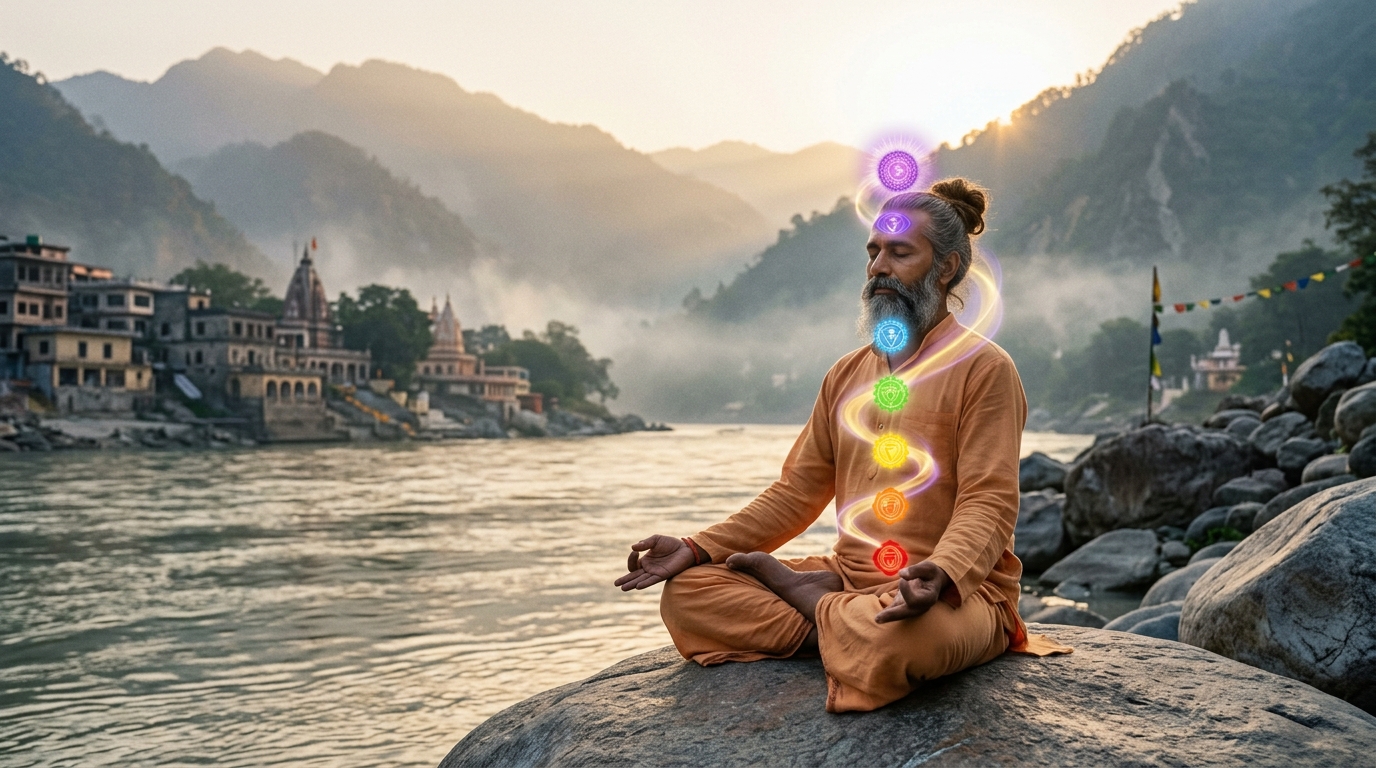
- Tantra & Hatha Yoga: Medieval texts like the Shiva Samhita view siddhis as energetic realignments achieved through the awakening of Kundalini Shakti, clearing of the Nadis, and mastering internal locks (Bandhas).
The Master Table: The Eight Classical Ashta Siddhis
Below is the complete architectural overview of the Ashta Siddhis, including their elemental correspondences, energetic centers, and deep-dive study guides:
| Siddhi | Sanskrit Root & Meaning | Governing Element | Chakra Center | Detailed Guide |
|---|---|---|---|---|
| 1. Anima | Anu (Atom) — Power to become infinitesimally small | Earth (Prithvi) | Ajna (Third Eye) | Anima Guide → |
| 2. Mahima | Mahat (Great) — Power of infinite cosmic expansion | Ether (Akasha) | Sahasrara (Crown) | Mahima Guide → |
| 3. Garima | Gariyan (Heavy) — Power of infinite density and grounding | Earth (Prithvi) | Muladhara (Root) | Garima Guide → |
| 4. Laghima | Laghu (Light) — Power of weightlessness and levitation | Air (Vayu) | Manipura / Anahata | Laghima Guide → |
| 5. Prapti | Prap (Reach) — Subtle omnipresence and effortless attainment | Ether (Akasha) | Vishuddha (Throat) | Prapti Guide → |
| 6. Prakamya | Kama (Desire) — Irresistible willpower and manifestation | Water (Jala) | Svadhisthana (Sacral) | Prakamya Guide → |
| 7. Ishitva | Isha (Lord) — Sovereign governance over nature and elements | Fire / Space | Manipura / Ajna | Ishitva Guide → |
| 8. Vashitva | Vash (Master) — Supreme self-mastery and non-violent aura | Air / Consciousness | Anahata / Ajna | Vashitva Guide → |
Detailed Exploration of Each Supernatural Power
1. Anima Siddhi: The Power of Infinite Subtlety
Derived from the Sanskrit word Anu (atom), Anima Siddhi allows a yogi to shrink their consciousness to subatomic dimensions. In practical sadhana, Anima manifests as microscopic discernment—the ability to perceive the subtle flow of prana through individual nadis and perceive truth hidden beneath gross illusion.
2. Mahima Siddhi: The Power of Cosmic Expansion
The polar counterpart of Anima, Mahima Siddhi originates from Mahat (greatness). It bestows the capability to expand consciousness across the entire cosmos. Mentally, it liberates the yogi from narrow tribalism, judgment, and emotional claustrophobia, allowing them to experience universal oneness.
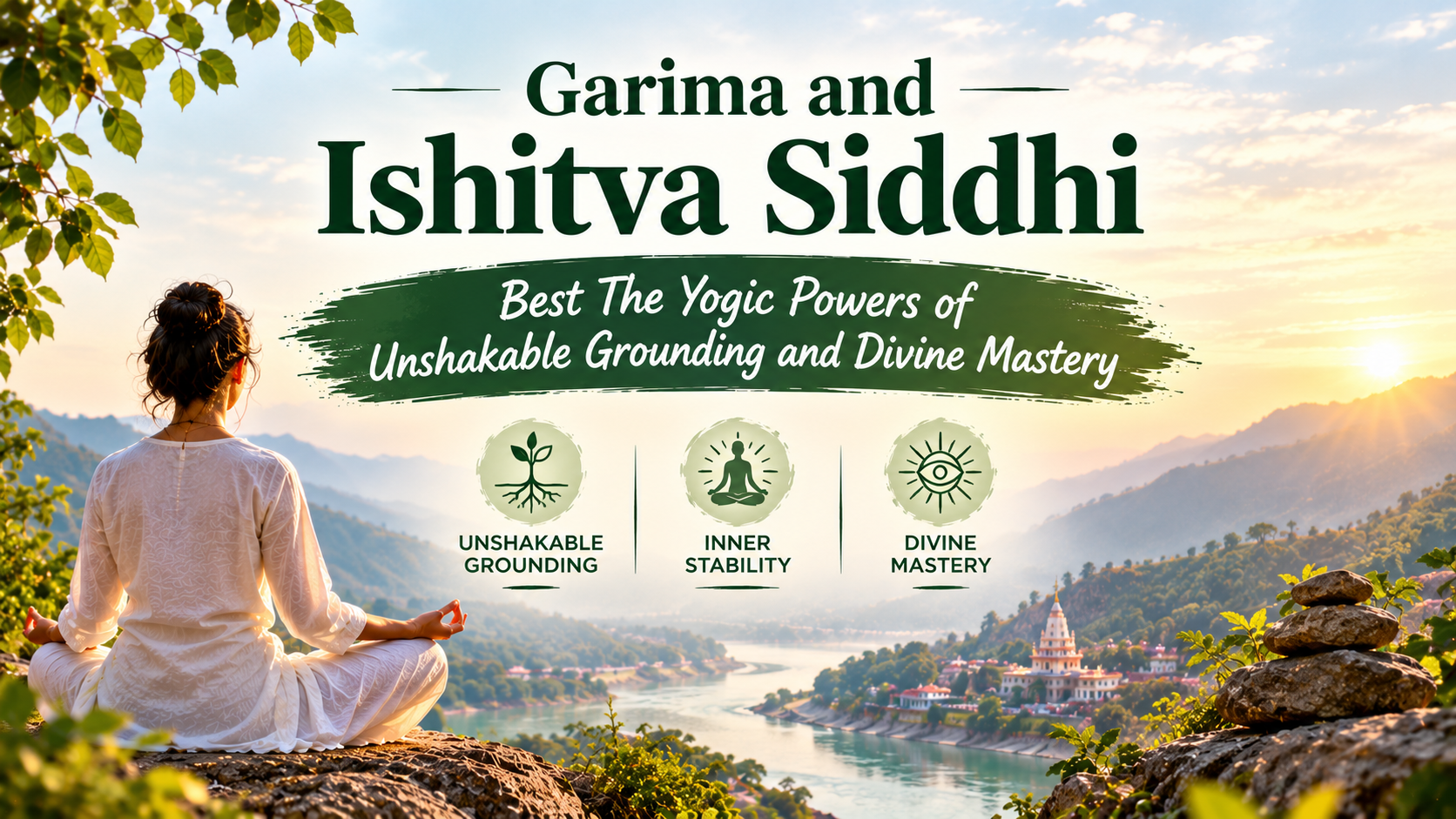
3. Garima Siddhi: The Power of Unshakeable Density
Connecting directly with the Earth element (Prithvi Tattva) at the Muladhara chakra, Garima Siddhi grants infinite density. In scripture, Lord Hanuman used Garima to render his tail immovable before the mighty Bhima. Spiritually, it provides deep psychological grounding that cannot be shaken by grief, crisis, or insult.
4. Laghima Siddhi: The Power of Weightlessness & Levitation
Rooted in Laghu (lightness), Laghima Siddhi neutralizes the downward pull of gravity through mastery of the Udana Vayu and the Air element. In daily practice, Laghima dissolves heavy mental burdens, allowing the yogi to navigate life with effortless grace and emotional levity.
5. Prapti Siddhi: The Power of Subtle Omnipresence
Originating from Prap (to attain or reach), Prapti Siddhi is the capacity to extend one’s subtle senses to any point in the universe without physical transit. It is the root of clairvoyance, clairaudience, and spontaneous manifestation without grasping.
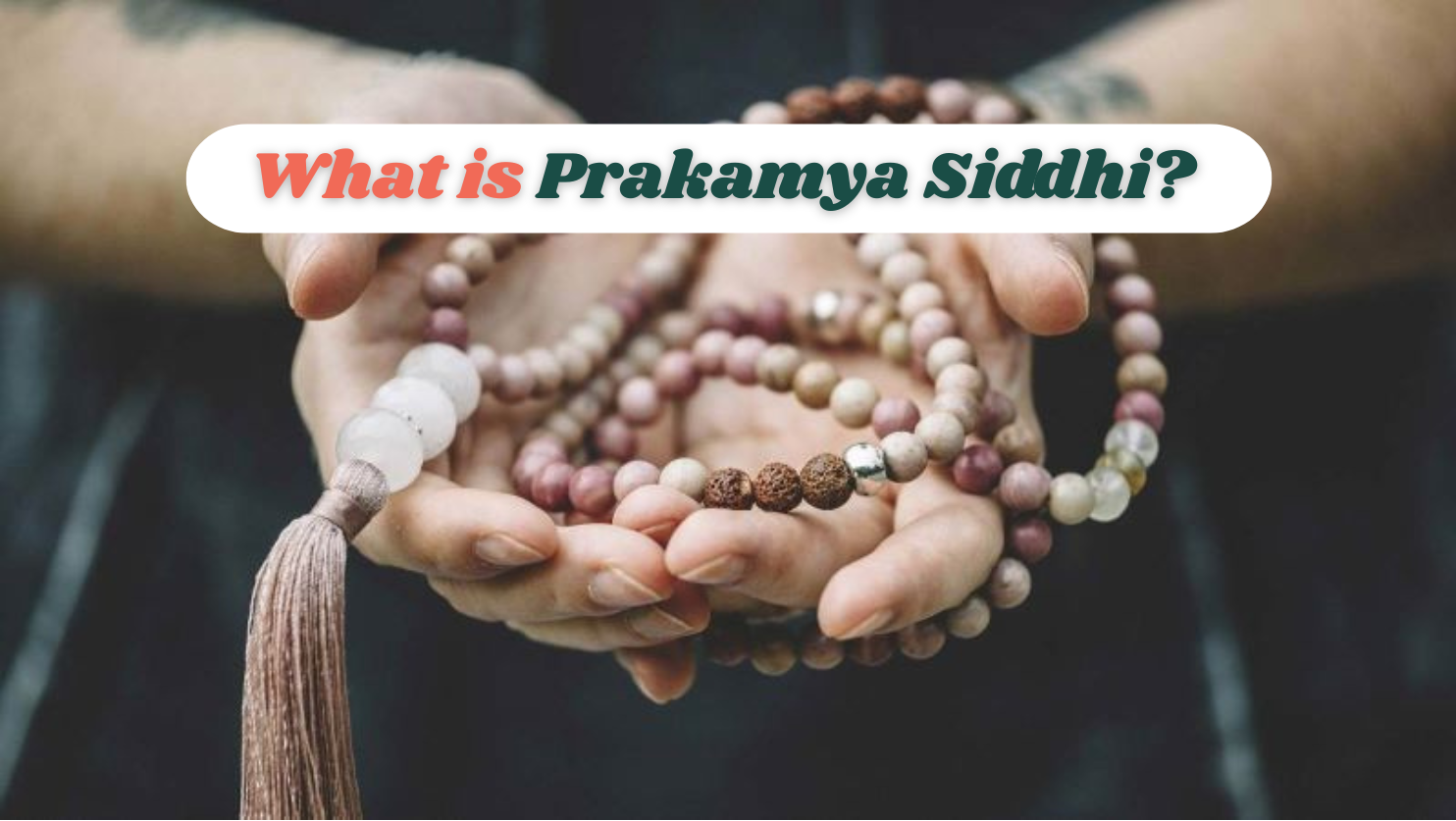
6. Prakamya Siddhi: The Power of Irresistible Willpower
Derived from Kama (aspiration), Prakamya Siddhi grants the fulfillment of unshakeable intention. When an accomplished yogi desires an outcome in alignment with Dharma, nature reshapes itself to realize that vision without resistance.
7. Ishitva Siddhi: The Power of Divine Governance
Stemming from Isha (supreme ruler), Ishitva Siddhi is divine lordship over the five physical elements. Unlike political tyranny, Ishitva is exercised with selfless love and non-violence (Ahimsa), aligning personal will with universal law (Rta).
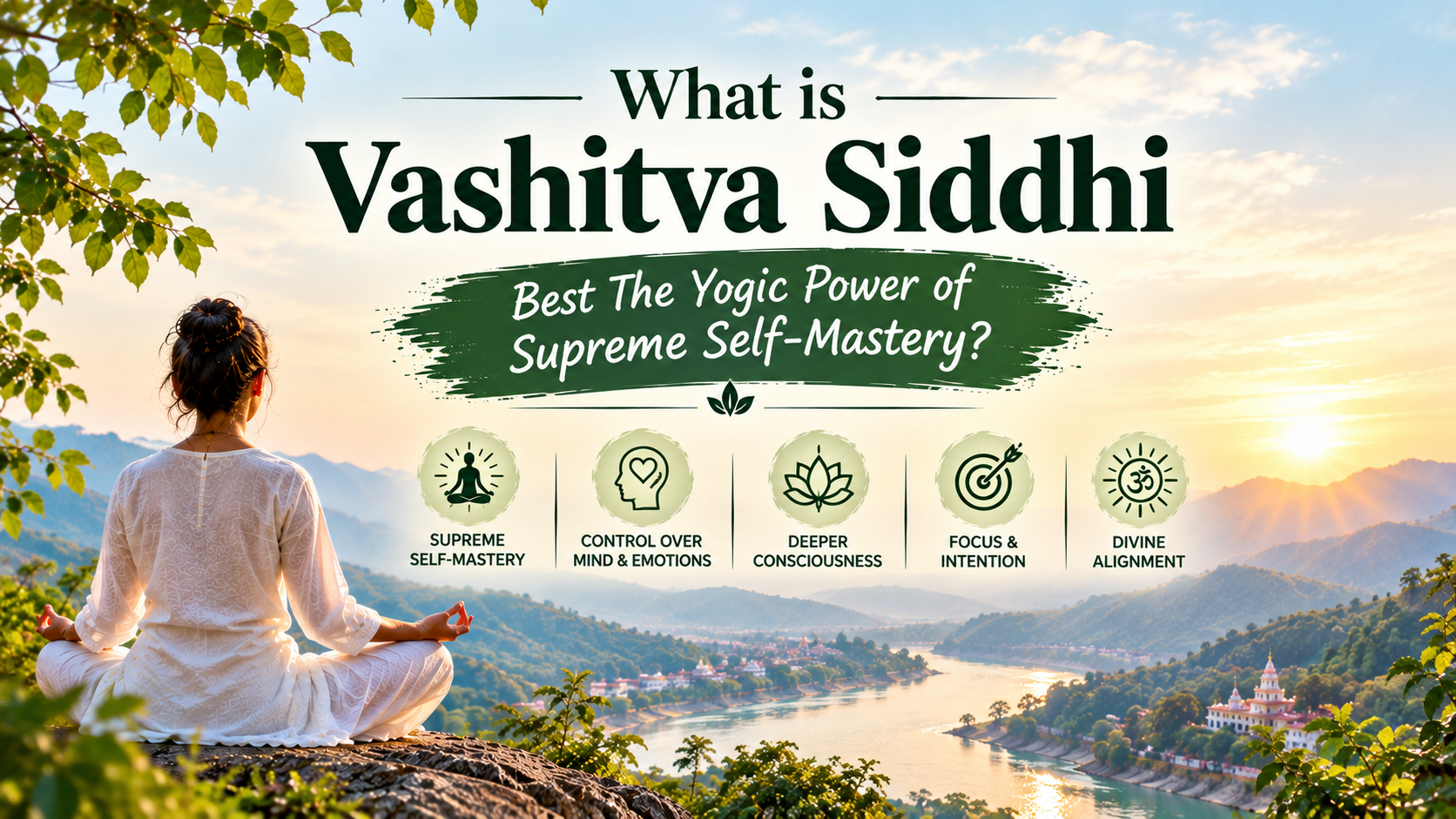
8. Vashitva Siddhi: The Power of Supreme Self-Mastery
Often misconstrued as external hypnosis, Vashitva Siddhi is the absolute conquest of one’s own senses, subconscious impulses, and passions. A yogi established in Vashitva radiates an aura so harmless and peaceful that even wild creatures and hostile enemies naturally abandon their enmity.
The Ashta Siddhis in Modern Daily Life
While the full supernatural manifestation of the Ashta Siddhis belongs to advanced yogic adepts, their internal principles provide an invaluable compass for contemporary life:
- Digital & Mental Discernment (Anima): Honing the ability to notice micro-distractions and protect your mental focus from algorithmic overwhelm.
- Vast Perspective (Mahima): Rising above petty office politics and interpersonal conflicts by viewing life through a wide, compassionate lens.
- Emotional Stability (Garima): Staying rooted in core values and unwavering integrity during financial or personal stress.
- Releasing Burdens (Laghima): Practicing non-attachment (Vairagya) so past regrets and anxieties no longer weigh down your spirit.
- Focus & Manifestation (Prakamya & Prapti): Aligning your daily actions with noble goals, ensuring sustained willpower and clear execution.
- Compassionate Leadership (Ishitva & Vashitva): Inspiring and guiding others through authentic presence, empathy, and impeccable self-discipline.
Master the Ancient Science of Yoga in Rishikesh
Immerse yourself in classical Patanjali philosophy, authentic pranayama, and meditation at Om Setu Yogashala in the sacred foothills of the Himalayas. Transform your consciousness under the direct guidance of traditional masters.
Frequently Asked Questions
What are the Ashta Siddhis in Hinduism and Yoga?
The Ashta Siddhis are the eight primary supernatural powers described in classical yoga and Vedic shastras: Anima (atomicity), Mahima (expansion), Garima (density), Laghima (weightlessness), Prapti (omnipresence), Prakamya (irresistible will), Ishitva (divine lordship), and Vashitva (self-mastery).
Who possesses all the Ashta Siddhis?
In Vedic and Hindu tradition, Lord Hanuman is revered as the ultimate custodian of all eight Siddhis and nine Nidhis, having been blessed by Mata Sita. Accomplished Rishis and Avatars such as Adi Shankaracharya and Dattatreya are also celebrated for their mastery over these powers.
Can a modern yoga practitioner achieve Ashta Siddhi?
Yes, through decades of dedicated sadhana, strict ethical grounding (Yama and Niyama), and deep absorption (Samyama). However, authentic masters emphasize cultivating their psychological and spiritual equivalents—clarity, resilience, and compassion—rather than seeking supernatural demonstrations.
Why does Patanjali warn against becoming attached to Siddhis?
In Sutra 3.37, Patanjali warns that Siddhis can re-inflate the practitioner’s ego and trap the consciousness in worldly fascinations. Attachment to psychic powers halts spiritual evolution, preventing the yogi from attaining Kaivalya (supreme spiritual freedom).
Conclusion
The Ashta Siddhis are not magical anomalies or mythological exaggerations; they are the sublime fruits of human consciousness fully awakened to its divine heritage. By viewing these powers through the lens of reverence, humility, and scriptural wisdom, we discover that the greatest Siddhi of all is not flying through the skies or moving mountains, but conquering our own minds and abiding in uninterrupted, universal love.
PHP: 2026-10-22 14:54:30 [notice X 0][/home/yatraret/omsetuyogashala.com/blog/wp-content/plugins/elementor/core/experiments/manager.php::170] version_compare(): Passing null to parameter #2 ($version2) of type string is deprecated [array (
‘trace’ => ‘
#0: Elementor\Core\Logger\Manager -> shutdown()
‘,
)]